

Expands who may visit local correctional facilities to include persons and accompanying staff of the chief executive officer of a county, members of a county legislative body, mayor of the city of New York, New York city public advocate, New York city comptroller, and members of the New York city council.
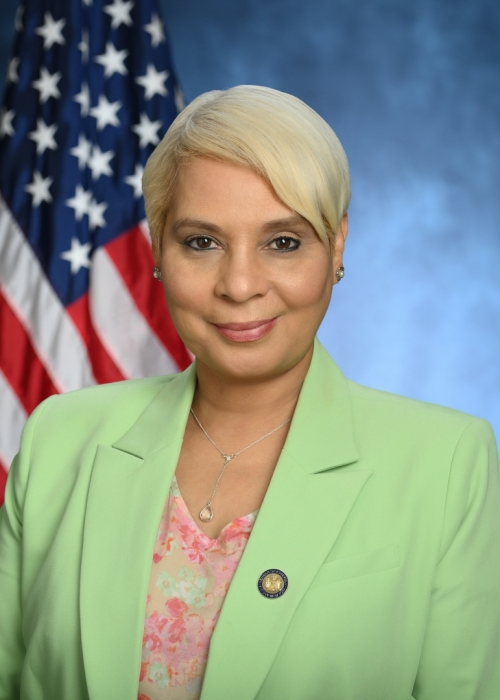
Asm. Maritza Davila
Sponsored bills
Maddy summaryThis bill increases the residential solar tax credit to 26% of qualified solar equipment costs, with new maximum credit amounts: $3,750 for installations before 2026, $5,000 for installations in 2026, and $10,000 for installations in 2027 and after. It applies to homeowners who install solar systems in their principal residence within the state, covering equipment purchases, long-term leases (10+ years), and power purchase agreements (10+ years). The credit can be carried over for up to five years if it exceeds annual tax liability, and for low-income taxpayers or those in disadvantaged communities, excess credit may be refunded starting in 2026.
Includes information about bystander intervention training in the department of labor's model sexual harassment prevention policy that includes information and practical guidance on how to enable bystanders to recognize potentially problematic behaviors and to motivate bystanders to take action when such bystanders observe problematic behaviors.
Maddy summaryThis bill expands eligibility for New York's Address Confidentiality Program to include election officers. The program protects individuals at risk of violence by allowing them to use a confidential address instead of their actual residence for official purposes. Election officers - defined as those covered under existing election law - can now enroll to shield their home addresses from public disclosure. This change directly affects election workers who may face safety risks, adding them to the existing list of eligible participants like domestic violence victims and reproductive health care staff. The bill modifies existing law to formally include election officers in the program's eligibility criteria.
Requires private investigators to notify the state police when they are employed by a foreign government or foreign national; requires the state police to maintain a registry of all private investigators who have been employed by a foreign government or foreign national.
Establishes the SUNY downstate medical support fund to provide financial support for infrastructural upgrades and expansion; facilitates research and development grants in medical and health-related fields; offers scholarships and financial aid; supports community health initiatives and outreach programs.
Maddy summaryThis bill requires state, county, and local transportation agencies to design all publicly funded road projects - including construction, reconstruction, and major maintenance - to safely accommodate all users (drivers, pedestrians, cyclists, and transit riders) through "complete street" principles. It applies to projects receiving both federal and state funding under transportation department oversight, excluding routine resurfacing but including projects with a 10+ year lifespan. The law mandates agencies consider factors like traffic volume, population density, and community input when planning, rather than automatically prioritizing vehicles. It does not change existing project approvals but sets new standards for how projects must be designed.
Creates the incentivizing habitability opportunity program; provides that each local social services district shall provide an incentive to owners who enter into a residential lease or rental agreement with an eligible household for a qualified dwelling unit in order to address homelessness and ensure appropriate habitability standards.
Relates to establishing the "340B prescription drug anti-discrimination act"; prohibits pharmaceutical manufacturers and pharmacy benefit managers from discriminating against covered entities and New York state pharmacies based on participation in the drug discount program authorized by section 340B of the federal public health service act.
Requires child protective services to orally and in writing disclose certain information to parents and caretakers who are the subject of a child protective services investigation; requires such oral and written disclosure to contain certain information regarding the rights of the person under investigation.