

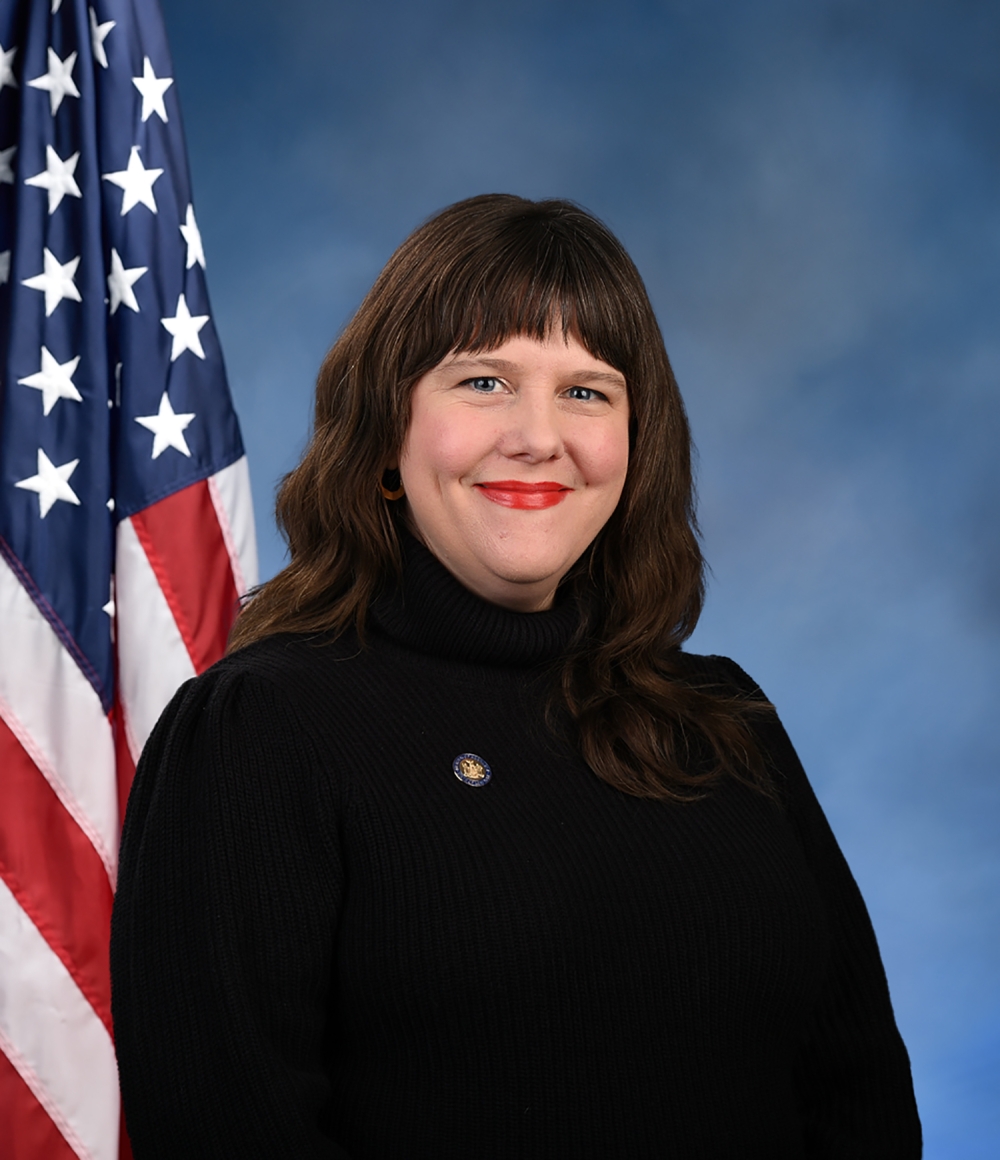
Photo of Emily Gallagher
D New York Assembly · District 50 On the 2026 ballot

Asm. Emily Gallagher

Compare
Total votes
6,537
all sessions
Attendance
96%
282 missed
Near the chamber average
With party
98%
of cast votes
Near the chamber average
Bipartisan score
1%
crosses aisle rarely
Near the chamber average
Sponsored
1,020
bills & resolutions
Near the chamber average
Committees
9
assignments
1,020 bills and resolutions

Sponsored bills

Total
1,020
Primary
88
Co-sponsor
932
This page
1,020
matching current filters
Co-sponsor A 2720
In committee Jan 7, 2026 1 co-sponsor
Co-sponsor A 5414
In committee · New York Assembly · Co-sponsor
Removes the lifetime ban on jury duty for convicted felons

Maddy summaryThis bill removes a lifetime ban preventing people convicted of felonies from serving on juries. It amends state law to no longer disqualify individuals based on past felony convictions, meaning former felons could be summoned for jury duty. However, it maintains that people currently incarcerated for felonies remain excused from service while in prison. The law would take effect 180 days after enactment.

In committee Jan 7, 2026 1 co-sponsor
Co-sponsor A 361
In committee · New York Assembly · Co-sponsor
Provides voters an opportunity to cure deficiencies regarding affidavit ballots

Maddy summaryThis bill (A 361) gives voters a chance to fix errors on affidavit ballots - used when voters can't provide standard identification - so their votes can be counted. If election officials find an affidavit ballot envelope incomplete or defective before counting, they must notify the voter within one day by mail, email, or phone, explaining the issue and how to correct it. Voters then have seven business days to submit a signed correction form verifying their identity and the ballot details. If the correction fixes the problem, the ballot is counted; if not, the voter is notified of the rejection. The bill directly affects voters who submit affidavit ballots with minor errors, aiming to reduce accidental vote disqualification.

In committee Jan 7, 2026 1 co-sponsor
Primary A 2293
In committee · New York Assembly · Lead sponsor
Relates to the right of public employees and employee organizations to strike; repealer

Maddy summaryThis bill repeals existing laws that prohibit public employees and their organizations from striking in New York. It removes specific provisions in the civil service law that banned strikes, imposed penalties like payroll deductions for violations, and required disciplinary actions against employees participating in strikes. The repeal directly affects public employees (such as teachers, sanitation workers, and government staff) and their unions by eliminating legal barriers to organizing strikes. This change would allow public employees to legally engage in strike activity under current labor laws, as the prohibitions are being removed. The bill does not create new strike rights but removes the existing ban.

In committee Jan 7, 2026 0 co-sponsors
Primary A 2364
In committee · New York Assembly · Lead sponsor
Protects valuable community services affected by the sale, mortgage and lease of real property of religious corporations

Maddy summaryThis bill (A 2364) requires religious corporations in New York to disclose details about community services (like food pantries, childcare, disaster relief, and support groups) they provide when seeking court approval to sell, lease, or mortgage property. It mandates that corporations include information on service attendance, sponsorship, and terms in their petition. The court must then ensure the transaction won’t cause irreversible harm to these services and may delay the sale to allow community groups to purchase the assets or secure alternative arrangements to continue the services. The law directly affects religious organizations selling property and aims to protect ongoing community programs.

In committee Jan 7, 2026 0 co-sponsors
Co-sponsor A 6920
In committee · New York Assembly · Co-sponsor
Prohibits discrimination on the basis of a person's caste in opportunities of employment, housing, and access to public accommodations

Maddy summaryThis bill adds "caste" to New York's existing anti-discrimination protections in employment, housing, and public accommodations. It defines "caste" as a hereditary social hierarchy based on birth that restricts opportunities, and prohibits discrimination against individuals because of their caste in hiring, housing, and public services. The law amends existing sections of the executive law to explicitly include caste alongside other protected characteristics like race, gender, and disability. It directly affects people in New York who experience caste-based discrimination in workplaces, housing, or public spaces. The key mechanism is updating anti-discrimination statutes to include caste as a protected category, making such discrimination unlawful under current enforcement frameworks.

In committee Jan 7, 2026 1 co-sponsor
Co-sponsor A 886
In committee · New York Assembly · Co-sponsor
Authorizes local governments to pay higher levels of minimum wage

Maddy summaryThis bill allows cities and counties to set minimum wage rates higher than the state's standard. It amends labor law to explicitly state that local governments can establish stricter wage requirements within their own boundaries without conflicting with state law. The key provision removes barriers that might prevent municipalities from adopting more protective wage policies. This directly affects local governments and employers operating in jurisdictions that choose to implement higher minimum wages. The change takes effect immediately upon passage.

In committee Jan 7, 2026 1 co-sponsor
Co-sponsor A 8889
In committee Jan 7, 2026 1 co-sponsor
Co-sponsor A 2181
In committee · New York Assembly · Co-sponsor
Provides lead service line identification for certain water systems

Maddy summaryThis bill requires certain public water systems (serving at least 15 year-round residents or 25 regularly) to identify lead service lines connecting water mains to properties. It defines "lead service line" broadly, including galvanized pipes downstream of lead lines or where lead connectors are used. Water systems must obtain property owner or occupant consent for free inspections, with a 30-day response window; if consent isn't received, occupants may provide consent. Inspections must occur within 60 days of consent, focusing solely on identification, not removal, of lead service lines.

In committee Jan 7, 2026 1 co-sponsor
Showing 231 to 240 of 1,020 bills
Previous 1 … 23 24 25 … 102 Next