

Maddy summaryThis bill, the "Affordable NY Act," increases property tax relief for homeowners and adjusts New York's personal income tax rates. It directly affects homeowners who qualify for the STAR (School Tax Relief) program by doubling the base exemption amount for enhanced STAR from $30,000 to $60,000 (effective 2025-2026) and linking future increases to the Consumer Price Index. For income taxes, it revises tax brackets, lowering rates for middle-income earners (e.g., reducing the top rate for income over $161,550 from 6.57% to 6.49% in 2019). The changes take effect immediately for some provisions and for others starting in 2025. These adjustments aim to reduce tax burdens for qualifying homeowners and middle-income taxpayers.
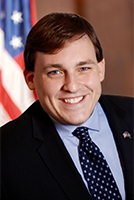
Asm. Doug Smith
Sponsored bills
Maddy summaryThis bill caps the maximum interest rate for personal credit cards issued or used in New York State at 10% per year. It directly affects New York residents who use credit cards for personal, family, or household expenses, making any rate above 10% invalid. The law amends banking law to set this 10% limit and prohibits using credit cards with higher rates, allowing the attorney general to seek court action against violations. The bill takes effect immediately but expires and reverts to previous law after five years.
Maddy summaryThis bill amends New York's penal law to explicitly include "on-duty auxiliary police officers" within the legal definition of assault in the second degree. It directly affects auxiliary police officers by ensuring that injuring them while they're performing duties is treated as assault in the second degree, aligning their protection with that of regular police officers and other first responders. The key change is adding auxiliary officers to the list of protected personnel in the statute, without creating new penalties or altering existing legal standards for assault.
Directs the public service commission to conduct a full cost benefit analysis of the technical and economic feasibility of renewable energy systems in the state of New York and to compare such directly with other methods of electricity generation; makes certain changes relating to greenhouse gas emissions limits.
Allows retired state police officers to serve as police officers for local police departments without diminution of retirement benefits; empowers the superintendent of state police to approve such service.
Maddy summaryThis bill repeals a specific provision (section 1020-dd) in New York's Public Authorities Law that prohibited the Long Island Power Authority (LIPA) from accepting "preference hydroelectricity." Preference hydroelectricity refers to hydroelectric power generated from specific sources meeting defined criteria. The repeal removes this legal barrier, allowing LIPA to potentially accept such hydroelectric power in its energy procurement. This change directly affects LIPA's authority to source certain types of hydroelectric energy.
Relates to the improvement and operation of sober living homes including the process for certification, inspections, and violations and the establishment of a toll free hotline to respond to complaints.
Includes aggravated threat of mass harm, making a threat of mass harm, aggravated harassment in the second degree, harassment in the first degree, menacing in the third degree, menacing in the second degree, menacing in the first degree, and aggravated harassment in the first degree in being eligible for bail; makes aggravated threat of mass harm and making a threat of mass harm eligible to be considered hate crimes; increases the penalties for aggravated threat of mass harm and making a threat of mass harm.
Maddy summaryThis bill limits health care workers, including nurses and unlicensed assistive personnel, to their regularly scheduled work hours without mandatory overtime. Exceptions allow longer shifts only during declared emergencies (like natural disasters or public health crises), federal/state emergency declarations, or when completing an ongoing medical/surgical procedure. It specifically excludes doctors, residents, and security staff from this definition. The law aims to protect patient safety by preventing excessive staff fatigue through concrete scheduling limits. Employers cannot use on-call time to bypass these restrictions.
Establishes a clinical preceptorship personal income tax credit for certain health care professionals who provide preceptor instruction to students studying to be a health care professional.