

Requires an assessor to send a second copy of the application and notice for a real property tax exemption to persons with disabilities and limited incomes thirty days prior to the appropriate taxable status date.
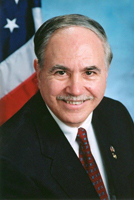
Asm. William Colton
Sponsored bills
Enacts the "construction insurance transparency act" to require insurers providing coverage for liability under the scaffold law to report, on an annual basis, to the superintendent of financial services relating to its finances and claims paid thereunder.
Allows taxpayers to contribute to the tuition assistance program fund on personal income tax forms; establishes the gifts to the tuition assistance program fund.
Authorizes a lien against personal and real property of the owner of a commercial towing company for illegal and improper practices; creates personal liability for members of an LLC and certain corporate shareholders.
Provides that a person is guilty of criminal impersonation in the second degree when a person pretends to be a servicemember or former servicemember, or a first responder, or as having received a decoration or medal; establishes a stolen valor fee.
Establishes a tax credit for individuals who serve or are employed as a direct support professional, or direct care worker, up to five thousand dollars for taxpayers who make less than fifty thousand dollars and phased out for individuals who make over one hundred thousand dollars.
Prohibits certain regulations of the state division of housing and community renewal, for cities having a population of less than one million and towns and villages, from permitting an owner to refuse to renew a lease on grounds that the housing accommodation is sought for personal use or occupancy (i.e. use or occupancy by the owner or the owner's immediate family); repeals provisions which permit evictions for personal use and occupancy.
Maddy summaryThis bill creates tax-advantaged savings accounts for small businesses, allowing them to deduct contributions (up to 10% of prior year's gross profits) and receive tax-free distributions during qualifying economic hardship. It directly affects eligible small businesses with 25 or fewer average full-time employees and under $250,000 annual net income. Key provisions include requiring hardship distributions to fund worker hiring or job retention, setting annual limits on qualified distributions, and mandating reinvestment plans for hardship withdrawals. The tax exemptions for contributions and qualified distributions begin in 2025, with penalties for misusing funds.
Maddy summaryThis bill removes a requirement for workers with permanent partial disabilities to prove ongoing "labor market attachment" to receive ongoing compensation benefits. It directly affects injured workers who have been classified as permanently partially disabled due to work-related injuries. The key change eliminates the need for these claimants to demonstrate continued workforce engagement to maintain benefits, while keeping the existing compensation rate (66.67% of lost wages) and maximum benefit duration limits based on the severity of disability. The bill applies to cases with injury dates after the effective date of related 2017 legislation.
Maddy summaryThis bill establishes a maximum caseload of twelve families per full-time preventative case planning services caseworker per month for local social services districts in New York. It directly affects districts providing preventative services to eligible children and families, requiring them to maintain caseloads at or below this limit while continuing to fund such services at prior-year levels. The law modifies state reimbursement rules, ensuring districts receive 100% state funding for preventative services if they meet the new caseload standard and maintain spending. These changes aim to standardize caseload management for preventative child welfare services under the Office of Children and Family Services.