

Maddy summaryThis bill adds "aggravated harassment in the first degree" (Section 240.31) to the list of "specified offenses" under New York's penal law. It directly affects individuals convicted of this specific harassment crime, as it now triggers legal consequences tied to "specified offenses" (like enhanced sentencing or mandatory provisions). The key change is formally including this harassment offense in the existing list of crimes that qualify as "specified offenses" for legal purposes.
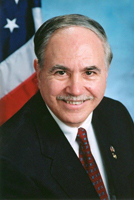
Asm. William Colton
Sponsored bills
Maddy summaryThis bill establishes a multi-state agreement (compact) where participating states would create a commission to award prizes for medical treatments that successfully cure diseases. The commission would review submissions, set prices for cures based on manufacturing costs and estimated public health savings, and collect limited royalties from non-participating states or countries based on those savings. It directly affects participating states (which would fund the commission), medical researchers who develop cures, and public health systems by potentially lowering future treatment costs through prize-funded solutions. The framework focuses on creating standardized prize awards and pricing mechanisms across states, without directly funding research or altering existing healthcare programs.
Relates to the assault of physicians providing direct patient care; provides that assault of physicians shall be assault in the second degree, a class D felony.
Maddy summaryThis bill requires all correctional facilities to install video cameras at every entrance and exit of their medical wards and clinics, and to post clear signage informing patients, visitors, and staff about the surveillance. It mandates continuous recording of footage with secure storage for at least 90 days, restricting access to authorized personnel only and requiring periodic audits by the attorney general. The policy directly affects correctional facility medical operations, impacting patient privacy, staff protocols, and visitor interactions within these medical areas. The law takes effect 180 days after enactment.
Maddy summaryBill A 3155 would allow New York State reservists with 20 years of honorable military service to earn 2.5 additional points on civil service entrance exams for new positions and 1 additional point on promotional exams for career advancement. To qualify, reservists must be U.S. citizens or lawful permanent residents living in New York at the time of application. The extra points are added to exam scores when eligibility lists are created, but applicants must provide proof of service through documentation. This bill directly affects reservists seeking state or local government civil service jobs in New York.
Establishes Three King's day as a school holiday for all public schools in a city school district of a city having a population of one million or more inhabitants.
Maddy summaryThis bill requires the DMV to add 5 points to a driver's record if they are convicted of hitting a pedestrian while driving, specifically for violations of Vehicle and Traffic Law sections 1151 or 1151-a. It directly affects drivers found guilty of pedestrian collision offenses. The key mechanism is the automatic 5-point penalty on the driving record, which could lead to license suspension or higher insurance costs. The bill makes this penalty a standard part of the conviction process for such traffic violations.
Maddy summaryThis bill (A 4886) creates a $2,000 refundable tax credit for New York taxpayers who experience the stillbirth of a child. It directly affects eligible parents who would have claimed the child as a dependent under federal tax law and have a stillbirth certificate issued under public health law. The credit is refundable (meaning it can result in a payment even if no tax is owed) and applies to taxable years beginning January 1, 2025. The bill requires a certificate of stillbirth from the public health law to qualify, but does not change dependency rules.
Provides that if a school building is designated as a polling place, the board or body which controls such building shall provide a space that is not easily accessible to areas of the building where instructional activities are taking place, and if such a space cannot be provided that meets such criteria, the board or agency which controls such building shall cancel in-person instructional activities during the operating hours of such poll site.
Provides that a person is guilty of loitering when such person remains in a transportation facility, within twenty-five feet of the token booth or similar location, for more than twenty-five minutes unless authorized to do so or unless the facility's design would make it impossible to maintain a greater distance.