

Maddy summaryNew York's bill A 9504 requires retailers to accept used rechargeable batteries of similar type for free at any time during business hours. Retailers must display clear signs stating it's illegal to dispose of these batteries in trash and that they'll recycle them, with limits of up to 10 batteries per person (5 for e-scooter/bike batteries). Battery manufacturers must cover recycling costs through approved plans, and retailers cannot sell batteries unless the manufacturer has such an approved plan. The law specifically excludes vehicle batteries (like car batteries) and storage batteries (such as solar backup systems) from these requirements.
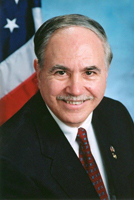
Asm. William Colton
Sponsored bills
Requires training for teachers, administrators and instructors in the area of mental health response; requires office of mental health to assist in development of curriculum for training.
Establishes the climate corporate data accountability act requiring certain business entities within the state to annually disclose scope 1, scope 2 and scope 3 emissions; establishes the climate accountability and emissions disclosure fund.
Requires the report on statewide opioid settlements include the amount of funds that have been spent and requires the public be provided information on how much funds have been spent.
Directs the department of public service to promulgate rules, regulations and model policies regarding setback requirements for the siting of battery energy storage systems; requires minimum setback requirements for commercial energy storage systems, with a capacity of three megawatts or greater, of no less than seven hundred fifty feet from residential property and no less than three hundred feet from residential property located in a city with a population of one million or more inhabitants; requires public hearings prior to the approval of an application for a permit for such systems.
Maddy summaryThis bill requires licensed residential facilities serving developmentally disabled children (including group homes, residential schools, and day programs) to install surveillance cameras with sound in all public common areas like living rooms, dining areas, hallways, classrooms, and time-out rooms. It also permits cameras in single-occupancy bedrooms of children age 13 or younger only with parental consent. Facilities failing to comply face daily fines of $1,000. The law directly affects providers operating under the Office of Mental Hygiene or Children and Family Services.
Requires employers to inform their employees that non-disclosure or non-disparagement provisions in their employment contracts do not prohibit them from speaking with law enforcement, the equal employment opportunity commission, the state division of human rights, a local commission on human rights, or an attorney retained by the employee.
Enacts the climate and community investment act; prioritizes the allocation of public investments in disadvantaged communities; addresses climate change challenges through the expansion and growth of clean and renewable energy sources; adopts best value requirements for the solicitation, evaluation and award of renewable energy projects; establishes a community just transition program; establishes a climate pollution fee and a household and small business energy rebate; creates the climate and community investment authority.
Maddy summaryThis bill would amend the state constitution to extend the term length for legislators from two years to six years for members elected in 2026 and later. It also imposes a term limit of three consecutive six-year terms for both senators and assembly members elected in 2026 or beyond, meaning no legislator could serve more than 18 years in a row. Partial terms held before 2026 would not count toward this limit. The changes would apply only to terms beginning after the bill is adopted, which is scheduled for consideration following the next general election.
Maddy summaryThis bill (A 8697) would amend New York's constitution to lower the voting age from 18 to 16 for all elections. It would allow residents aged 16 or older who have lived in their county, city, or village for at least 30 days before an election to vote. The bill directly affects 16- and 17-year-old New York residents. If passed, it would require a constitutional amendment process, including a 3-month public notice period before a vote on the change.