

Maddy summaryThis bill establishes a legal framework for safe injection sites in New York, creating a program approved by the Department of Health to provide overdose prevention services. It directly affects people who use drugs (participants), community health organizations operating the sites, and local communities through designated locations. Key provisions require sites to offer sterile equipment, overdose monitoring, naloxone access, referrals to treatment, and language-accessible education, while mandating annual reporting on participant numbers and services. The bill also provides legal immunity from arrest or penalties for participants, staff, and property owners who follow approved protocols, ensuring these sites operate without criminal or civil liability.
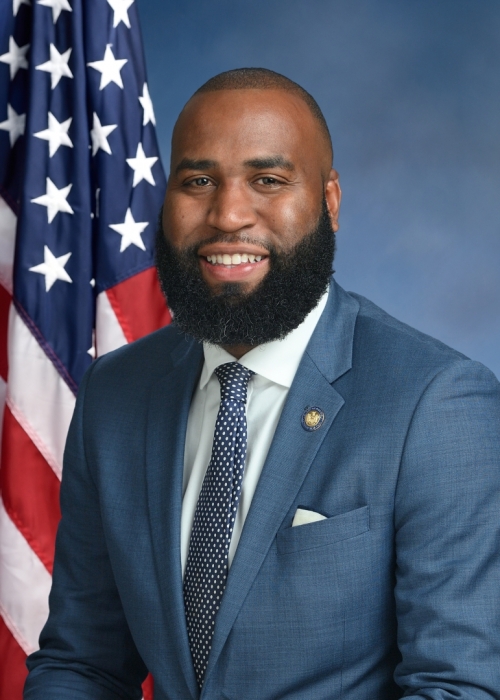
Asm. Brian Cunningham
Sponsored bills
Establishes rental vouchers for working families; provides definitions; allows for families to make an application for rental vouchers at the appropriate social services district or any facilitated enrollment site authorized by the office of temporary and disability assistance; sets forth eligibility requirements.
Maddy summaryThis bill requires schools to add a checkbox on student registration forms, allowing parents to authorize library cards for their minor children during enrollment. The state education board must create a system to process these requests through the school forms. It directly affects parents, public libraries, and schools by integrating library access into the standard registration process. The law takes effect 120 days after enactment.
Establishes the COVID heroes grant program to award a lump sum pay differential of $2,500 to essential SUNY hospital employees who worked during the COVID-19 state disaster emergency.
Enacts The New Deal for CUNY; increases the ratio of faculty and mental health counselors to full-time students; requires that certain amounts of tuition be replaced by federal, state, and city funds.
Maddy summaryThis bill creates a tax credit for small businesses that install diaper changing stations and related restroom facilities. Eligible businesses (with under $5 million in annual revenue or fewer than 100 full-time employees) can claim a 70% credit for qualifying expenses, up to $10,000 total over three years. Qualifying expenses include installing free-access diaper changing stations, diaper dispensers (which may charge for products), or renovating restrooms to meet a "family bathroom" standard requiring gender-inclusive access to these facilities. The credit applies to business restrooms, not employee-only spaces, and unused credit can be carried forward for up to five years.
Establishes a sea level rise mitigation and adaptation plan for cities with a population of one million or more to be implemented by the department of environmental conservation; requires a sea level rise vulnerability and adaptation report to be submitted.
Enacts the "assuring college campus and educational safety and support (ACCESS) act" relating to harassment of students and applicants at educational institutions; describes the circumstances under which harassment at educational institutions is an unlawful discriminatory practice; describes the circumstances under which an educational institution is deemed to have permitted harassment; describes additional circumstances under which a college or university is deemed to have permitted harassment.
Establishes a five-year window for any entity participating in the New York state supportive housing program (NYSSHP) in good standing with such program to participate in a request for proposal to increase their contract rates up to ESSHI levels.
Maddy summaryThis bill requires public school teachers to offer students a one-minute period of silent meditation at the start of each school day. It directly affects all public school students and teachers in New York, making participation optional for each student. The law specifies that the meditation must be conducted as a non-religious activity, allowing students to reflect on the day's activities or choose a religious theme if they wish, but it cannot be structured as a religious exercise. Participation is limited to seated reflection, with no requirement for students to stand or engage actively.