

Establishes the universal child care act to provide for the establishment and funding of universal child care in the state of New York; establishes a universal child care taskforce to help implement universal child care in the state and repeals certain provisions of the social services law relating thereto; establishes the permanent child care workforce pay equity fund; establishes a universal child care public option pilot program to provide universal child care in at least twenty locations throughout the state; makes an appropriation therefor.
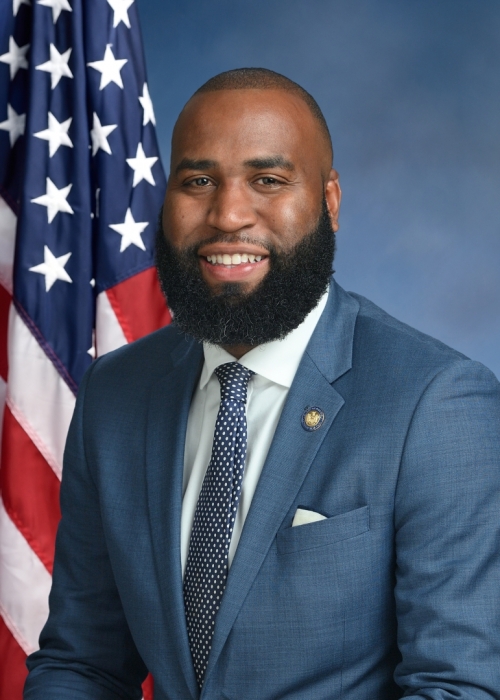
Asm. Brian Cunningham
Sponsored bills
Maddy summaryThis bill adds home internet service payments to the list of basic living costs covered by New York's public assistance program. It directly affects low-income households eligible for social services by including internet costs in the standard of need calculations used to determine aid amounts. The key mechanism requires social services officials to provide monthly assistance for home internet service, alongside existing covered expenses like shelter and heating. This change expands existing support without creating new programs, integrating internet access into current benefit structures for qualifying families.
Provides voting membership to existing non-voting rider representatives on the MTA Board, provides for enhanced representation of MTA riders with disabilities.
Requires trucks to utilize commercial GPS designed for use by a commercial vehicle which is able to provide audible and visual warnings when the truck is on a route where the height, weight, width, or length of the truck exceeds the limitations of such route when operating on public highways in the state.
Establishes the teachers' fossil fuel divestment act; requires the New York state teachers' retirement system to divest the retirement system of any stocks, securities, equities, assets, or other obligations of corporations or companies included on an exclusion list of coal producers and oil and gas producers.
Maddy summaryThis bill requires liability insurance for bicycles, e-bikes, and e-scooters operated on public streets in New York City (population over 1 million), excluding private property. It mandates that owners carry insurance meeting specific standards set by the Superintendent of Financial Services, covering personal injury or property damage from accidents. Riders must display proof of insurance upon request by authorities or individuals harmed by an accident. The requirement applies to all public use in NYC, with limited self-insurance options for government agencies or corporations that can prove financial responsibility. This directly affects NYC residents, commuters, and delivery workers using these vehicles on public roads.
Enacts the overdose prevention and recovery act; directs that at least twenty percent of funds from the opioid stewardship fund shall be invested in recovery services and supports; requires an annual report to the legislature regarding funds distributed from the opioid stewardship fund; makes the opioid stewardship fund permanent.
Enacts the "Supervising Upcoming Professionals for Practice in Official Roles in Therapy (SUPPORT) act"; provides that for licensure as a clinical social worker, an applicant may satisfy the experience requirements under supervision of a mental health practitioner who has been granted the privilege to diagnose and develop assessment-based treatment plans under article one hundred sixty-three of the education law.
Maddy summaryThis bill requires New York broadband providers to offer high-speed internet service at $5 per month to eligible low-income households. It directly affects households qualifying for programs like SNAP (food benefits), Medicaid, free/reduced school lunches, or senior/disability rent exemptions. Providers must offer minimum speeds of 100 Mbps download and 10 Mbps upload, include all fees in the $5 price, and advertise the program prominently. They must also submit annual reports to the state on enrollment, eligibility verification, and service details to ensure compliance.
Relates to the creation of a school-based teen dating violence prevention program designed to be incorporated into a school district's existing health curriculum to prevent and reduce the incidence and prevalence of teen dating violence.