

Enacts the affordable waste reduction act"; defines terms; provides for registration of producer responsibility organizations and service providers; establishes the producer responsibility advisory board; provides for department of environmental conservation responsibilities; provides for producer responsibility advisory board, organization, producer and service provider responsibilities; creates a recyclable or compostable covered materials lists and exempt materials list; establishes producer fees; provides for service provider reimbursement; makes related provisions.
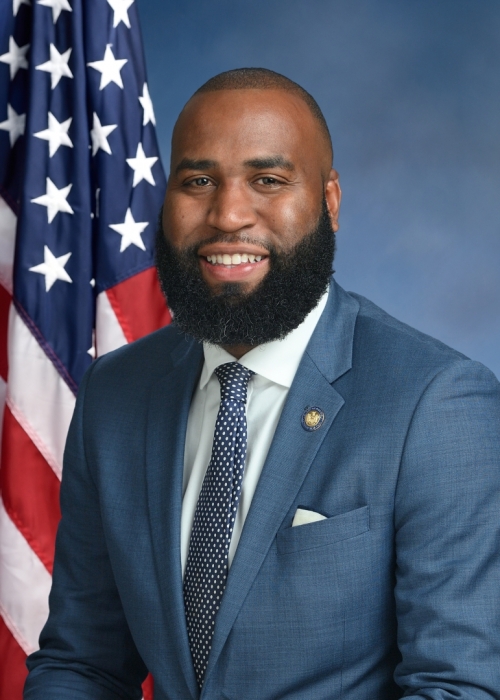
Asm. Brian Cunningham
Sponsored bills
Relates to procedures relating to driving while ability impaired by drugs; defines impairment and intoxication; updates procedures for field testing of drivers suspected of being under the influence of drugs to include the use of oral/bodily fluid tests; provides that refusal to submit to such field tests is specified to be a traffic infraction; makes related provisions.
Maddy summaryThis bill allows certain liquor license holders (specifically those under sections 64, 64-a, etc. of the alcoholic beverage control law) to pay their license fees in two equal annual installments instead of a single lump sum. It also provides a 50% discount on renewal fees for these licensees. Both the installment option and the renewal discount expire December 31, 2025. The bill adjusts payment terms for existing license types without creating new license categories.
Maddy summaryThis bill (A 966) mandates that the state transportation department install signs on all state highways stating "Watch for Motorcycles" to improve rider visibility. It directly affects drivers traveling on state highways by requiring these standardized signs at locations designated under traffic control guidelines. The key provision specifies the exact wording and requires installation to follow the state's official traffic device manual. The law takes effect on April 1st following enactment, with rules for implementation authorized immediately.
Maddy summaryThis bill establishes a New York state program to redeem up to $9,000 of student loans for eligible public school teachers. It directly affects teachers hired after the law's effective date who teach STEM subjects or special education, meet specific academic criteria (top 20% in high school, 3.5 GPA, or top 20% SAT/ACT scores), and complete three consecutive years of full-time teaching. The program redeems eligible loan balances after three years of service, with the state covering up to $9,000 or the actual debt balance, whichever is lower, upon submission of employment proof. Teachers may cancel the contract with written notice but must repay any unredeemed debt.
Decreases the frequency of lock-down drills in schools; directs that such drills shall be implemented with a trauma-informed approach; permits parents to opt their children out of such drills.
Enacts the "community solar opportunity and local approval reform (Community SOLAR) act"; authorizes municipalities to establish standards for distributed generation energy facilities.
Maddy summaryThis bill requires social media platforms to verify the age of all account holders (new and existing) using a third-party vendor. Social media networks must complete verification within 30 days of account creation for new users or within 30 days of a user's first access attempt after the law takes effect for existing accounts. If verification isn't completed within the timeframe, platforms must deny access to the account until it's resolved. The Consumer Protection Division will establish specific verification methods, data security standards, and rules for handling age-related information collected during compliance.
Establishes the commission for the modernization and revitalization of the state university of New York downstate medical center which directs such commission to conduct a study to examine services that should be offered at SUNY downstate medical center; directs the commission to submit a report and make recommendations to the legislature.
Maddy summaryThis bill requires all buses, omnibuses, and commercial trucks operating on New York's public highways to install specific GPS devices. The devices must let operators input vehicle dimensions (length, width, height, weight) and provide route directions that automatically avoid restricted areas like low bridges, weight-limited roads, one-way streets, and dangerous turns. The GPS must remain operational, mounted for easy access, and meet these requirements at all times. This directly affects commercial vehicle operators and fleet managers by mandating new technology for route planning and safety compliance.