Prohibits the use of surveillance pricing, directly or indirectly; prohibits the collection, use, retention, or sharing of data to facilitate surveillance pricing; provides exceptions; provides for enforcement by the attorney general; makes related provisions.
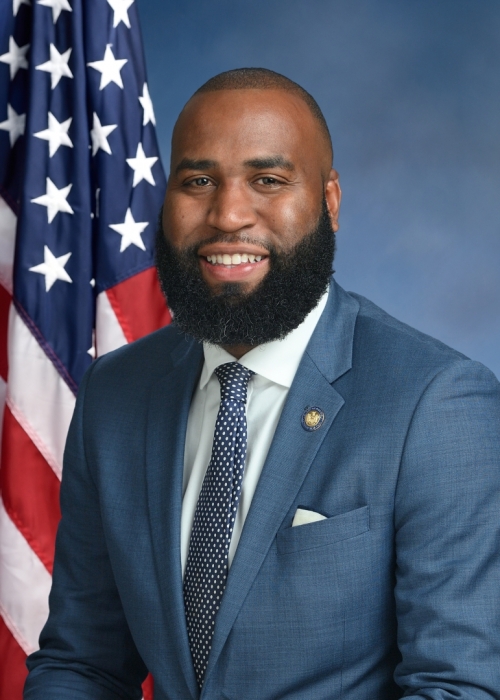
Rep. Brian Cunningham
Sponsored bills
Maddy summaryThis bill requires all state agencies to only purchase firearms, ammunition, and firearm accessories from dealers who do not sell unserialized gun build kits or firearm precursor parts. Bidders must certify annual compliance with firearm safety laws, including providing documentation on trace requests, thefts, inspections, and policies preventing straw sales or sales to prohibited individuals. It mandates that contractors implement specific safety practices, such as employee training and digital surveillance, to detect illegal transfers. The state will develop a public safety scoring system to evaluate bidders' compliance, effective April 2027. This directly affects state procurement contracts and suppliers seeking to work with government agencies.
Relates to the municipal sustainable energy loan program regarding qualifying water improvements, qualifying resiliency improvements and, in a city with a population of one million or more, the use of low carbon intensity building components.
Establishes the artificial intelligence training data transparency act requiring developers of generative artificial intelligence models or services to post on the developer's website information regarding the data used by the developer to train the generative artificial intelligence model or service, including a high-level summary of the datasets used in the development of such system or service.
Requires the office of victim services to publicize programs offered by the office and to include certain information in annual reports to the governor and the legislature and to make such reports public on the office's website.
Maddy summaryThis bill creates a new legal framework for protective orders targeting severe stalking behavior, directly affecting victims (petitioners) and alleged stalkers (respondents). It establishes temporary and final "anti-stalking orders" that prohibit contact, surveillance, and remote control of connected devices (like smart home systems), requiring respondents to stay away from victims' homes, workplaces, or schools. The law defines "stalking" broadly to include offenses like harassment, assault, identity theft, and unauthorized sharing of intimate images, requiring a "course of conduct" (two or more acts within 90 days) to trigger the order. Courts must issue temporary orders the same day if an immediate threat exists, with final orders requiring a hearing to confirm evidence supports the petition.

Requires synthetic content creations system providers to include provenance data on synthetic content produced or modified by a synthetic content creations system that such provider makes available.
Maddy summaryBill A 5846 provides remedies for disruptions during early voting or Election Day voting, directly affecting voters and the Boards of Elections. It mandates that if voting at a polling place or district is delayed for over 15 consecutive minutes, the Board of Elections must extend the voting timeframe to compensate for the lost time. This extension can happen on the same day or a subsequent voting day, potentially at alternative locations. The bill also requires the Board of Elections to widely publicize any such remedial actions taken, though they can vote to waive the extension under specific, documented circumstances.
Requires a pharmacy benefit manager to pay a participating pharmacy at minimum at the national average drug acquisition cost (NADAC) rate, or at the pharmacy acquisition cost rate if greater or there is not a NADAC rate, plus a professional dispensing fee that is at minimum the professional dispensing fee paid under the state medical assistance program.
Provides that beginning in the 2026-2027 academic year, certain graduate students shall be required to pay 25% of all current and future mandatory university fees; provides that in the 2027-2028 academic year and thereafter, no mandatory university fees shall be charged to certain graduate students and adjunct staff, with the exclusion of the graduate student association student activity fee.