Authorizes a fee waiver for applications to SUNY and CUNY if a prospective student, either a high school senior, or a person completing a gap year, submits and completes the FAFSA form.
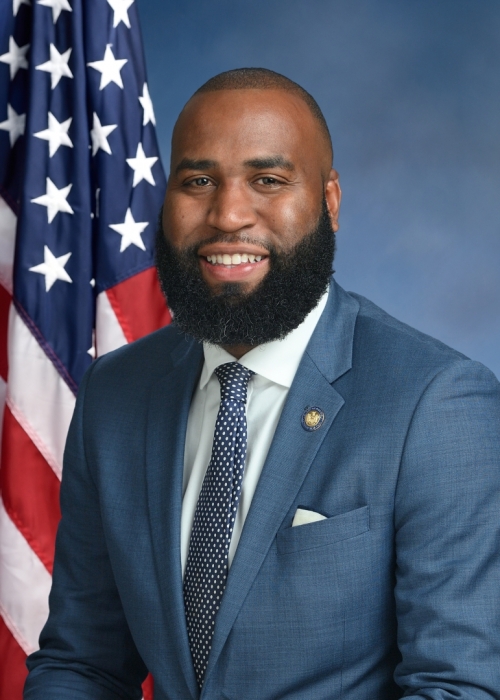
Asm. Brian Cunningham
Sponsored bills
Requires school districts to have diversity, equity and inclusion officers to develop methods to diversify the personnel of the school district and to recommend changes to district policies and practices to reduce racial disparities in hiring school district employees, particularly teachers; requires boards of education to annually report information regarding such policies and practices to the department of education; requires the department of education to annually report such information to the legislature.
Maddy summaryThis bill increases the state commission of correction from 3 to 9 members. It specifies that 3 members are appointed by the governor (with Senate confirmation), 2 by the Assembly speaker, 2 by the Senate Temporary President, and 2 by the Correctional Association. The commission must now include at least one person formerly incarcerated in a New York correctional facility, a public health professional, a behavioral healthcare professional, an attorney with criminal defense or prisoner rights expertise, and others deemed beneficial. The bill also sets term lengths and removal procedures for commission members.
Establishes the advanced coursework expansion incentive grant program to school districts who offer advanced courses to economically disadvantaged students.
Maddy summaryBill A 4520 amends the tax law regarding congestion surcharge payments. It shifts the primary responsibility for these payments from transportation network companies to licensed medallion agents when those agents are authorized to manage medallions or make payments on behalf of medallion owners. These medallion agents become solely liable for the surcharges and can make batch payments for multiple medallions they manage. For taxicab and HAIL vehicle trips, the bill details how Taxicab Service Providers (TSPs) must withhold surcharges from daily collections, including for cash trips, and outlines their reporting responsibilities.

Relates to requiring the department of transportation to prepare a plan for every public transportation system to be eligible to receive operating assistance in the purchase of new zero-emission buses or vehicles.
Maddy summaryThis bill changes how New York state reimburses residential programs that provide emergency shelter and services to domestic violence victims. It requires the state department to set an annual daily reimbursement rate for these programs, with social services districts paying programs at that rate minus other state or federal funds already covering costs. Crucially, it mandates 100% reimbursement for any *additional* costs incurred due to 2019 budget changes affecting these services, without reducing existing federal funding for state programs. The bill takes effect April 1, 2026.
Requires the mandatory reporting of suspected child abuse or maltreatment by certain employees of the metropolitan transportation authority; requires such employees to complete coursework or training regarding the identification and reporting of child abuse and maltreatment.
Requires certain entities to stock opioid antagonists and to store naloxone nasal sprays with or adjacent to automated external defibrillator cabinets.
Maddy summaryThis bill requires health insurers to automatically approve preauthorization requests for specific medical services when healthcare professionals (like doctors or nurses) have received approval for at least 90% of similar requests in the past six months. It directly affects healthcare providers who work with participating insurers and ensures insurers must pay for covered services without delay or reduction once automatic approval is granted. Key provisions include annual reviews (by November 15th) to maintain approval status, a 30-day notice period before rescinding approvals, and a guarantee that insurers cannot deny payment for services covered under the automatic approval. The law aims to reduce administrative delays for providers while maintaining insurer oversight through retrospective reviews.