Provides for the inclusion of a faculty or staff member on the board of trustees of community colleges elected by and from among the faculty and staff of the college.
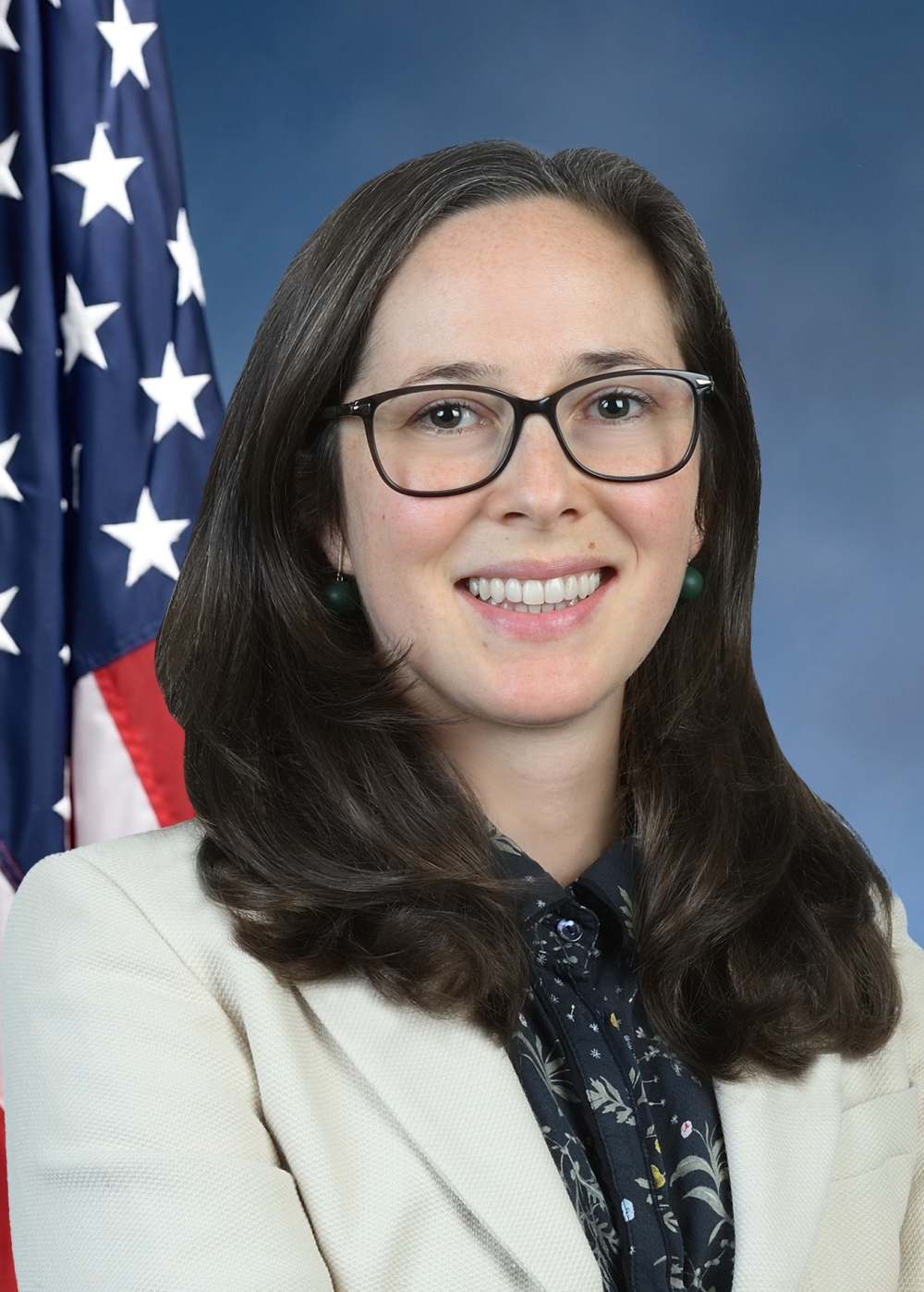
Asm. Rebecca Kassay
Sponsored bills
Maddy summaryThis bill requires utility companies and contractors to provide detailed electronic records identifying pole attachments, including equipment owners, contractors, work dates, and safety compliance details. It creates an online public complaint system for reporting unsafe attachments, equipment hazards, or violations of safety standards like the National Electrical Safety Code. The commission must investigate complaints within two weeks and can issue fines up to $20,000 for first violations, $50,000 for second violations, or stop-work orders for third violations. The law directly affects utility providers, telecom companies, and contractors working on utility poles, aiming to improve public safety and accountability through standardized reporting and enforcement.

Relates to rechargeable battery recycling; adds a battery used as the principal electric power source for an electric scooter or bicycle with electric assist to the definition of "rechargeable battery"; provides that a battery manufacturer may not sell, offer for sale, or distribute rechargeable batteries in the state unless the battery manufacturer is implementing or participating under an approved plan; allows a city with a population of one million or more to enforce through its own agencies.
Relates to authorizing and regulating the use of electronic bell jar vending machines; requires responsible placement and operation of electronic bell jar vending machines; allows for geographic considerations for such machine placement.
Maddy summaryThis bill, the "Responsible AI Safety and Education Act" (RAISE Act), regulates large artificial intelligence (AI) developers who train or use "frontier models" - defined as models requiring over $100 million in computing costs or 10^26 computational operations. It directly affects commercial AI companies (excluding academic researchers) by requiring them to implement safety protocols, conduct risk testing, and report incidents like unauthorized model access or misuse. Key provisions mandate documented safety measures to prevent "critical harm" (defined as serious injury to 100+ people or $1 billion+ in property damage), with remedies for violations. The law also creates specific definitions for terms like "frontier model," "safety incident," and "knowledge distillation" (modified AI models), ensuring clarity for compliance.
Provides for certain victim statements to be taken at their workplace instead of the police department where such workplace was the scene of the crime and is a hospital, emergency medical facility, nursing home or residential health care facility.
Authorizes the commissioner of education to conduct a survey regarding instruction on Asian American, Native Hawaiians and Pacific Islander history within the state; establishes an Asian American, Native Hawaiians and Pacific Islander history advisory committee; provides for the repeal of such provisions upon the expiration thereof.
Permits an eligible retirement system member to receive, in lieu of an ordinary death benefit, a death benefit such member would otherwise be entitled to receive provided such member is a state-paid judge or justice of the unified court system or a housing judge of the civil court of the city of New York.
Directs the state university trustees, without any public bidding, to lease and otherwise contract to make a portion of the lands of SUNY Stony Brook on its campus to the Stony Brook Housing Development Corp. for the purpose of building undergraduate student, graduate student, faculty and staff housing; limits such lease to a period not exceeding 100 years.
Requires the department of health to publish a report on the incidence of tick-borne illnesses annually on the department's website; requires the department to submit an annual report to the governor and the leaders of the legislature; requires the superintendent of financial services to review the status of health insurance coverage for the treatment of Lyme disease and other tick-borne related diseases and to submit a report to the governor and the leaders of the legislature.