

Enacts the "just energy transition act"; creates the just energy transition task force; requires a study of competitive options to facilitate the phase-out, replacement and redevelopment of New York state's oldest and most-polluting fossil-fueled power generation facilities and their sites by the year 2040.
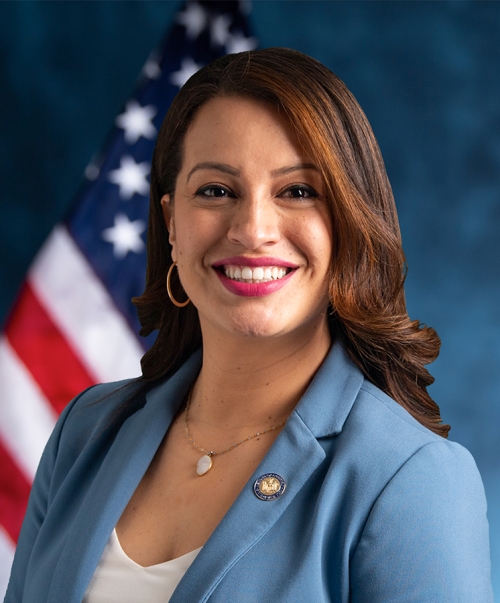
Asm. Catalina Cruz
Sponsored bills
Permits the state board of elections to join certain multistate voter list maintenance organizations and provide such organizations with certain voter information; requires the state to join a multistate voter list maintenance organization on or before July 31, 2025.
Relates to notifying candidates of designation for certain county committees; requires the board of elections of the city of New York to provide notice to each candidate designated in a petition for election to a party position of a county committee located within the city of New York.
Establishes the biometric privacy act; requires private entities in possession of biometric identifiers or biometric information to develop a written policy establishing a retention schedule and guidelines for permanently destroying biometric identifiers and biometric information when the initial purpose for collecting or obtaining such identifiers or information has been satisfied or within three years of the individual's last interaction with the private entity, whichever occurs first.
Prohibits health care practitioners from performing a virginity examination or supervising the performance of a virginity examination on a patient; defines "virginity examination".
Maddy summaryThis bill requires New York state agencies that collect demographic data to create separate categories for White, Middle Eastern, and North African populations. It mandates that these groups be listed individually, including specific nationalities like Egyptian, Iranian, and Palestinian, while also allowing respondents to select multiple categories. Agencies must publish this updated data online by December 2025, with certain departments given an additional year to comply. The law applies to all relevant state entities except for labor, criminal justice, mental health, and disability assistance offices, which are exempt until two years after the bill becomes effective.
Maddy summaryThis bill requires all general hospitals to create violence prevention programs that align with federal and accrediting organization standards. Larger hospitals in cities or counties with over one million people must have an off-duty law enforcement officer or trained security staff present in the emergency department at all times. Smaller hospitals must also maintain security presence near the emergency department, though critical access, sole community, and rural emergency hospitals are exempt unless they report increased violence, in which case they must eventually comply. The law will take effect approximately 280 days after it is passed.
Allocates the Amistad commission to work alongside the department of education and on behalf of students in the state; repeals certain provisions relating to the Amistad commission; requires schools in the state to provide curriculum relating to Black history, slavery, and race.
Requires that every court, and every public board, commission, institution, or officer having powers or charged with duties in relation to abandoned, delinquent, destitute, neglected or dependent children who shall receive, accept or commit any child shall provide and keep a record showing if such child has a developmental disability; requires a study of the number of children in foster care who have a developmental disability.
Maddy summaryThis bill restricts the presence of specific chemicals in menstrual products sold or distributed within the state. It defines "restricted substances" to include items like lead, mercury, formaldehyde, and various phthalates, prohibiting their use as intentionally added ingredients starting on the effective date. The law also establishes a timeline for setting lower safety thresholds for these chemicals, requiring the Department of Health to propose regulations within a year and review them every five years. Manufacturers of tampons, pads, cups, and other menstrual hygiene products must comply with these limits to sell their goods in the state.