

Maddy summaryThis bill directs New York's education commissioner to create a statewide pilot program improving social and emotional learning (SEL) in schools, requiring every school district to implement it in at least one school within 12 months. The program must use pre-tested SEL curricula meeting specific standards (including evidence from federal clearinghouses and community service components) and be delivered through approved community organizations. All participating schools must integrate SEL into lessons or standalone classes for students from pre-K through 12th grade. The program will be evaluated by the state education department, with a final report due by July 2029, and is funded through state appropriations with an expiration date of August 2029.
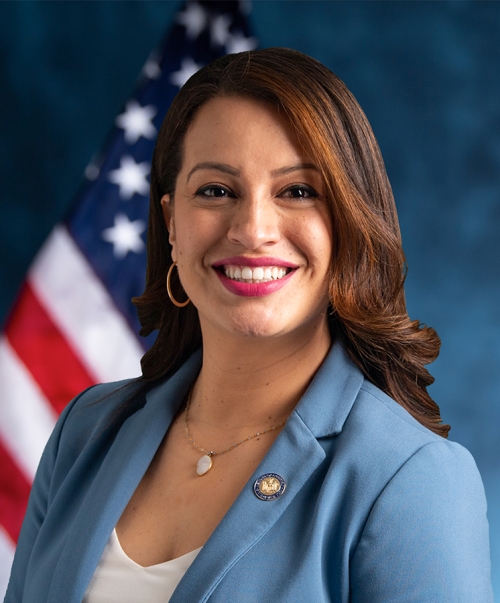
Asm. Catalina Cruz
Sponsored bills
Extends the statute of limitations of actions related to certain sex trafficking offenses, reviving such actions otherwise barred by the existing statute of limitations; grants trial preference to such actions; exempts such actions from certain provisions requiring notice of claims.
Maddy summaryThis bill requires insurance companies to cover at least 90 days of rehabilitation services at a facility when a doctor prescribes it. It directly affects insured individuals needing post-illness or injury rehabilitation, ensuring they receive extended coverage without arbitrary limits. The key provision mandates that new or renewed insurance policies include this 90-day coverage, contingent on a doctor's referral. The law takes effect 90 days after enactment and applies to policies issued after that date.
Establishes a tax credit for food service establishment donations to food pantries, in the amount of fifty percent of the marketed value of each of the taxpayer's qualified donations up to six dollars per qualified donation, beginning with the 2027 tax year.
Relates to residency requirements for police officers in a city with a population of one million or more; provides that any person appointed as a paid member of the police force of such city shall become a resident of any political subdivision or municipal corporation within such city within one year of their appointment and shall continue to reside within any political subdivision or municipal corporation.
Relates to establishing the crime of coercive control; provides that a person is guilty of coercive control when such person engages in a course of conduct against a member of such person's same family or household, without the victim's consent, which results in limiting or restricting, in full or in part, the victim's behavior, movement, associations or access to or use of such victim's own finances or financial information; provides that coercive control is a class E felony.
Maddy summaryThis New York bill prohibits law enforcement officers and agencies from using cell-site simulators - devices that mimic cell towers to track phones without consent. It directly affects law enforcement (including police officers and agencies) and individuals whose phone data might be collected through these devices. Key provisions ban the use, acquisition, or third-party agreements involving such technology, require illegally obtained evidence to be suppressed in court, and allow affected individuals to sue for up to $5,000 per violation or actual damages. The law also permits class-action lawsuits and awards legal fees to successful plaintiffs.
Relates to claims for unjust conviction and imprisonment and the availability of certain benefits and entitlements to exonerees; allows for sealing of records, payment of awards and payment of attorney's fees; repeals certain provisions relating thereto.
Requires that in civil claims under the child victims act, adult survivors act, or a civil sex trafficking claim any insurer who may provide liability coverage for a claim shall, upon request from the claimant or claimant's attorney, provide information regarding each known policy of insurance; provides that a person bringing a civil claim in a sex trafficking case need not disclose their immigration status.
Clarifies the right of publicity including the definitions of who and what qualifies as a digital replica; provides guidance as to digital replicas that do not violate an individual or deceased individual's right to publicity; expands the statute of limitations for an action brought for violating an individual's right to publicity.