

Enacts the "ratepayer disclosure and transparency act" which requires a monthly report that includes the estimated or actual ratepayer costs and benefits of any mandated state energy program to the governor and legislature including any New York climate leadership and community protection act compliance costs.
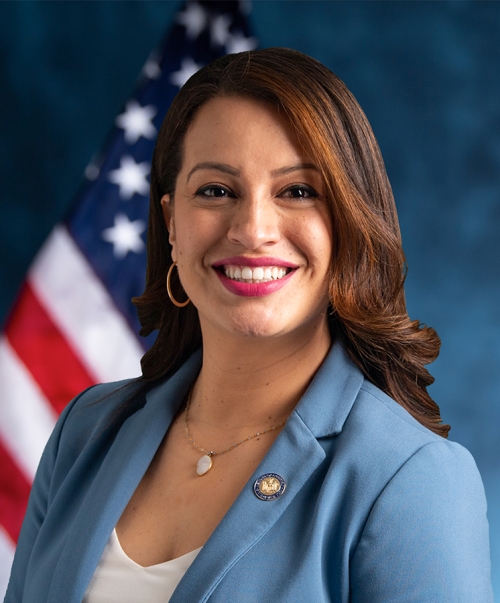
Asm. Catalina Cruz
Sponsored bills
Relates to a state transportation plan; requires such plan include a minimum twenty-year forecast period at the time of adoption, assessing long-range needs spanning such period, including a forecast of highway pavement and bridge conditions.
Maddy summaryThis bill caps security deposits for residential leases of one year or longer at one month's rent. Landlords cannot charge more than this amount, and additional move-in fees (like pet fees or background checks) must be included within that limit - pet fees max at 25% of the total deposit, other fees at 10%. Most fees must be refundable to tenants, with pet-related fees only retained for cleaning or pet-caused damage after move-out. Violations carry civil fines up to 15% of the annual rent. The bill directly affects landlords and tenants in long-term residential leases.
Relates to the right of defendants in misdemeanor or felony cases to have such matter appear before a judge or justice admitted to practice law in New York; creates an automatic right to have a case reassigned to an attorney judge.
Requires employers of retail, food service or cleaning employees to give such employees 7 days' notice of their work schedule and a month's notice of the minimum hours of work; provides a private right of action to employees who are aggrieved by certain violations of such provisions.
Maddy summaryThis bill requires employers to pay minimum wage for any time over one hour during a split shift when an employee is not working (e.g., during a long break between work periods). It directly affects hourly workers with split shifts, such as those working morning and afternoon shifts with an extended unpaid break. The key provision mandates that this non-working time be counted as "worked" time for minimum wage purposes, ensuring pay for the full duration of the shift. The bill is pending in the Labor Committee and has not yet become law.
Maddy summaryThis bill limits health care workers, including nurses and unlicensed assistive personnel, to their regularly scheduled work hours without mandatory overtime. Exceptions allow longer shifts only during declared emergencies (like natural disasters or public health crises), federal/state emergency declarations, or when completing an ongoing medical/surgical procedure. It specifically excludes doctors, residents, and security staff from this definition. The law aims to protect patient safety by preventing excessive staff fatigue through concrete scheduling limits. Employers cannot use on-call time to bypass these restrictions.
Maddy summaryThis bill creates a dedicated state fund to research installing suicide barriers on bridges. The fund, managed by the state comptroller and tax commissioner, can only be used to study how to add barriers when building new bridges or replacing existing bridges that have had suicide attempts. It does not require barrier installation, only research into the feasibility and design of such barriers for specific bridge projects. The bill directly affects state bridge planning processes for projects involving bridges with documented suicide histories.
Relates to the oversight of immigration detention facilities; prohibits municipalities from using funds or resources for the construction of any new detention facility or the expansion of any existing detention facility without approval by the legislature; establishes a committee on immigration detention oversight.
Maddy summaryThis bill modifies New York's social services law to provide targeted assistance for people with medically diagnosed HIV infection. It requires social services districts to ensure individuals with HIV who are homeless or facing homelessness pay no more than 30% of their income toward rent, and to provide emergency shelter, transportation, or nutrition assistance when needed to maintain independent living. The bill also mandates districts to help with eligibility documentation, arrange home visits for interviews, and refer to specialized resources, while creating a statewide online resource hub for HIV-related services. Funding rules are updated to allow full reimbursement for HIV-related emergency shelter costs (up to 110% of fair market rent) and necessary transportation/nutrition payments. The policy directly affects low-income New Yorkers living with HIV who face housing instability.