

Maddy summaryThis bill allows eligible voters to register to vote and cast a ballot on the same day at any early voting or election day polling location in New York. It establishes "conditional voter registration" where voters complete an affidavit at the polling place, which becomes effective after election officials verify their eligibility and match their information to state or federal databases (like DMV or Social Security records). If verification fails, voters may still receive a temporary voter ID to cast a ballot. The bill directly affects constitutionally-qualified voters who wish to register and vote simultaneously on election day without prior registration.
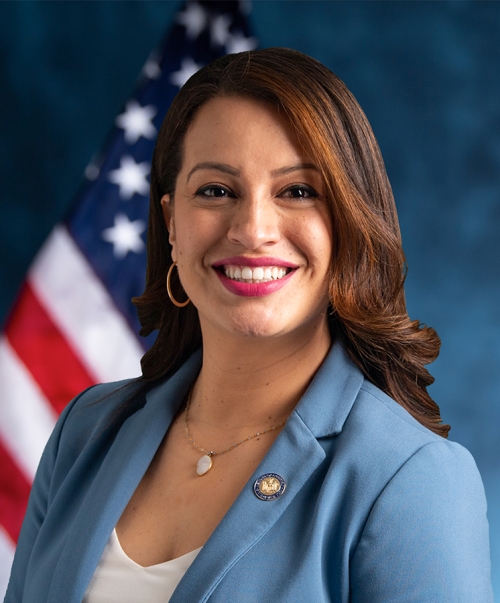
Asm. Catalina Cruz
Sponsored bills
Maddy summaryThis bill creates a new Office of Urban Agriculture within the state Department of Agriculture. It defines urban agriculture broadly to include community gardens, urban farms, farmers markets, and community-supported agriculture. The office's key duty is to identify vacant public lands in cities and suburbs and help communities access them for food production through coordination with municipalities and state agencies. This directly affects urban residents seeking affordable fresh food, community groups wanting to establish gardens, and local governments managing public land. The policy change establishes a formal state mechanism to support city-based food systems.
Enacts the building up immigrant legal defense or BUILD act to provide competitive workforce development and capacity building grants to eligible entities that are seeking to expand access to representation for individuals facing deportation by increasing the workforce and strengthening the legal services infrastructure needed to provide such representation.
Maddy summaryThis New York State bill allows for advance payments of the Earned Income Tax Credit (EITC) to qualifying low-income workers, replacing the current system where refunds are issued after annual tax filing. Eligible workers - including those aged 19 or older (down from 25) and without children - will receive four payments: three during the year (20% of the expected credit) and one adjusted payment after the tax year ends. The bill also increases the credit percentage for 2027 and later years (up to 40%), raises the income threshold for phaseout to $24,960 (from $11,610), and includes annual inflation adjustments. Payments will be delivered via direct deposit or electronic benefit transfer (EBT) card.
Maddy summaryThis bill (A 320) clarifies how interest is calculated and recovered in civil court cases where a plaintiff wins a monetary award. It directly affects individuals and businesses winning cases involving contract breaches, property disputes, or bodily injury. Key changes require courts to specify the exact date interest starts accruing in verdicts (typically the date of injury for bodily harm cases) and mandate that courts or clerks compute the interest amount up to the verdict date. The bill standardizes these procedures without altering the types of cases where interest applies.
Maddy summaryThis bill amends New York's penal law to make it a crime to intentionally remove or tamper with a sexually protective device (like a condom or diaphragm) without consent during agreed-upon sexual activity, or to knowingly use a tampered device. It specifically prohibits three actions: removing protection without consent during sex, using a device known to be tampered with, or lying about using protection when none was used or it was ineffective. The law directly affects individuals engaging in sexual activity where protection was mutually agreed upon but compromised without consent. It defines "sexually protective device" to include common items like condoms, spermicide, and dental dams. The bill would take effect November 1, 2025, if passed.
Maddy summaryThis bill designates August 31st of every year as "Overdose Awareness Day" in New York State. It adds this date to the existing list of official commemorative days in the executive law, alongside other observances like Juneteenth and Holocaust Remembrance Day. The bill does not create new policies, funding, or requirements - it simply establishes an annual day of remembrance focused on overdose prevention and awareness. This designation directly affects New York State residents and government entities, which may choose to recognize the day through official proclamations or events. The change takes effect immediately upon enactment.
Maddy summaryThis bill allows retired members of New York state retirement systems to change their designated beneficiary if that beneficiary has been convicted of a family offense (as defined in state law) and the retired member was the complainant in the case. Retired members have 180 days from the beneficiary's conviction date to submit a written request to the retirement system to make this change. Once received, the retirement system will update the beneficiary or recalculate benefits accordingly. The comptroller must notify retired members about this provision and can create rules to implement it, working with domestic violence and criminal justice agencies.
Maddy summaryThis bill requires all public schools with 100 or more enrolled students to have a registered professional nurse physically present on-site during all school hours. It amends education law to mandate that school boards ensure this nurse is available to assist with student health needs, including emergencies and health instruction. The requirement directly affects schools meeting the enrollment threshold, ensuring consistent health support for students during school days.
Maddy summaryThis bill prohibits all law enforcement agencies from using chemical incapacitants (like tear gas or similar agents) except for pepper spray under strict limits. Specifically, pepper spray is restricted to liquid canisters no larger than 0.75 ounces and cannot be used for crowd control. The law defines "law enforcement agency" broadly to include any unit authorized to investigate or arrest for felonies, and "chemical incapacitant" to cover toxic chemicals, munitions designed to cause harm, and related equipment. This directly affects all state and local law enforcement agencies by restricting their use of chemical agents during operations.