

Maddy summaryThis bill prohibits involuntary servitude and forced labor in all New York state and local correctional facilities, directly affecting incarcerated individuals. It amends the Civil Rights Law to explicitly ban slavery, involuntary servitude, and forced labor for all people in New York - including those convicted of crimes - and adds a new Correction Law section prohibiting any labor compelled through force, threats, or adverse actions (like disciplinary measures). The law makes it illegal for facilities to require labor against an individual's will using coercion or fear of punishment. This represents a concrete legal change to end forced labor practices within New York's prison system.
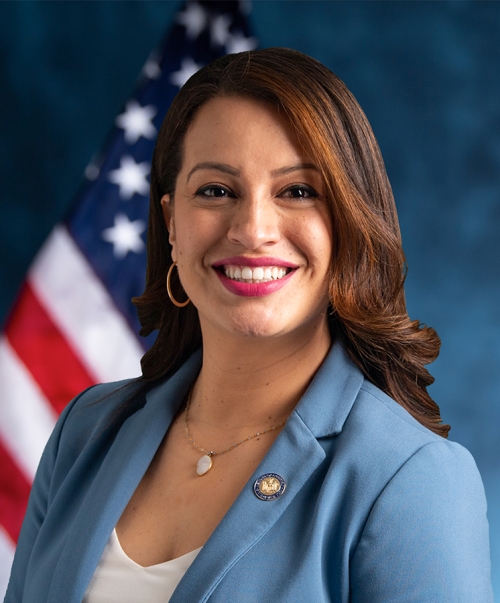
Asm. Catalina Cruz
Sponsored bills
Directs local law enforcement agencies in municipalities authorizing an auxiliary police force by local law to provide retirement service identification cards to auxiliary police officers who retire with 10 or more years of service or who are injured in the course of duty and unable to continue duty due to such injury.
Maddy summaryThis bill eliminates asset limits for households receiving public assistance benefits, meaning savings, property, and other assets will no longer reduce eligibility or benefit amounts. It directly affects households enrolled in programs like food assistance, cash aid, or medical assistance by removing previous restrictions (e.g., $2,500 cash limit for applicants). Key provisions replace specific dollar thresholds with a general exemption for all assets, while retaining limited exemptions for homes, one vehicle, burial plots, and education funds. The change aligns with federal requirements and ensures benefits are calculated without penalizing households for holding assets.
Relates to the purchase of zero-emission buses and the procurement of electric-powered buses, vehicles or other related equipment and infrastructure; requires public utilities to have infrastructure, capacity, facilities, and transmission and distribution systems needed to supply power for the charging of zero-emission buses and provides a tariff for charging of electric buses.
Establishes the child and family well-being program and fund for the distribution of grants to eligible nonprofit community-based providers to respond to children's and families' needs in communities.
Creates the "disaster preparedness and emergency planning act"; authorizes a local sales tax exemption for emergency preparedness supplies; requires the division of homeland security and emergency services, in conjunction with the department of taxation and finance, to establish, promote and publish on the web a list of eligible items; requires the division of homeland security and emergency services to create public service announcements regarding such exemption and make available to municipalities for promotion purposes.
Authorizes the commissioner of health to withhold reimbursements from medical assistance programs to retail entities who decline to make available, dispense, distribute, or sell a product approved by the federal government which would block, prevent, or otherwise negate a pregnancy in any jurisdiction within and subject to such federal government.
Maddy summaryThis bill increases the standard fee that New York notaries public can charge for common services from $2 to $5 per transaction. It directly affects notaries by raising fees for administering oaths, certifying acknowledgments of documents, and swearing witnesses. The key provision updates Section 136 of the executive law to replace all instances of "$2" with "$5" for these specific notarial acts. Electronic notarial services are excluded from this change and will continue to be regulated separately. The bill takes effect immediately upon enactment.
Maddy summaryThis bill creates a new civil lawsuit pathway for individuals whose constitutional or federal rights were violated by government actors (such as police, courts, or public officials). It allows victims to sue for damages and court-ordered remedies, removes common defenses like "I thought it was legal," and requires courts to award attorney fees to winning plaintiffs - even if the case settles without a formal judgment. Public entities (like cities or state agencies) must cover their employees' legal costs if sued under this law, and lawsuits must be filed within three years of the violation. It directly affects people harmed by government overreach, ensuring they have a clear legal route to seek redress for rights violations.
Includes additional community districts in which pilot programs to address the legalization or conversion of certain basement and cellar dwellings can be established by local law.