

Maddy summaryThis bill (A 1471, the "Tiarah Poyau Act") amends criminal procedure law to allow courts to provide juries with written instructions about the legal elements of offenses or defenses when requested during deliberations. It requires courts to give written instructions only after letting defense and prosecution attorneys review them, mark them as exhibits, and read them to the jury. The bill directly affects juries and judges in criminal trials by changing how juries can seek clarification on legal standards. It does not alter trial procedures but adds a specific mechanism for written jury instruction requests with safeguards for legal review.
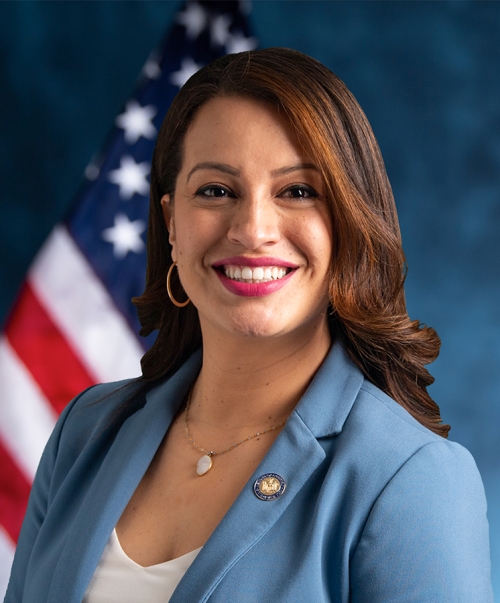
Asm. Catalina Cruz
Sponsored bills
Maddy summaryThis bill increases criminal penalties for damaging property or stealing items at religious worship sites and cemeteries. It makes damaging religious items (like scrolls, vestments, or religious symbols) at churches, synagogues, or religious museums a class D felony, and upgrades cemetery vandalism or theft (e.g., headstones, monuments) to higher felony levels based on value. Offenders face harsher punishments for targeting these specific locations, including theft exceeding $250 at cemeteries or damage exceeding $2,000 at religious sites. The law directly affects individuals who commit these acts at protected locations, with penalties now reflecting the heightened seriousness of targeting sacred or memorial spaces.
Maddy summaryThis bill amends New York's public assistance eligibility rules to streamline determinations and clarify household composition. It requires annual adjustments to income thresholds using federal poverty guidelines (e.g., a three-person NYC household without special needs becomes ineligible at the federal poverty level), and allows caregivers to exclude children's unearned income from household calculations. It also clarifies that parents must apply with minor children seeking aid unless excluded, while updating asset exemptions like vehicle value limits (up to $12,000 for 2018+) and tuition savings accounts. These changes directly affect low-income households applying for state assistance programs, particularly those with children.
Maddy summaryThis bill requires real estate brokers in New York to provide buyers with a written "buyer broker agreement" before acting as their agent. The agreement must clearly disclose that compensation is negotiable and include details about payment terms, agency relationships, and any potential shared compensation. It directly affects homebuyers and real estate brokers during residential property transactions. Brokers must retain signed copies for three years, ensuring transparency about how agents are paid for their services.
Moves from the Office of Court Administration (OCA) to the Division of Criminal Justice Services (DCJS) responsibility for certifying, establishing and implementing standards for pretrial services agencies of the state.
Enacts the solar for schools act which provides grants for eligible school districts to purchase and install solar and geothermal power sources; defines terms; directs the New York state energy and research development authority to establish such grant program; provides for the repeal of such provisions upon the expiration thereof; makes an appropriation therefor.
Relates to creating a separate tax on inheritance income, creating a separate tax on gift income, the computation of the estate tax, and creating a gift tax.
Maddy summaryThis bill removes a lifetime ban preventing people convicted of felonies from serving on juries. It amends state law to no longer disqualify individuals based on past felony convictions, meaning former felons could be summoned for jury duty. However, it maintains that people currently incarcerated for felonies remain excused from service while in prison. The law would take effect 180 days after enactment.
Prohibits the diminution of health insurance benefits of public employee retirees and their dependents or reducing the employer's contributions for such insurance; defines employers to include the state, municipalities, school districts, and public authorities and commissions.
Maddy summaryThis bill limits out-of-pocket costs for physical and occupational therapy by capping co-payments at 20% of the total reimbursement paid to the provider. It directly affects insured individuals who use these services under group health, accident, or health insurance plans. The key provision requires all such policies to comply with the 20% co-payment limit, regardless of whether therapy is provided by a physician or a licensed therapist. This applies to services covered under physician referrals and replaces previous higher co-payment thresholds.