

Establishes the "accountability of costs for data centers act"; requires each electric corporation, gas corporation and municipality to establish an independent classification of service for large energy use facilities that is separate and distinct from other classifications of service; authorizes the department of public service to develop financial surety requirements.
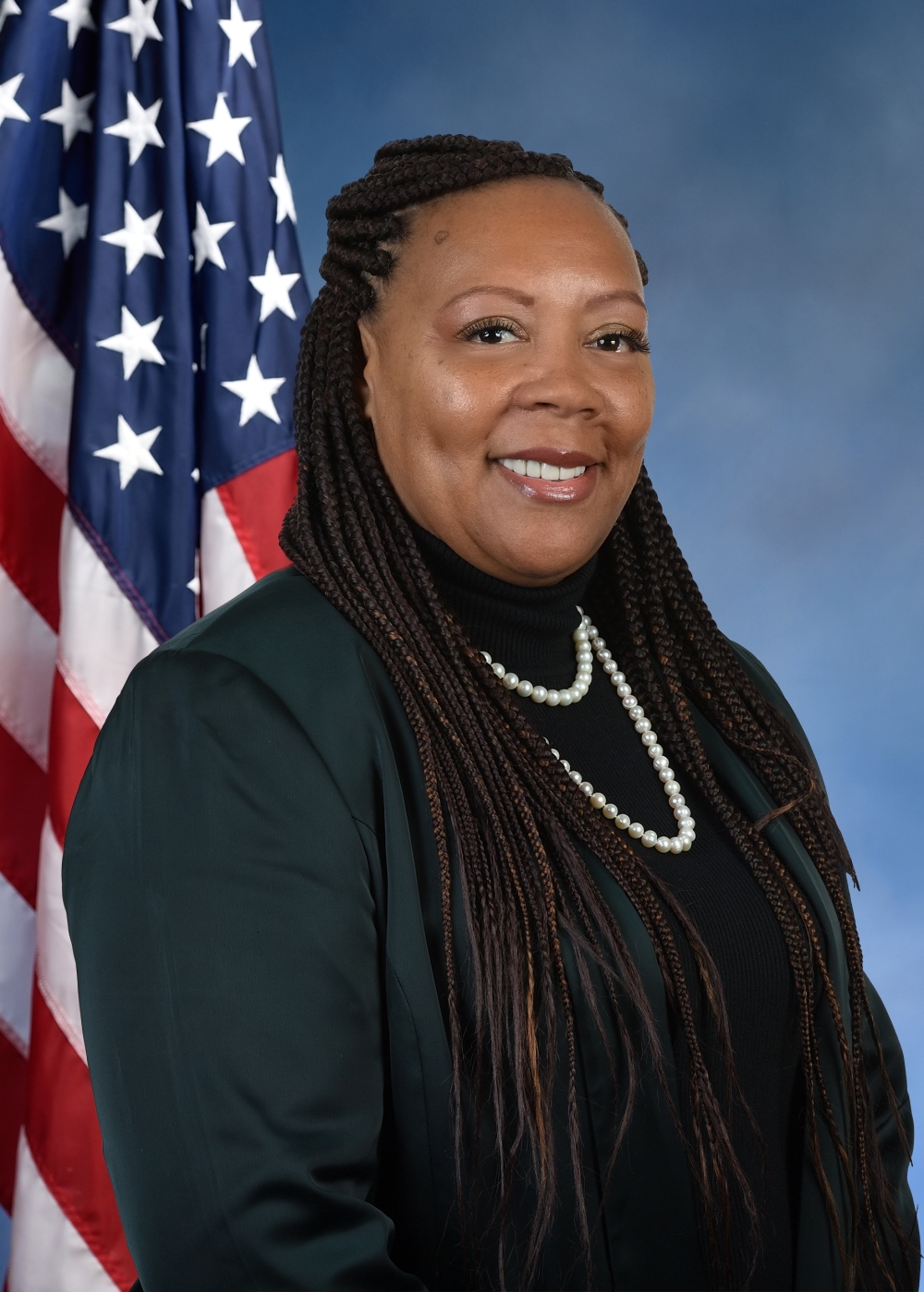
Asm. Larinda Hooks
Sponsored bills
Authorizes, under certain circumstances, full-time college and university students to act as election inspectors and poll clerks in the election district where their college or university is located.
Provides for the sealing of unfounded, exonerated, and pending claims made against law enforcement officers; requires such claims to be redacted from disciplinary records.
Requires every franchisor, including its affiliates and subsidiaries to properly fulfill any warranty agreement and/or franchisor's service contract and to compensate each of its franchised motor vehicle dealers for warranty parts and labor, including but not limited to all warranty repairs, extended service contract repairs, extended warranty repairs, campaigns, service bulletins, policy repairs, component part warranties, factory compensated repairs, recalls, diagnostics, parts and other voluntary stop-sell repairs, and any other franchisor compensated repairs; relates to reimbursement to a motor vehicle dealer from a motor vehicle franchisor.
Maddy summaryThis bill allows individuals with child protective services (CPS) records to request a second hearing to seal those records after two years, provided they demonstrate a significant life change (such as completing substance abuse treatment, parenting classes, or mental health services) and have no recent history of child maltreatment. It directly affects people who previously had CPS involvement and completed rehabilitation services. The key provision requires submitting evidence of these life changes to the Office of Children and Family Services, with the second hearing request only permitted two years after the first hearing. The bill does not change existing sealing eligibility but adds this second opportunity under specific conditions.
Relates to commissaries and canteens at correctional institutions; provides that items for sale at a commissary or canteen shall be sold for no more than a certain percentage over the purchase price; provides that the department of corrections and community supervisions shall publish on its website the price list for all commissary items for sale at each institution as of June 1, 2026 and on an annual basis thereafter.
Maddy summaryThis bill establishes the "expanded pharmaceutical insurance coverage panel" within New York's executive department to broaden access to prescription drug coverage. The panel, composed of state agency leaders (including health, aging, and budget officials), will set cost-sharing rules, develop outreach programs for eligible residents, and report annually on enrollment and program costs. It directly affects elderly and low-income New York residents by expanding access to state and federal prescription drug benefits. The panel will operate without member compensation, focusing on improving coverage efficiency and informing applicants about available benefits.
Maddy summaryThis bill increases civil penalties for employers violating New York's child labor laws. Penalties rise to up to $3,000 for a first violation, $5,000 for a second, and $10,000 for third or subsequent violations. Crucially, if a minor is seriously injured (defined as permanent disability) or dies due to a violation, penalties triple to up to $30,000. The law directly affects employers who break child labor rules, with penalties paid to the state treasury.
Maddy summaryThis bill requires New York's Department of Public Health to annually report on food security trends at the county level. It directs the department to include the USDA's standard six-item food security survey in its existing health tracking system and publicly post the results online each year. The law directly affects New York residents by creating a state-level tracking system to monitor food insecurity, replacing the discontinued federal USDA report. This provides lawmakers and community organizations with updated, localized data to inform decisions about nutrition assistance programs and resource allocation.
Regulates the development and use of certain artificial intelligence systems to prevent algorithmic discrimination; requires independent audits of high risk AI systems; provides for enforcement by the attorney general.