

Eliminates court surcharges and fees and probation and parole surcharges and fees; eliminates the requirement that a parolee or releasee receiving a merit termination of sentence be financially able to comply with an order of restitution; eliminates the requirement that a person receiving a discharge of sentence be financially able to comply with an order of restitution and the payment of certain surcharges or fees (Part A); prohibits mandatory minimum fines for penal law and vehicle and traffic offenses (Part B); mandates that courts engage in an individualized assessment of a person's financial ability to pay a fine prior to imposing a fine (Part C); eliminates the availability of incarceration as a remedy for a failure to pay a fine, surcharge, or fee, lifts and vacates existing warrants issued solely on a person's failure to timely pay a fine, surcharge or fee and ends existing sentences of incarceration based on such failure (Part D); vacates existing unsatisfied civil judgments based on a person's failure to timely pay a surcharge, or fee (Part E); prohibits the collection of a fine, restitution or reparation from the funds of an incarcerated person; prohibits the payment of court fines, mandatory surcharges, certain fees, restitution, reparation or forfeitures from the earnings of prisoners (Part F); vacates existing unpaid surcharges, DNA databank fees, crime victim assistance fees, sexual offender registration fees, supplemental sex offender victim fees, or probation or parole supervision fees; repeals certain provisions of law relating to restrictions on remitting such fees (Part G).
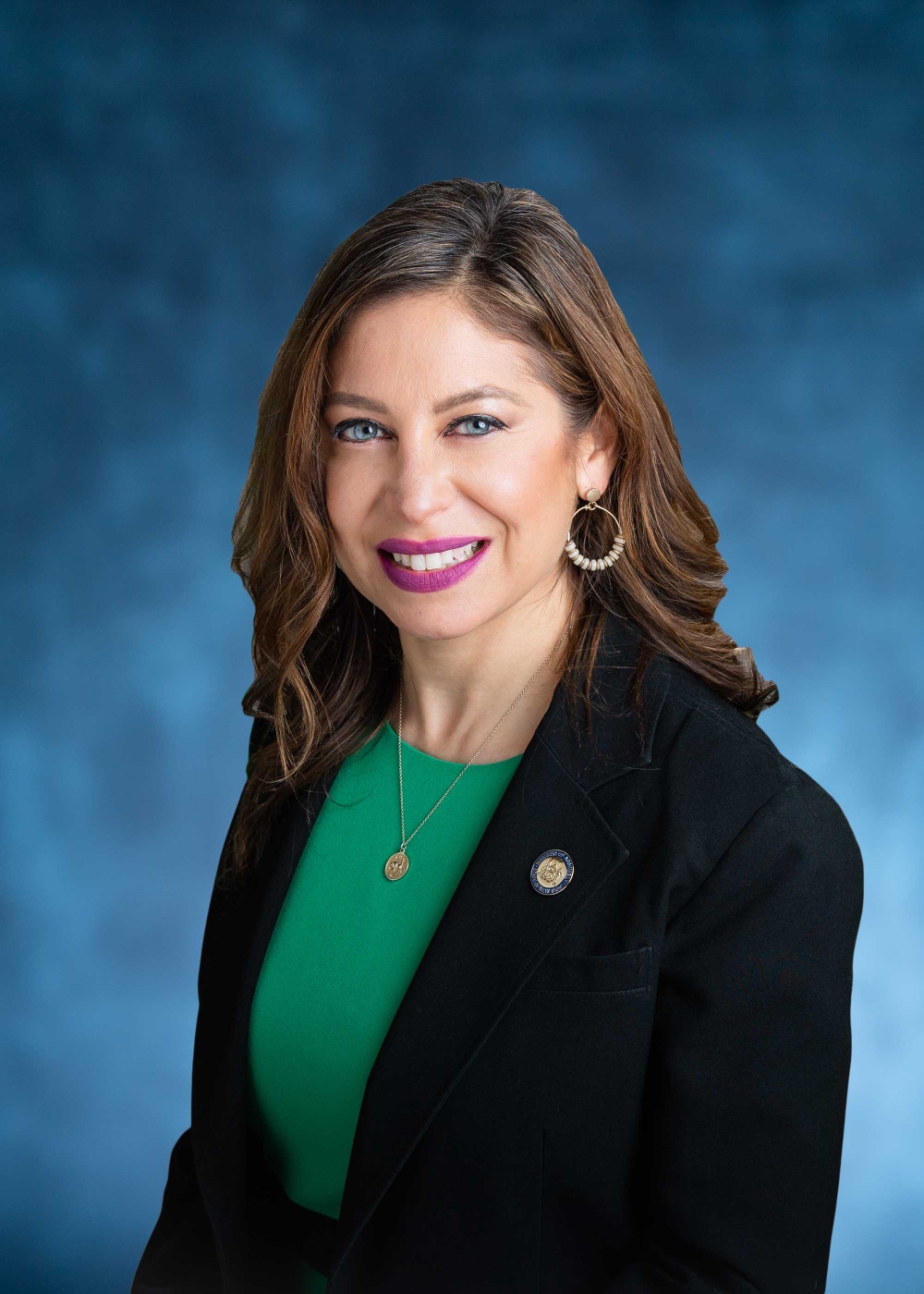
Asm. Jessica González-Rojas
Sponsored bills
Establishes a reproductive health services training and education grant program to ensure health care providers receive adequate training in abortion care.
Maddy summaryThis bill creates a sales tax exemption for specific school supplies purchased during a defined back-to-school period from late August to early September. The exemption applies to items such as computers under $3,000, art materials, and common classroom essentials like backpacks, notebooks, and pens. It directly benefits students, parents, and schools by reducing the cost of these necessary items when bought within the specified timeframe. The law takes effect immediately upon passage.
Requires the reporting of certain accidents involving vehicles, including electric scooters and bicycles with electric assist; requires reports to include information indicating whether certain accidents involved electric scooters and bicycles with electric assist.
Maddy summaryThis bill requires dealers to register limited use motorcycles at the time of sale within New York State. Under the new rules, these vehicles must be officially registered immediately when purchased from a dealer, rather than waiting for the buyer to handle the process later. The legislation also sets the annual registration fee at $25.50 and mandates that dealers collect a signed declaration from buyers who intend to use the motorcycle exclusively outside of New York. These changes aim to streamline the registration process for specific types of motorcycles while maintaining oversight through dealer involvement.
Requires micromobility devices, mopeds, and bicycles with electric assist to have a red tag attached to the charging cord which states to unplug when not in use.
Maddy summaryThis bill extends the expiration date for regulations governing the licensing of facilities that slaughter animals or poultry from August 2024 to August 2028. The law directly impacts businesses operating these slaughterhouses by allowing them to continue under the current licensing requirements for an additional four years. It is a procedural measure that amends an existing statute to delay the automatic repeal of its provisions, ensuring the rules remain in effect until the new date.
Implements "Cassie's law" which provides a private right of action for crime victims against persons or private entities who suppress evidence of a crime in exchange for monetary compensation.
Maddy summaryThis bill allows attendees at professional and collegiate sporting events to bring their own reusable aluminum or stainless steel bottles and cups into the venue. While venues cannot ban these containers, they are permitted to require that they be empty upon entry, lack a cap, and hold no more than twenty-four fluid ounces. To enforce these rules, the legislation imposes civil penalties of up to $500 for a first violation and $750 for subsequent ones if a venue prohibits allowed containers. The changes would take effect approximately 120 days after the bill becomes law.
Clarifies the standard for intentional discrimination or retaliation claims by requiring a person or persons prove that an unlawful motivation was a motivating factor and not "the sole motivating factor" or a "but-for cause" of the challenged treatment.