

Maddy summaryThis bill requires New York's Commissioner of Health to establish regional minimum hourly reimbursement rates for home care providers serving Medicaid patients. It directly affects home care agencies and providers who employ home care aides, mandating rates that cover all necessary costs - including base wages, benefits, payroll taxes, operational expenses, and compliance costs. The rates must be set regionally based on actual service costs, adjusted annually to reflect labor law changes, and published publicly. Providers must justify any contract rates below these minimums, and the comptroller can audit contracts to ensure adequacy. The goal is to ensure reimbursement rates support fair wages and operational needs for home care workers under Medicaid.
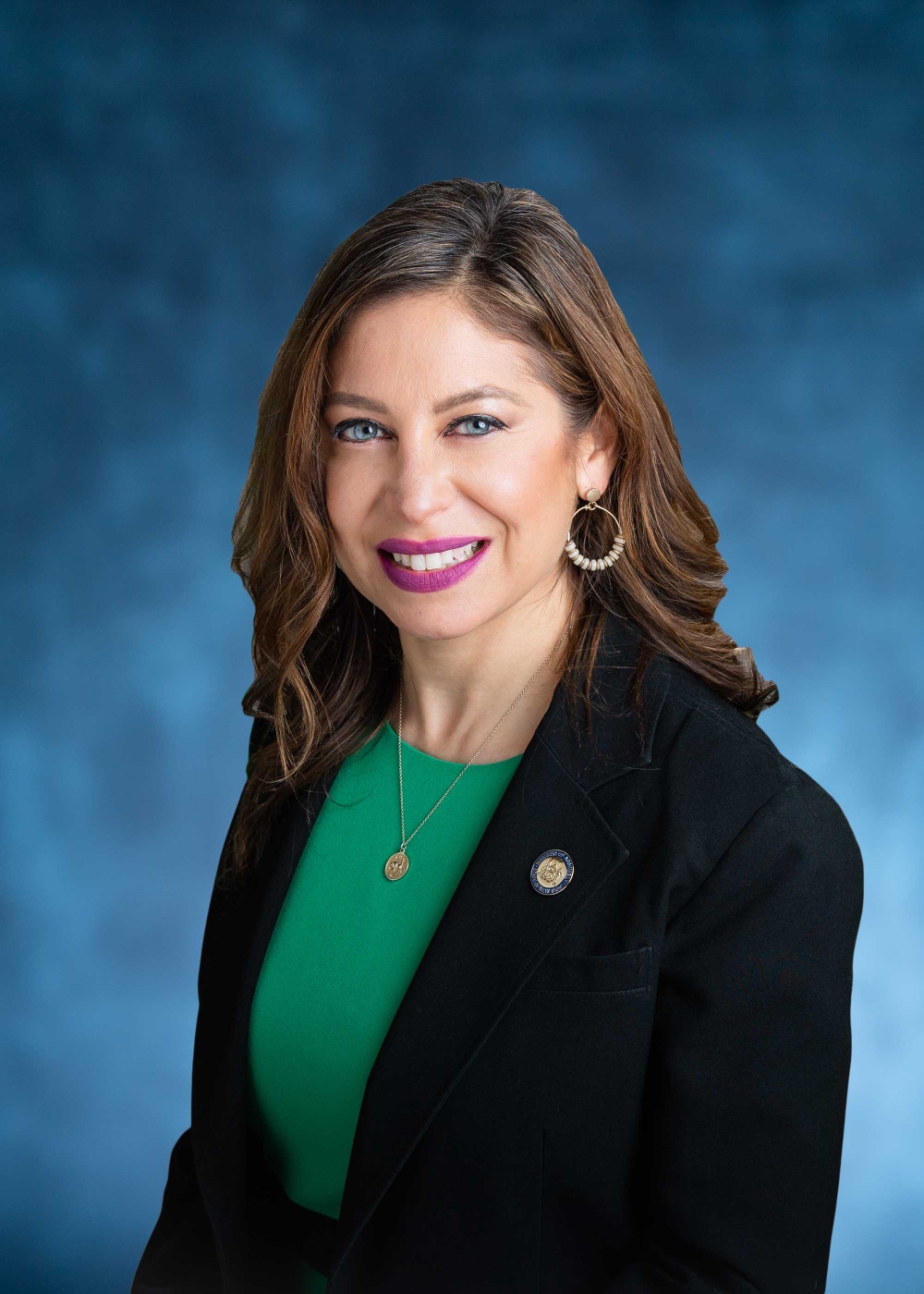
Asm. Jessica González-Rojas
Sponsored bills
Establishes the teachers' fossil fuel divestment act; requires the New York state teachers' retirement system to divest the retirement system of any stocks, securities, equities, assets, or other obligations of corporations or companies included on an exclusion list of coal producers and oil and gas producers.
Enacts the overdose prevention and recovery act; directs that at least twenty percent of funds from the opioid stewardship fund shall be invested in recovery services and supports; requires an annual report to the legislature regarding funds distributed from the opioid stewardship fund; makes the opioid stewardship fund permanent.
Maddy summaryThis bill creates a New York state tax credit for small businesses hiring disabled workers. Small businesses with 100 or fewer employees can claim a $5,000 credit per disabled employee (up to $25,000 per business annually), provided the employee works 35+ hours weekly for six months and the employer verifies the employee meets the statutory disability definition. The credit is capped at $5 million total per year, with unused credits carried forward for up to three years. It directly affects small business employers in New York who hire eligible disabled residents, aiming to incentivize their employment through tax relief.
Maddy summaryThis bill increases fines for violating public health laws. It raises penalties for nursing home and hospital operators from $3,000 to $5,000 per violation, with repeat offenses or violations causing harm now carrying up to $10,000 or $20,000 fines. Excess fines collected beyond $2,000 per violation go to a patient safety center, while nursing home fines over $10,000 fund quality improvement programs for nursing homes. The changes apply directly to healthcare facilities and their operators under New York's public health and social services laws.
Requires continuing teacher and leader education to include courses, programs and activities related to immigrant focused trauma-informed practices to support students who are dealing with adverse childhood or adolescent experiences as a result of immigration status.
Ensures that boards of elections provide adequate notice to each voter before and after a board cancels the voter's registration or places such voter in inactive status.
Authorizes courts to hold evidentiary hearings for a temporary order of protection in certain circumstances; grants superior court judges the authority to issue a temporary order of protection when an action is pending in a local criminal court in certain circumstances.
Maddy summaryThis bill (A 3742) requires all high schools to keep opioid antagonists (like naloxone) available for emergency overdose treatment and to have at least one trained employee present during all school hours and after-school activities. The law mandates schools to acquire the medication, designate a staff member who completed approved training in its use, and ensure that employee oversees storage and administration. It directly affects high schools, students, and staff by establishing a concrete protocol for responding to opioid overdoses on school grounds. The bill takes immediate effect upon enactment and does not include exemptions for school activities.
Maddy summaryThis bill removes specific eligibility restrictions for Medicaid home care services in New York. It repeals a provision requiring individuals seeking home care to meet strict activity-of-daily-living criteria (like needing assistance with multiple tasks) or dementia-related supervision levels. The change directly affects Medicaid recipients needing home care services, particularly those with dementia or Alzheimer's who previously faced these barriers. The policy shift simplifies eligibility by eliminating these prior requirements for people applying on or after October 1, 2020. The bill modifies New York's social services law to broaden access to home care services under Medicaid.