

Maddy summaryThis bill removes a lifetime ban preventing people convicted of felonies from serving on juries. It amends state law to no longer disqualify individuals based on past felony convictions, meaning former felons could be summoned for jury duty. However, it maintains that people currently incarcerated for felonies remain excused from service while in prison. The law would take effect 180 days after enactment.
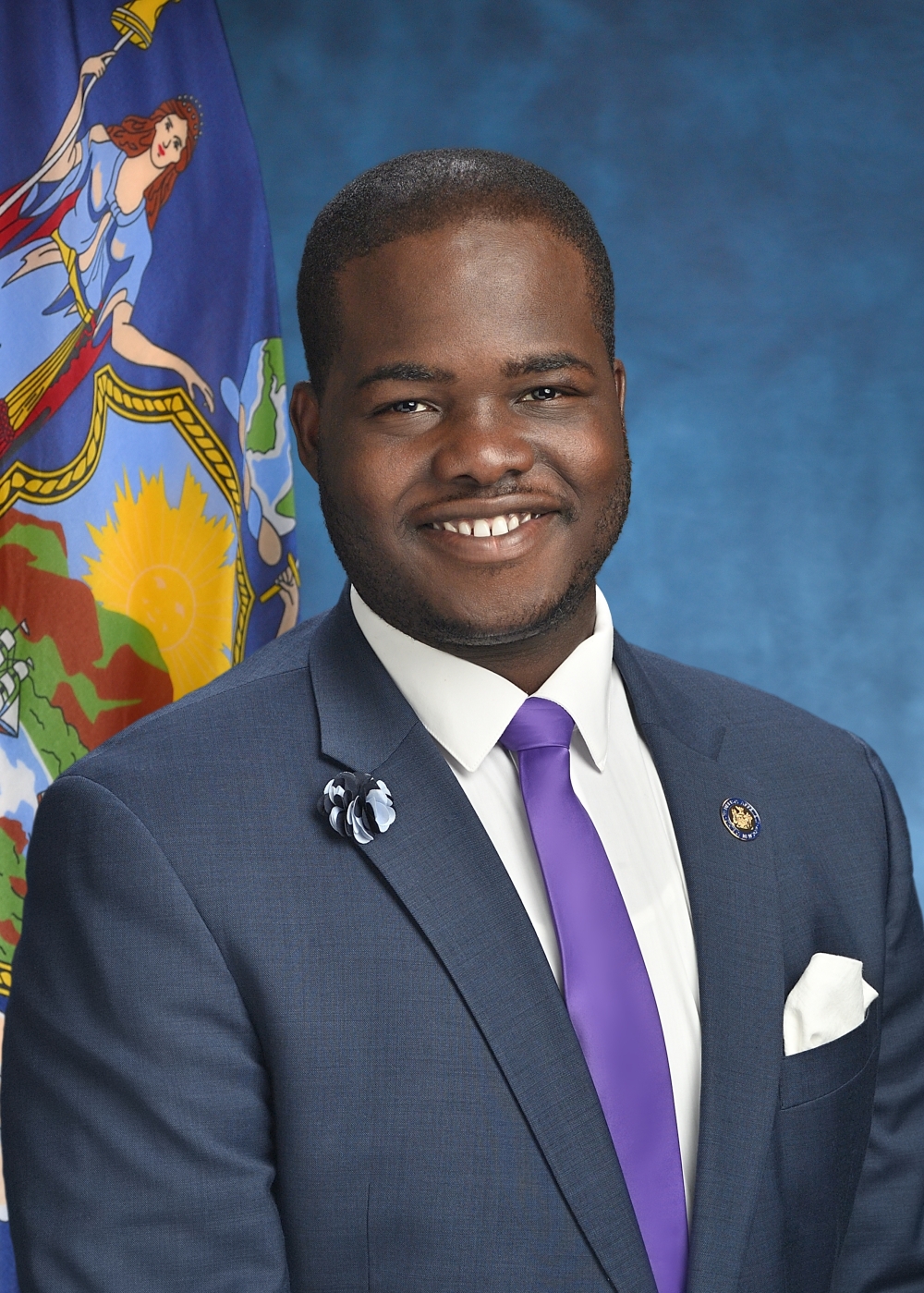
Asm. Khaleel Anderson
Sponsored bills
Maddy summaryThis bill adds "caste" to New York's existing anti-discrimination protections in employment, housing, and public accommodations. It defines "caste" as a hereditary social hierarchy based on birth that restricts opportunities, and prohibits discrimination against individuals because of their caste in hiring, housing, and public services. The law amends existing sections of the executive law to explicitly include caste alongside other protected characteristics like race, gender, and disability. It directly affects people in New York who experience caste-based discrimination in workplaces, housing, or public spaces. The key mechanism is updating anti-discrimination statutes to include caste as a protected category, making such discrimination unlawful under current enforcement frameworks.
Requires public hospitals to establish auto-immune disease treatment centers; authorizes the commissioner of health, with the assistance of the office of health equity, to make funds available to public hospitals for such purpose.
Maddy summaryThis bill increases the maximum number of academic years students can receive tuition assistance under New York's program from four to six years. It directly affects undergraduate students enrolled in eligible degree programs at New York institutions. Key provisions include raising the limit to six years for standard programs, seven years for programs normally requiring five years, and four years for two-year programs. The change applies to all students receiving aid after the bill's effective date, extending their eligibility period for tuition support.
Maddy summaryThis bill requires certain public water systems (serving at least 15 year-round residents or 25 regularly) to identify lead service lines connecting water mains to properties. It defines "lead service line" broadly, including galvanized pipes downstream of lead lines or where lead connectors are used. Water systems must obtain property owner or occupant consent for free inspections, with a 30-day response window; if consent isn't received, occupants may provide consent. Inspections must occur within 60 days of consent, focusing solely on identification, not removal, of lead service lines.
Provides additional enforcement of housing maintenance code violations in the city of New York; requires the department of housing preservation and development to produce a list of owners/landlords with multiple violations; directs HPD to commence proceedings to be appointed as the administrator of buildings with multiple, longstanding violations; provides additional penalties.
Maddy summaryThis bill (A 1724, "Hunger-Free Campus Act") creates a grant program to address student food insecurity at public colleges and universities. It requires qualifying campuses to meet specific standards - including establishing student-inclusive task forces, providing SNAP enrollment assistance, operating food pantries, and hosting awareness events - to earn "hunger-free campus" designation. Public institutions meeting these criteria receive competitive grants to fund food security initiatives like meal vouchers, pantry access, and SNAP outreach. The program mandates annual student hunger surveys and requires a two-year report to state leaders detailing grant usage, student impacts, and recommendations for future funding.
Requires justices of the supreme court, judges of the county court and judges of the court of claims, regularly sitting in a criminal term or in a term with criminal as well as civil jurisdiction to visit the correctional facility with the highest population of incarcerated individuals in the county in which such justice is appointed or elected within two years of such appointment or election and every two years thereafter; requires a report on the conditions of such correctional facility.
Provides for a gun violence prevention program in the public schools; provides that the program is to be developed by the department of education in conjunction with other state agencies and educational organizations and is to be made available to schools for use in pre-kindergarten through twelfth grade; provides for a report to the governor and the legislature on the program; enacts the "gun violence prevention act".
Relates to the criminal possession of a ghost gun; makes such possession a class C felony unless you are a licensed gunsmith or dealer in firearms with intent to manufacture and/or distribute such firearms; requires educational materials shall be provided for no less than 2 years after the effective date of such provisions.