

Repeals managed long term care provisions for Medicaid recipients; establishes provisions for fully integrated plans for long term care including PACE and MAP plans.
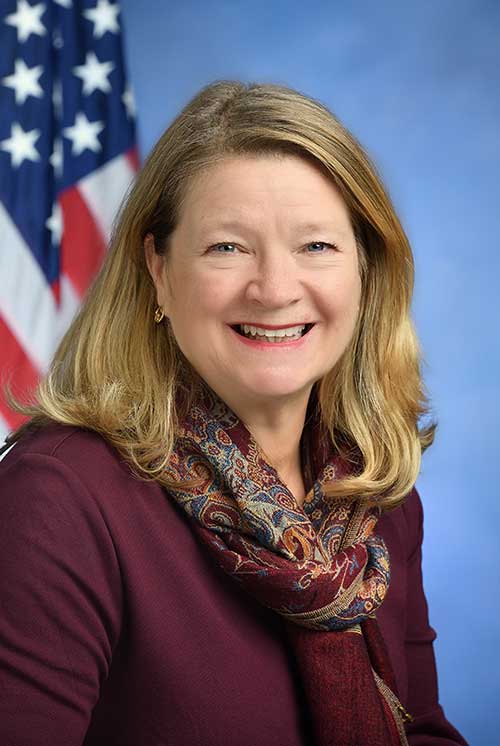
Asm. Karen McMahon
Sponsored bills
Stabilizes electric costs for New York consumers; restricts unreasonable rate and fee increases; establishes additional auditing and enforcement authorities.
Allows a licensed pharmacist to prescribe and order FDA-approved medication assisted therapy under a non-patient-specific regimen for the treatment of opioid use disease.
Maddy summaryThis bill updates rules for when construction projects must pay local prevailing wages. It applies to projects using at least 20% public funds (or $3 million/$5 million in public funds) for construction costs. Exemptions include single-family homes, small nonprofits, and certain affordable housing developments meeting specific affordability requirements. This affects contractors and developers working on qualifying projects funded in part by public money.
Maddy summaryThis New York State bill (A 585) repeals Title 2 of Article 14 of the Election Law, which governed public financing for elections. The repeal removes the legal framework for public funding of candidate campaigns, directly affecting how political campaigns are financed in the state. The bill takes effect immediately upon enactment, eliminating the existing public financing system without creating new provisions. It is a procedural change that removes specific election law provisions without altering other campaign finance rules.
Requires ice skating rinks maintain a certain indoor air quality and maintain a certificate of acceptable air quality where a resurfacing machine is used.
Maddy summaryThis bill automatically qualifies children with elevated venous blood lead levels (at or above 5 mcg/dl) for early intervention services by adding this condition to the legal definition of "disability" in public health law. It directly affects young children under three years old who are identified with lead levels meeting this threshold during medical screenings. The key mechanism amends Public Health Law to include elevated blood lead levels as a qualifying condition, eliminating the need for separate evaluations to access services. This change ensures children exposed to lead - known to cause developmental delays - receive timely support without administrative barriers.
Maddy summaryThis bill amends New York's Penal Law to explicitly include animal fighting under the definition of criminal activity for enterprise corruption charges. It adds "section three hundred fifty-one of the agriculture and markets law relating to animal fighting" to the list of offenses that qualify as criminal activity in enterprise corruption cases. This change directly affects prosecutors and courts handling cases where animal fighting is part of a larger criminal enterprise, allowing such cases to be prosecuted under enterprise corruption statutes. The key mechanism is a technical update to the legal definition, not a new policy or funding measure.
Maddy summaryThis bill creates a new criminal offense called "endangering the welfare of a child in the first degree" for individuals who knowingly or recklessly create a serious risk of physical injury or long-term harm to a child under 17. It specifically applies when someone causes physical injury to a child under 7, or has prior convictions for certain crimes involving children under 17. The offense is classified as a class E felony, carrying more severe penalties than the existing "second degree" offense (a class A misdemeanor). The law directly affects caregivers, parents, or others responsible for children's safety who fail to prevent serious harm.
Maddy summaryThis bill requires drivers to pass bicycles and pedestrians safely on roads outside New York City. In towns and cities with under one million residents, drivers must move to another lane if possible when overtaking a cyclist or pedestrian, or maintain at least a three-foot distance if lane changes aren't feasible. If neither option is safe, drivers must only proceed if it's reasonable under current road conditions. The law applies specifically to vehicles overtaking cyclists or pedestrians on the same side of the road in non-NYC areas.