

Maddy summaryThis bill requires health insurance plans, including individual, group, and government-sponsored coverage, to pay for FDA-approved treatments and diagnostic tests for Alzheimer's disease and related dementias. The coverage applies when a licensed physician determines the treatment is medically necessary and follows FDA labeling requirements. Plans subject to this bill cannot use step therapy, which would otherwise require patients to try less expensive options before accessing these specific treatments. The law takes effect on January 1st following its passage and applies to all policies issued, renewed, or modified on or after that date.
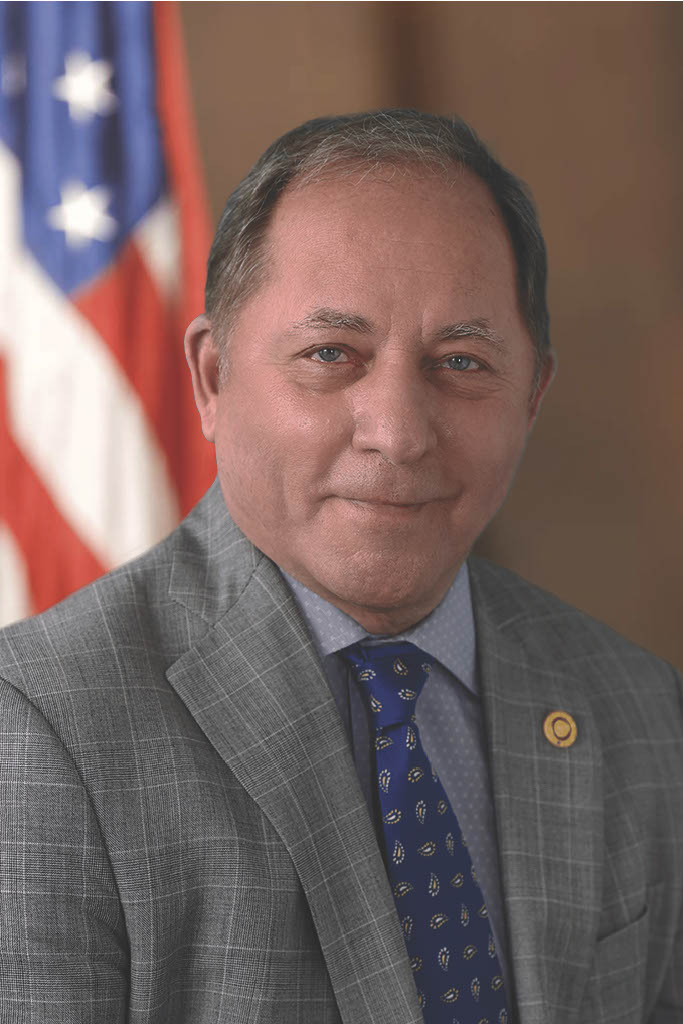
Asm. Steve Hawley
Sponsored bills
Maddy summaryThis bill would exempt precious metal bullion sold for investment from retail sales taxes. It directly affects buyers and sellers of gold, silver, platinum, and other precious metals in bar, ingot, or coin form. The exemption applies only when the metal is held in its original form for investment purposes, not for industrial or artistic use, and when the purchase price does not exceed specified percentages of the metal's market value. The law would take effect after a 90-day waiting period following its passage.
Allows a nursing home patient, or such patient's representative, to install, operate and maintain, at such patient's own expense, an electronic monitoring device in such patient's room.
Maddy summaryThis bill is a resolution that formally congratulates the Pavilion/York Air Rifle Team and their head coach for winning the New York State Rifle Invitational Championship in the Three-Position Event. The measure recognizes the team's athletic achievement by pausing legislative proceedings to offer official praise and transmitting copies of the resolution to the team members, coach, and school administrators. It highlights their undefeated season, individual accomplishments, and the discipline and teamwork demonstrated during the competition held on March 1, 2026. The resolution serves as a ceremonial acknowledgment of their success rather than implementing new policy or funding.
Relates to increasing the earnings limitation for positions of public service; increases the earnings limitation from $35,000 to $65,000 in 2027 and thereafter.
Enacts into law components of legislation relating to the possession and sale of nitrous oxide; criminalizes certain sales and possessions of nitrous oxide; (Part A); regulates the sale of nitrous oxide; (Part B); establishes an education and outreach program relating to nitrous oxide (Part C); criminalizes driving while ability impaired by nitrous oxide (Part D).
Maddy summaryThis bill requires social media platforms to block minors under 14 from creating accounts and mandates parental consent for 14-15 year olds to use accounts. It defines "social media platform" to include apps with addictive features (like infinite scrolling or push notifications) and sets standards for age verification. Platforms must delete personal data from terminated accounts and avoid showing minors content deemed "harmful" under specific legal criteria (e.g., sexually explicit material lacking artistic value). The bill directly affects major social media companies operating in the state, minors under 16, and their parents/guardians.
Requires the state comptroller, the attorney general and independent certified public accountants to conduct an annual audit of the office of cannabis management.
Maddy summaryThis bill creates a one-time energy price refund credit for New York state taxpayers who lived in the state during 2024 and meet specific income limits. Eligible residents receive between $150 and $400 depending on their filing status and income level, with higher amounts available for married couples and lower incomes. The credit is calculated based on 2024 tax information and will be issued as a refund or tax credit for the 2026 tax year. The legislation also ensures that any portion of the credit included in federal income will not be subject to New York state or local income tax.
Maddy summaryThis bill allows unused funds in New York's climate investment account - collected from electricity customers through utility bills - to be returned directly to those customers. Specifically, any uncommitted funds collected via the "bill-as-you-go" system (where fees are added to monthly utility bills) must be credited back to ratepayer accounts by the end of each fiscal year. The bill modifies existing law to require this refund, ensuring customers who paid these climate-related fees receive the unused portion. It directly affects electricity customers who contributed to the climate investment account but did not have their funds fully allocated for climate projects. The change is a procedural adjustment to fund handling, not a new policy for climate initiatives.