

Repeals certain provisions establishing a fee for background checks on certain firearm and ammunition purchases; removes such fees as a source of funds for the background check fund.
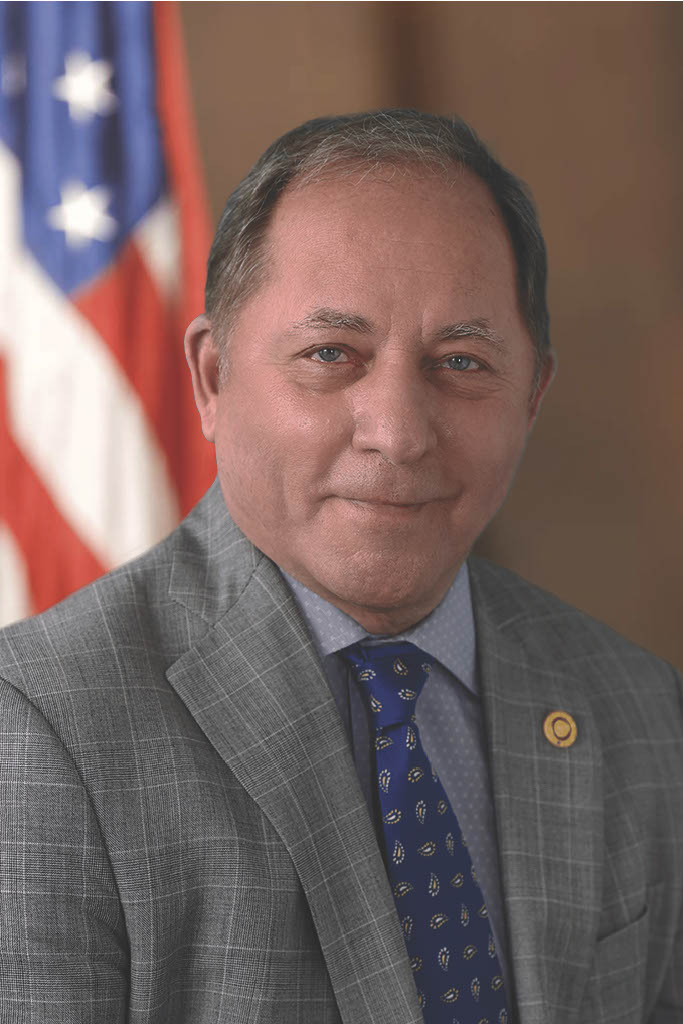
Asm. Steve Hawley
Sponsored bills
Maddy summaryThis bill establishes a new statewide program allowing local communities in New York to form regional partnerships to design their own broadband expansion plans, replacing the previous state-managed approach. It directly affects residents in areas with inadequate internet speeds (under 25 Mbps) and local governments like counties, cities, and towns. The program provides state funding for infrastructure projects like fiber networks or mobile hotspots, with local groups selecting internet service providers. The state will review plans to ensure full coverage for all residents in each region, prioritizing access over speed or reliability.
Maddy summaryThis bill requires all public buildings and state parks, recreation sites, and historic preservation areas to install separate bins for recyclable materials (like paper, plastic, glass, and metal) and compostable materials (such as food scraps and yard waste). It mandates these bins be placed alongside regular trash bins, with regular collection and proper processing of both materials. The law applies to all covered facilities, including government buildings and state-managed parks, and would take effect 120 days after enactment. This creates a standardized waste separation system to increase recycling and composting rates across public spaces.
Maddy summaryThis bill (A 4761) prohibits New York state agencies from contracting with entities that boycott certain U.S. allies, defined as NATO members, Israel, Japan, South Korea, Ireland, and other specified nations. It requires the commissioner to publish an annual list of boycotting entities and mandates contractors to certify they are not on this list when bidding for state contracts. Exemptions allow limited exceptions for past boycotts that ceased or for critical services essential to state operations. The law creates a formal process for entities to challenge their inclusion on the list and for agencies to enforce compliance through contract penalties.
Enacts "Jessica Lunsford act" relating to enhancing the class A-II felony of predatory sexual assault against a child by expanding the acts to which such offense applies; establishes a mandatory sentence of 25 years to life term of imprisonment; requires electronic monitoring of incarcerated individuals upon release from prison.
Maddy summaryThis bill amends New York's family court procedures to tighten when youth court cases may be transferred to family court. It requires courts to deny such transfers if defendants caused serious injury, displayed weapons (including firearms), or committed certain sexual offenses as defined in criminal law. The bill repeals section 725.15 of the criminal procedure law and updates victim notification rules for dispositional hearings. These changes directly affect youth defendants, family courts, and prosecutors handling cases involving minors.
Prohibits the use of state funds for non-residents seeking an abortion or any other procedure that results in the intentional termination of a pregnancy at any stage of gestation.
Directs the public service commission in consultation with NYSERDA to conduct a full cost benefit analysis of the technical and economic feasibility of renewable energy systems in the state of New York and to compare such directly with other methods of electricity generation within nine months after the effective date and every four years thereafter.
Maddy summaryThis bill creates a $1,000 tax credit for taxpayers who must replace tires damaged by potholes on state or local roads. It directly affects vehicle owners who incur costs from pothole-related tire failures, reducing their income tax liability by up to $1,000 per year. To claim the credit, taxpayers must provide proof of the pothole damage to the tax commissioner, and any unused portion of the credit may be carried forward as an overpayment. The credit applies to taxable years starting January 1, 2025, and is limited to one replacement per vehicle.
Relates to establishing the lump sum allocation advisory committee (Part A); relates to requiring transparency, identification and disclosure of certain appropriations (Part B); relates to withholding the salaries of the governor, agency commissioners and deputy commissioners for failing to meet certain reporting deadlines (Part C); relates to creating a tax rate reduction board to look at personal income tax and corporate franchise tax rates (Part D); relates to conducting an audit of all state economic development programs (Part E); relates to prohibiting certain political contributions by individuals appointed to entities that oversee lump sum appropriations (Part F); relates to prohibiting certain third party contracts (Part G).