

Provides that a person is guilty of criminal mischief in the third degree when such person intentionally damages property of another person to promote or suppress a political ideology, or otherwise as an expression of political ideology.
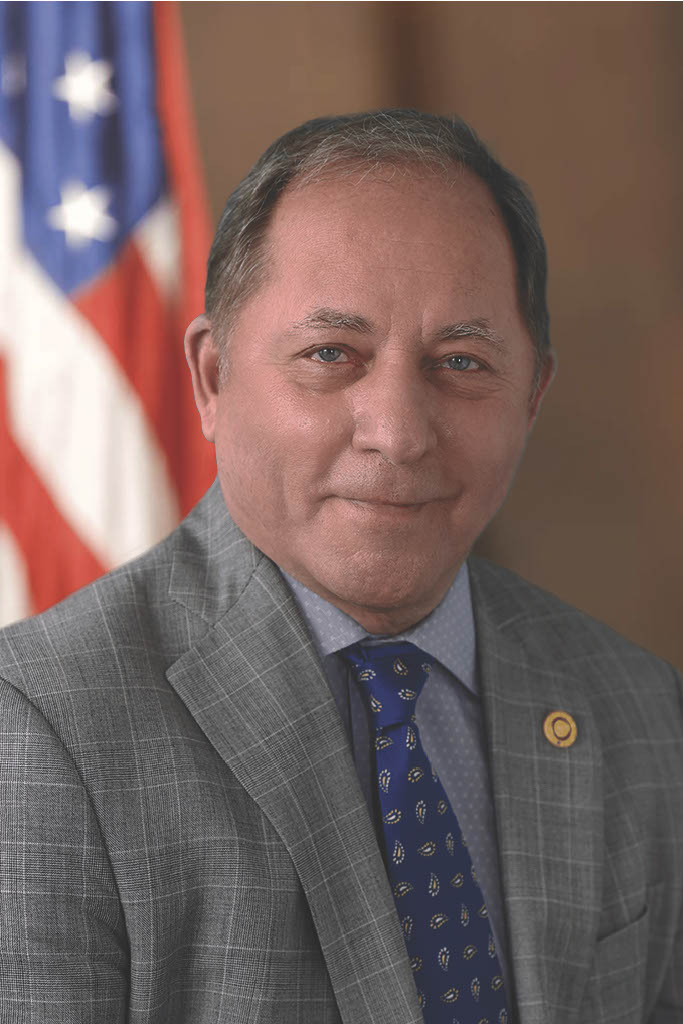
Asm. Steve Hawley
Sponsored bills
Prohibits state agencies from promulgating rules, regulations or any form of guidance requiring individuals under the age of eighteen who are not exhibiting COVID-19 related symptoms, as defined by the centers for disease control and prevention, to wear a mask or face covering in a public place or while participating in any recreational or organized sporting activity.
Enacts the New York automobile insurance fraud and premium reduction act; provides that this act is aimed at reducing insurance fraud and thus lowering the cost of insurance premiums; provides a provision for compensation to a person that reports insurance fraud to the authorities; further provides that this act also increases the penalty for insurance fraud; appropriates $3,100,000 therefor.
Permits judicial discretion based on dangerousness when issuing a securing order; allows for limited pre-trial detention upon such a determination; extends the time period for discovery from twenty to forty-five days; permits the immediate issuance of a bench warrant for failure to appear for certain principals charged with hate crimes; places restrictions on when appearance tickets may be issued.
Maddy summaryThis bill amends New York's labor law to exempt contractors building new one-family residential homes from certain safety device requirements. Specifically, it removes the obligation for these contractors to provide safety equipment like scaffolding, hoists, or ladders during construction, repair, or alteration work. The exemption directly affects contractors specializing in new single-family home projects, allowing them to operate without meeting the same safety mandates as other construction contractors. The change takes effect 180 days after the bill becomes law.
Maddy summaryThis bill requires individuals applying for public assistance benefits (such as food stamps or cash aid) to have lived in the state for at least 90 days prior to their application. It directly affects new residents seeking state-funded support programs. The key provision adds a new requirement to the social services law, stating that no public assistance can be granted to applicants who do not meet this 90-day residency period. The law takes effect January 1 following its passage.
Makes it a violation to loiter while masked or disguised by unusual or unnatural attire or facial alteration while in a group of six or more persons so masked or disguised.
Directs the commissioner of transportation, in consultation with the commissioner of the office for people with developmental disabilities, to conduct a statewide study and review of the transportation of individuals with developmental disabilities.
Maddy summaryBill A 4758 adds a new section to the education law to define antisemitism. When the Department of Education reviews or investigates potential violations of state law or Title VI of the Civil Rights Act based on an individual's actual or perceived Jewish ancestry or ethnic characteristics, it will consider the definition of antisemitism established by the International Holocaust Remembrance Alliance (IHRA) on May 26, 2016. This includes contemporary examples of antisemitism, which will inform the department's assessment of such practices.
Maddy summaryThis bill prohibits state agencies from moving leftover money from funds that collect dedicated fees (like tolls or permit fees) into other general funds. It requires these dedicated funds to stay separate from other state money and be used only for their specific purpose, preventing commingling or reallocation. The law directly affects state financial management by restricting how unspent revenue from targeted fee sources can be handled. This is a procedural change to state finance rules, not a new policy affecting citizens or programs. (3 sentences)