

Maddy summaryThis bill sets new rules for New York's Medicaid inspector general when auditing healthcare providers' billing for medical assistance payments. It defines key terms like "overpayment" and "clerical error," requires auditors to follow specific standards, and limits how they can spread audit findings to all claims (extrapolation) for minor, isolated errors. Providers must receive detailed audit reports explaining findings and have the right to submit supporting documentation before final decisions. The bill also mandates annual reporting on audit activities to state officials, including how many audits used extrapolation and their financial impact.
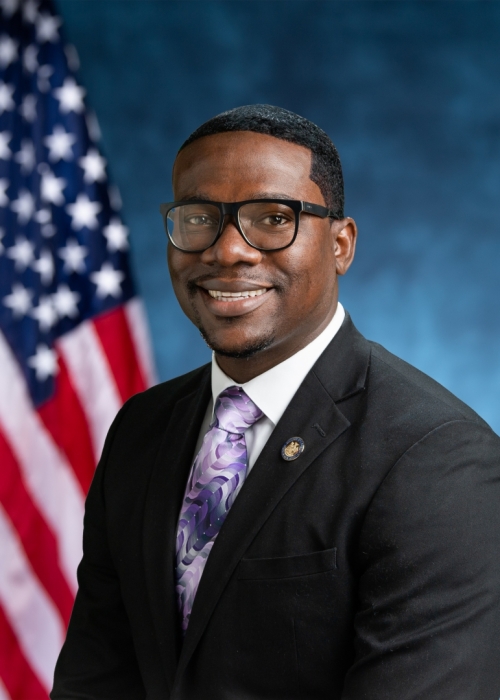
Asm. Demond Meeks
Sponsored bills
Provides representation to veterans that are at or below four hundred percent of the federal poverty guidelines for matters involving children, sustenance and real property proceedings.
Relates to prohibiting the exclusion of coverage for losses or damages caused by exposure to lead-based paint; provides that no insurer licensed or permitted by the superintendent to provide liability coverage to rental property owners shall exclude coverage for losses or damages caused by exposure to lead-based paint.
Enacts the "beauty justice act"; provides for the regulation of ingredients in personal care products and cosmetics; prohibits the sale of personal care products and cosmetic products containing certain restricted products.
Maddy summaryThis bill allows medical assistants to administer vaccines in outpatient clinics under the direct supervision of a physician, nurse practitioner, or physician assistant. It requires that vaccines be recommended by the CDC and that medical assistants complete appropriate training and supervision as defined by state regulations. The law directly affects medical assistants, healthcare providers, and patients in outpatient settings by expanding the scope of practice for medical assistants in vaccine administration. It amends the Education Law and Public Health Law to establish these specific conditions for vaccine delegation.
Maddy summaryBill A 3026 redirects fines and penalties from environmental conservation law violations (such as those under titles 19, 21, and 27 of the environmental conservation law) into a dedicated "conservation enforcement account" within the state conservation fund. It affects environmental law enforcement officers and the Department of Environmental Conservation by requiring all such fines to fund enforcement activities like staffing, scientific work, and legal support. The bill mandates that these funds must supplement - rather than replace - existing enforcement budgets and requires annual expenditure reports to legislative leaders. Courts collecting fines must remit payments directly to this account, streamlining how penalty revenue supports environmental protection efforts.
Maddy summaryThis bill repeals specific rules in the correction law that governed how incarcerated people are moved from county jails to state prisons. It removes these transfer provisions without creating new requirements or affecting other aspects of the correction system. The change directly impacts the administrative process for moving inmates between county and state facilities. As a procedural update, it does not alter eligibility, rights, or funding but simplifies the legal framework for transfers. The bill was recently referred to the Correction committee for review.
Prohibits organized militias from another state, territory, or district from entering into New York for the purpose of doing military duty without the express permission of the governor unless such militia has been called into federal service and is acting under authority of the president of the United States.
Designates certain employees of public utilities, municipal utilities, electric corporations, gas corporations, water corporations, steam corporations, telecommunications corporations, and cable television companies as first responders during a declared state disaster emergency.
Maddy summaryThis bill requires state correctional facilities to provide incarcerated individuals with free voice communication services, including calls made to and from their families or legal representatives. The legislation mandates that these services cannot be replaced by in-person visit programs and prohibits facilities from generating revenue from communication services. It also ensures that existing contracts for communication services must end by March 31, 2026, while new contracts are subject to the free service requirement starting April 1, 2026.