Establishes procedures regarding orders of post-termination visitation and/or contact between a child and such child's parent and for modification of such orders.
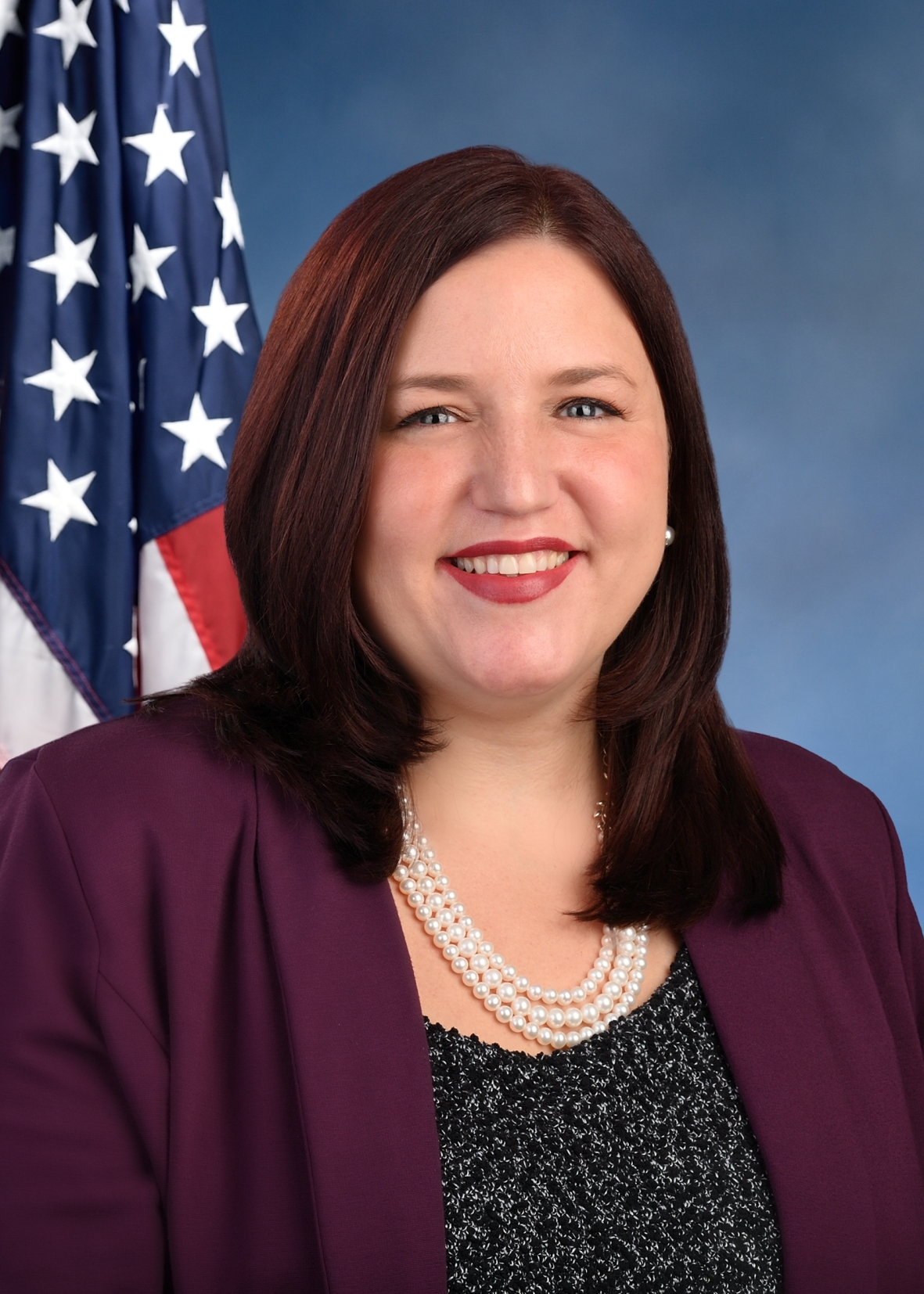
Asm. Jen Lunsford
Sponsored bills
Directs the department of environmental conservation to establish a perfluoroalkyl and polyfluoroalkyl substances removal treatment installation grant program, providing a one-time grant to private well users for the installation of PFAS treatment or service connection to a public water system; directs the department of environmental conservation to establish a perfluoroalkyl and polyfluoroalkyl substances removal treatment maintenance rebate program, providing a rebate to private well users for the maintenance of PFAS treatment equipment.
Maddy summaryThis bill adds "caste" to New York's existing anti-discrimination protections in employment, housing, and public accommodations. It defines "caste" as a hereditary social hierarchy based on birth that restricts opportunities, and prohibits discrimination against individuals because of their caste in hiring, housing, and public services. The law amends existing sections of the executive law to explicitly include caste alongside other protected characteristics like race, gender, and disability. It directly affects people in New York who experience caste-based discrimination in workplaces, housing, or public spaces. The key mechanism is updating anti-discrimination statutes to include caste as a protected category, making such discrimination unlawful under current enforcement frameworks.
Maddy summaryThis bill requires construction employers to create written heat illness prevention plans for workers exposed to extreme heat. It directly affects construction workers and all employers in the construction industry, including contractors and temporary staffing agencies. Key provisions mandate employers to provide cool water (under 59°F/15°C), paid rest breaks in shaded/cool areas, regular heat monitoring, and annual training on heat risks and emergency response. Plans must be developed with worker input, translated for non-English speakers, and include heat wave alert procedures. Employers must also track heat exposure and maintain records of safety measures.
Maddy summaryThis bill (A 7116) requires New York State's comptroller to create and maintain an interactive online report tracking spending on contracts with minority and women-owned businesses. It mandates annual public reporting showing how much state agencies spend broken down by business ownership categories (Asian American, Black American, Hispanic American, and women-owned), including prime and subcontractor data. The report must be accessible on the comptroller’s website with historical data dating back to 2017, allowing users to search and compare spending across years. This policy change increases transparency in state contracting without altering existing business development rules.

Maddy summaryThis bill increases the real property tax relief credit for homeowners with qualifying income levels. It adjusts the calculation method, raising the credit percentage for lower-income taxpayers (up to $75,000 gross income) from 14% to 20% and modifying thresholds for middle-income households ($75,000-$150,000 and $150,000-$350,000). The credit now has a minimum value of $1,550 (up from $350) and applies to tax years beginning January 1, 2026. It directly affects homeowners whose real property taxes exceed 5% of their qualified gross income, providing greater relief for those with moderate incomes.
Maddy summaryThis bill requires certain public water systems (serving at least 15 year-round residents or 25 regularly) to identify lead service lines connecting water mains to properties. It defines "lead service line" broadly, including galvanized pipes downstream of lead lines or where lead connectors are used. Water systems must obtain property owner or occupant consent for free inspections, with a 30-day response window; if consent isn't received, occupants may provide consent. Inspections must occur within 60 days of consent, focusing solely on identification, not removal, of lead service lines.
Maddy summaryThis bill changes how political parties select candidates for primary elections in specific county offices and judicial delegate positions. It requires county committees (where party rules allow) to designate candidates through a weighted vote based on the party's gubernatorial vote in the district from the last general election. The county committee must file the designated candidate with election officials within four days, and candidates receiving at least 25% of the weighted vote can demand to appear on the primary ballot. The bill excludes counties within cities of one million or more population and limits a person to being designated for only one office per year.
Establishes the child victims act fund which provides grant awards in reimbursement to public school districts and voluntary foster care agencies located within the state who have been named as defendants in certain child sexual abuse legal cases and in which it can be demonstrated by the public school district or voluntary foster care agency that no insurance policy for the covered period can be located after a good-faith effort to do so has been made, there was a monetary judgment issued or settlement agreement with regard to such action and where it can be demonstrated by the public school district or voluntary foster care agency that payment in full of such judgment or settlement would put a substantial burden on the district's or agency's ability to execute its mission and negatively impact its existing student population.
Eliminates provisions exempting employees with disabilities from the minimum wage law; provides that laws or minimum wage orders that authorize an employer to pay a wage that is less than the minimum wage are valid provided that under such laws or orders an employee with a disability is paid the same wage as an employee in a comparable position that does not have a disability.