

Creates the New York health benefit and cost commission to review and report on utilization rates, public and patient health effects, and impact on premiums and access to health care and health coverage of all existing and proposed mandated health benefits.
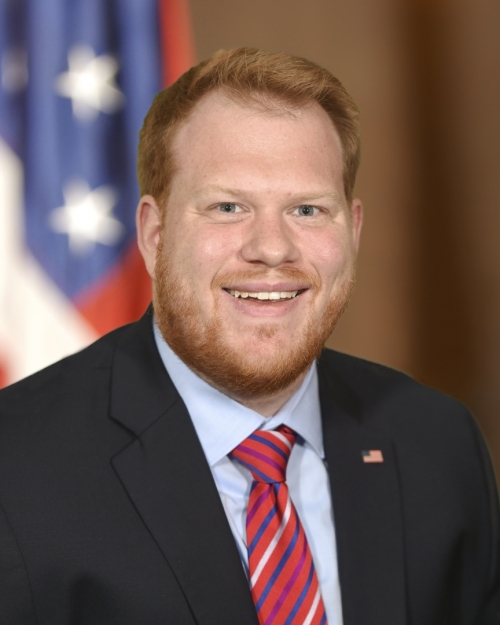
Asm. Josh Jensen
Sponsored bills
Enacts the Northeast Regional Health Insurance Compact Act directing the governor to invite the governors of Connecticut, Massachusetts, New Hampshire, Rhode Island, Vermont, Maine, New Jersey, and Pennsylvania to participate in a Northeast Regional Health Insurance Compact Summit along with their respective health and insurance regulators, to discuss the feasibility of creating a Regional Health Insurance Collaborative that allows residents of participating states to purchase qualified health insurance plans offered in any member state.
Directs the chief information officer conduct a study on the feasibility of utilizing blockchain technology in the state government and provide a report on its findings.
Ensures Medicaid spending results in real access to medical care by increasing transparency in Medicaid managed care network adequacy reviews and safeguarding continuity of care in light of recent major provider network withdrawals.
Requires soccer programs, lacrosse programs, ice hockey programs, and field hockey programs to provide informational packets about concussions to parents and guardians of children participating in soccer programs; defines soccer programs, lacrosse programs, ice hockey programs, and field hockey programs.
Maddy summaryThis bill requires all visitors and incarcerated individuals to undergo body imaging scans at New York correctional facilities - visitors before entry and inmates upon intake and after visitation. It mandates that facilities use specific scanning equipment defined in public health law, with regulations established by state or New York City health authorities. The bill also requires alternative screening methods for people unable to use scanners due to medical reasons, while allowing facilities to deny visitation for non-medical refusal. This policy directly affects visitors, inmates, and correctional facility staff through new screening procedures.
Maddy summaryThis bill establishes the "First Responder Peer Support Program Act" to create a statewide grant program for peer-to-peer mental health support services. It directly affects first responders - including firefighters, police officers, EMTs, 911 operators, and correctional officers - by providing funding for local programs offering trauma-informed training and mental health resources. Key provisions include requiring standardized training on trauma, suicide prevention, and resilience; mandating strict confidentiality for participants; and prohibiting disclosure of personal information to employers. Grants are allocated to eligible local entities, with annual reports tracking program use without identifying individuals.
Maddy summaryThis bill creates an optional 20-year retirement plan for New York state correction officers (including employees directly performing correction officer duties). Eligible members can choose this plan within one year of the law's effective date, allowing retirement after 20 years of service or at age 62. Upon retirement, they receive a pension equal to 1/40th of their final average salary per year of service (capped at 50% total), with additional benefits beyond 20 years capped at 75% of final average salary. The state covers the extra costs through additional contributions.
Prohibits the governor from preventing or inhibiting state agency cooperation with the federal government for the purposes of immigration enforcement; prohibits state agencies from preventing or inhibiting collaboration with federal agencies for the purposes of federal immigration enforcement.
Maddy summaryThis bill requires all state-controlled or state-supported elementary, middle, and high schools to include agriculture instruction starting in the 2026-2027 school year. It directly affects students and school districts by mandating curriculum covering food origins, farm-to-market processes, sustainability, resource management, textile production, and agricultural careers. Key provisions include requiring courses approved by both the Education and Agriculture departments, integrating topics like water/land conservation and rural community culture, and allowing connections to science and business classes. The instruction aims to help students understand food systems and agricultural practices through concrete, hands-on learning.