Authorizes the board of trustees of the village of East Syracuse to permit that the office of village justice and/or associate justice may be held by a non-resident who lives in the town of Dewitt.
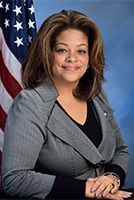
Asm. Pamela Hunter
Sponsored bills
Maddy summaryAssembly Resolution No. 170, adopted on March 10, 2025, requests Governor Kathy Hochul to officially proclaim March 2025 as Women's History Month in New York State. This ceremonial resolution recognizes New York's historical milestones in women's rights, including the 1848 Seneca Falls convention and the 105th anniversary of the 19th Amendment. It does not create new laws or policies but serves as a symbolic acknowledgment of women's contributions to the state and nation. The resolution was formally transmitted to the Governor following Assembly adoption.
Maddy summaryThis is a ceremonial resolution (Assembly Resolution 163), not a substantive bill. It honors Ruth J. Colvin, the founder of Literacy Volunteers of America, for her decades of work establishing literacy programs across New York State. The resolution recognizes her founding of the Syracuse-based literacy initiative in 1962, which grew into a national network including numerous New York-based organizations that have helped tens of thousands of adults develop literacy skills. The resolution formally expresses the legislature's condolences to her family and transmits copies to her family, ProLiteracy, and LiteracyCNY.
Maddy summaryAssembly Resolution 160 is a commemorative resolution passed by the New York State Legislature to honor Hazel N. Dukes, a civil rights leader and former president of the New York State NAACP, who died on March 1, 2025. The resolution recognizes her 50-year career advocating for civil rights, education equity, and community leadership, including her work as a trailblazer for African American representation. It formally expresses the Legislature's condolences to her family and acknowledges her legacy as a foundational figure in the civil rights movement.
Maddy summaryThis bill amends tax exemption policies for municipal and public authority projects to require consideration of onsite child care services. Specifically, it adds "the extent to which a project will provide onsite child care services or otherwise facilitate new child care services" as a mandatory factor for agencies evaluating tax exemption applications. Projects seeking real property, mortgage recording, or sales tax exemptions under these policies must now account for how they support child care access. This applies to all projects evaluated under the General Municipal Law and Public Authorities Law, including those seeking financial assistance for development. The change does not create new child care services but integrates child care accessibility into existing tax incentive criteria.
Makes clarifying changes in regards to the purchase of flood insurance by mortgagors that exceeds certain limits upon a mortgagees request; amends the effectiveness thereof.
Maddy summaryThis bill restricts certain harmful chemicals in menstrual products sold in New York State. It prohibits manufacturers from intentionally adding specific substances like lead, mercury, formaldehyde, phthalates, and PFAS (a class of chemicals including Teflon-like compounds) to products such as tampons, pads, and menstrual cups. Starting immediately upon the bill's effective date (12 months after enactment), these chemicals cannot be added as intentional ingredients, with future safety thresholds for remaining traces to be set by health and environmental agencies by 2029. The law applies to all distributors and sellers of menstrual products within New York.
Maddy summaryThis bill requires New York state-owned parking facilities with at least 50 spaces to install electric vehicle charging stations in a percentage of spots ranging from 10% to 20%, depending on the facility's total size. The Office of General Services is tasked with installing and maintaining these stations, which must meet specific electrical capacity standards, and is authorized to hire licensed electricians if upgrades to the power system are needed. The law applies to public, employee, and pay-per-use parking areas and would have taken effect on April 1 of the following year. However, the bill was vetoed by the Governor in December 2024 and subsequently tabled, meaning it did not become law.
Maddy summaryThis bill updates the laws governing wrongful death lawsuits to clarify exactly what types of money can be awarded to the surviving family members of a deceased person. It explicitly allows juries or courts to grant compensation for funeral costs, medical bills incurred before death, grief, and the loss of financial support, guidance, and companionship. The legislation also defines who is eligible to receive these damages, including spouses, domestic partners, children, parents, and individuals who stood in a parent-like role to the deceased. Additionally, the bill sets specific rules for how the awarded money must be shared among eligible survivors based on their individual losses and outlines how legal fees and other expenses are handled.

Maddy summaryThis bill updates state agricultural laws to officially classify cannabis as a crop, livestock product, and livestock. By adding a new paragraph to the agriculture and markets law, it incorporates the legal definition of cannabis from the state's cannabis law into the agricultural code. The change takes effect immediately upon signing, ensuring that cannabis is recognized within the existing framework for farming and agricultural markets.