

Provides additional documentation a tenant may provide to demonstrate that such tenant or a member of such tenant's household has been a victim of domestic violence for purposes of permitting the termination of residential lease by victims of domestic violence.
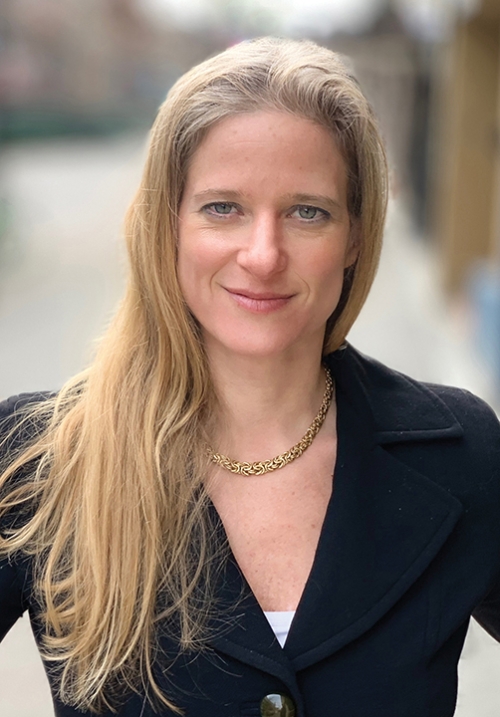
Asm. Anna Kelles
Sponsored bills
Establishes the psilocybin assisted therapy pilot program; provides such program will be offered to veterans and first responders from New York state; establishes a psilocybin assisted therapy pilot program fund.
Enacts the "gender identity respect, dignity and safety act"; relates to the treatment and placement of incarcerated individuals based upon gender identity; requires that incarcerated individuals in state and local correctional facilities who have a gender identity different from their assigned sex at birth be addressed and have access to commissary items, clothing and other materials that are consistent with the person's gender identity; establishes that incarcerated individuals shall be presumptively placed in a correctional facility with persons of the gender that most closely aligns with such person's self-attested gender identity unless the person opts out of such placement.
Maddy summaryThis bill requires most employer-sponsored health insurance plans (large group policies) in New York to cover in vitro fertilization (IVF) treatments for infertility. Specifically, it mandates coverage for up to three cycles of IVF, removing prior restrictions that limited coverage. Plans may still apply standard cost-sharing like deductibles and co-pays, consistent with other medical benefits. The law directly affects employers offering large group health insurance and individuals covered under those plans, ensuring IVF becomes a standard benefit for infertility treatment.
Establishes a wastewater infrastructure and drinking water program for the purpose of making payments toward the replacement and rehabilitation of existing local municipally-owned and funded drinking water, storm water and sanitary sewer systems.
Maddy summaryThis bill updates the definitions and requirements for organizations that provide fiscal intermediary services within the consumer directed personal assistance program. It establishes a new category of "Fiscal intermediary" alongside the existing "Statewide fiscal intermediary," allowing certain entities, like those with Department of Health contracts or independent living centers, to operate in this role. These new fiscal intermediaries will have the same status as the Statewide fiscal intermediary and can directly contract with managed care plans and other programs. The bill also removes the procurement process requirement for the Statewide fiscal intermediary and streamlines registration rules for these service providers.
Enacts the "building recruitment and incentives for dedicated government employees (BRIDGE) act" which provides a service credit for members who were previously employed by the federal government.
Maddy summaryThis bill (A 6096) requires homeless shelters in New York State to undergo quarterly unannounced inspections. It directs the Office of Temporary and Disability Assistance to create rules mandating at least four annual inspections per shelter, with one inspection each quarter. The inspections will be conducted by the state department or local social services districts. The bill takes immediate effect upon enactment.
Maddy summaryThis bill (A 5001) requires New York state agencies to conduct cost comparisons before signing consultant contracts exceeding $1 million annually. It mandates agencies to evaluate whether state employees could provide the same services at equal or lower cost, excluding legal services and construction contracts. If savings exceed 10%, agencies must develop a business plan analyzing options, performance risks, and quality standards, and notify affected employees if layoffs may occur. The plan must then be reviewed by the state comptroller, who has 90 days to approve or disapprove it.
Maddy summaryThis bill requires developers seeking permits for major projects near low-income or minority neighborhoods to submit a detailed public engagement plan. The plan must include maps of the community, locations of sensitive sites like schools, a schedule for at least three public meetings, and materials in plain language translated into common community languages. Applicants must also provide quarterly progress reports and ensure community input influences project design. This applies to projects within one mile of designated disadvantaged communities, aiming to improve transparency and community involvement in environmental permitting.