

Maddy summaryThis bill establishes minimum cash wage requirements for "miscellaneous industry workers" who receive tips, including car wash attendants, nail salon workers, tow truck drivers, dog groomers, tour guides, valet attendants, and similar roles. It sets specific hourly cash wage floors that must be paid in addition to tips, with rates increasing annually through 2029 (e.g., $12.77/hour in NYC starting 2026, $11.50/hour outside NYC starting 2026). The bill ensures that when tips are added to the cash wage, the total equals the full minimum wage for their region, preventing employers from relying solely on tips to meet wage requirements. It directly affects these tipped workers by guaranteeing a minimum cash payment regardless of tip amounts received.
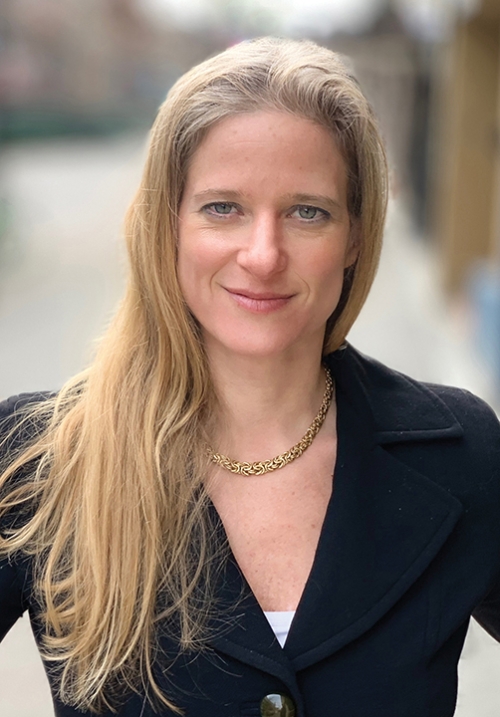
Asm. Anna Kelles
Sponsored bills
Establishes a gender-affirming care access program to provide support and increase access to gender-affirming care including certain medical and surgical care.
Maddy summaryThis bill updates how New York State calculates payment rates for federally qualified health centers (FQHCs), which provide primary care in underserved communities. It changes the rate calculation method: through 2025, rates use the Medicare Economic Index, and after 2025, they use a federal cost adjustment formula (FQHC Market Basket inflator) adjusted for service scope. The state health department must analyze actual FQHC costs every three years starting in 2025 to set updated rates, ensuring payments reflect real costs while guaranteeing no facility receives a rate lower than the 2025 level. This directly affects FQHCs by potentially increasing their state-funded payments based on verified operational expenses.
Maddy summaryThis bill creates a sales tax exemption for commercial energy storage systems. It directly affects businesses installing or using equipment that stores electricity for later use in non-residential buildings (like offices, factories, or warehouses) to provide heating, cooling, hot water, or electricity. The key provision exempts the retail sale and installation costs of this equipment, as well as electricity sales from businesses that own and install such systems on a customer's non-residential property under specific written agreements. The exemption applies to both the equipment itself and the electricity generated by it, aligning with existing tax law definitions for similar energy storage systems.
Authorizes and directs the public service commission to establish rules to limit a utility's ability to recover its direct or indirect costs associated with its attendance in, participation in, preparation for, or appeal of any rate proceeding conducted before the commission.
Maddy summaryBill A 8082 establishes a new retirement service credit for members of public retirement systems who have served as volunteer firefighters or emergency service personnel. Eligible members can receive one year of service credit for every five years of volunteer service, up to a maximum of three years of credit for fifteen years of service. To qualify, members must have at least five years of other credited service and pay a fee equivalent to three percent of their compensation for the twelve months prior to application, for each year of credited volunteer service. This credit can be applied towards special twenty or twenty-five year retirement plans.
Requires renewable energy data resources provided by NYSERDA to include mapping of certain capital projects with a value of greater than one million dollars for purposes of providing public information on the viability of siting of solar energy arrays, major renewable energy facilities, or major electric transmission facilities.
Requires labor peace agreements as a precondition for contracts for certain retail or distribution projects in which a public agency has a substantial proprietary interest.
Establishes the hospice workforce stabilization and innovation program; grants for staff retention incentives, continuing education, professional certification including board certification in hospice and palliative care, workforce wellness initiatives, and other workforce support activities approved by the department; creates grants for establishing regional hospice workforce pipeline programs.
Expands the eligibility period for indigent legal service attorneys to receive certain loan forgiveness; increases loan reimbursement for certain attorneys who work in legal services with indigent clients.