

Provides that the thruway authority shall issue permits for ambulances and fire vehicles exempting such vehicles from paying tolls on the thruway when engaged in an emergency operation.
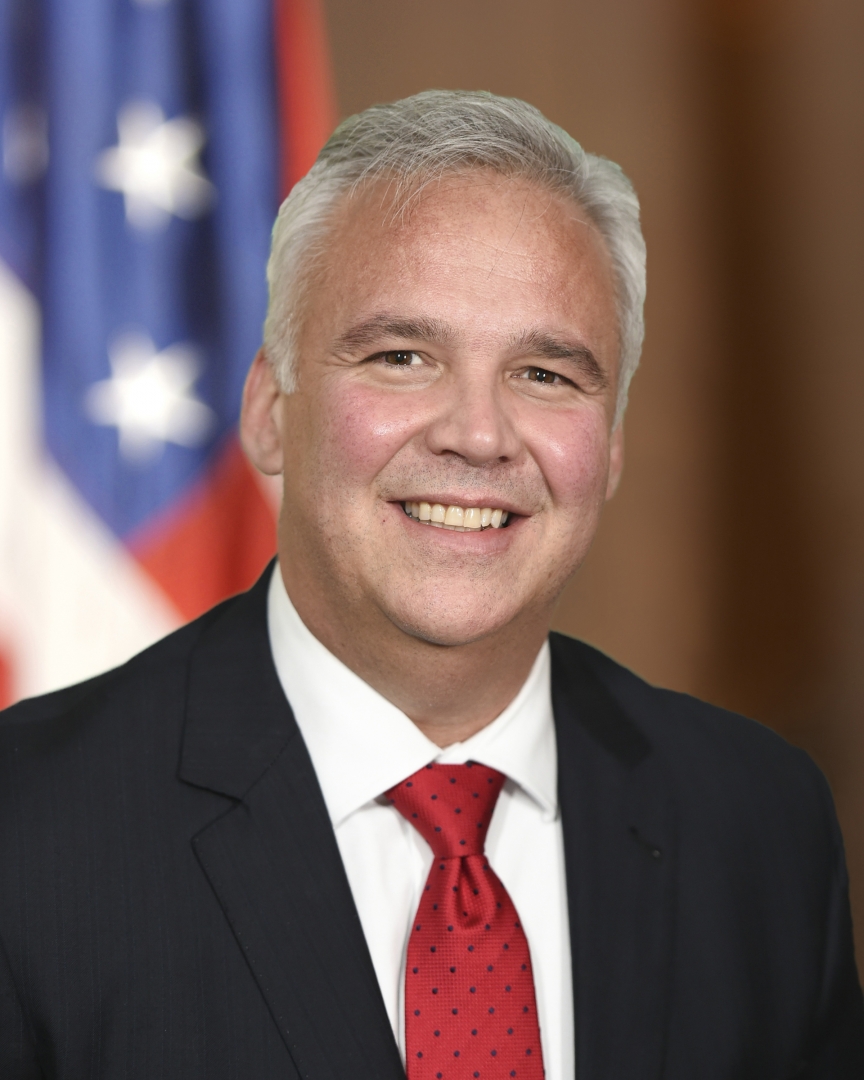
Asm. Matt Simpson
Sponsored bills
Maddy summaryThis bill requires that certain legislative bills be scheduled for a floor vote if they reach specific co-sponsorship levels. Assembly bills must have at least 76 co-sponsors to be brought to the floor for a vote during the same session they were introduced, while Senate bills need 32 co-sponsors. The law applies to all bills introduced in the current legislative session and mandates that once the threshold is met, the bill must be considered on the floor. It directly affects legislators who introduce bills by setting minimum support requirements for floor consideration.
Maddy summaryThis bill exempts wood burning used for recreation, building heating, cooking, or food preparation from certain greenhouse gas emissions regulations. It directly affects rural residents and small communities who rely on wood-burning for these everyday purposes. The law modifies environmental conservation rules to exclude these specific wood-burning activities from compliance requirements tied to New York's 2019 climate law. The exemption applies immediately upon the bill's enactment.
Maddy summaryThis bill designates May as "Elder Appreciation Month" each year, recognizing older adults through a formal legislative designation. It does not create new holidays, funding, or policy requirements - only establishes a symbolic month of recognition. The bill amends the executive law to add May to the list of months designated for commemoration, specifically honoring elders. As a procedural resolution, it has no direct impact on individuals or programs but serves to highlight elder appreciation annually.
Maddy summaryThis bill formally recognizes Jaxon Egloff, a student at Bolton Central High School, for being named the New York State Sportswriters Association's Class D Boys Basketball Player of the Year. The resolution highlights his achievements, including leading his team to a state championship and averaging 17 points per game during the season. It directs the legislature to pause briefly to commend him and instructs that a copy of the resolution be sent to him. This action serves as an official tribute to his athletic success rather than enacting new laws or policies.
Maddy summaryThis bill updates how New York State sets payment rates for residential health care facilities (like nursing homes). It requires the state to adjust rates using specific components - direct/indirect price changes, facility-specific costs - and mandates updates by April 1, 2026, and every five years after. Special rate provisions apply to facilities providing specialized care (e.g., for brain injury rehab, AIDS units, or pediatric services), with inflation adjustments starting in 2026. The bill also creates a workgroup of experts to advise on rate-setting and includes funding mechanisms to support facility quality improvements.
Prohibits the elimination of building systems or equipment used for the combustion of fossil fuels, including, natural gas, propane and fuel oil in new building construction.
Excludes the amount of state and local taxes and fees from the amount on which an interchange fee is charged for that electronic payment transaction by a credit or debit card network; prohibits a payment card network from altering or manipulating the computation and imposition of interchange fees.
Maddy summaryThis bill formally commends Dr. Richard P. Leach for receiving the 2026 Liberty Bell Award from the Warren County Bar Association. The resolution recognizes his distinguished career as a physician and his ongoing efforts to assist immigrants and educate the public on medical issues. By adopting this measure, the legislative body acknowledges his contributions to the community and transmits a copy of the resolution to Dr. Leach.
Maddy summaryThis bill creates a new class E felony offense for intentionally interfering with police officers during their duties. It specifically prohibits actions like spitting on officers, throwing objects, or physically pushing, shoving, or blocking them while they are performing official tasks. The law defines obstruction as a criminal act punishable by up to four years in prison, applying directly to individuals who disrupt officer safety or operations. The bill does not include exceptions or additional context beyond these specific prohibited behaviors.