Relates to certain conduct that may place a person in segregated confinement; expands the criteria that can be used for calculating good behavior allowances.
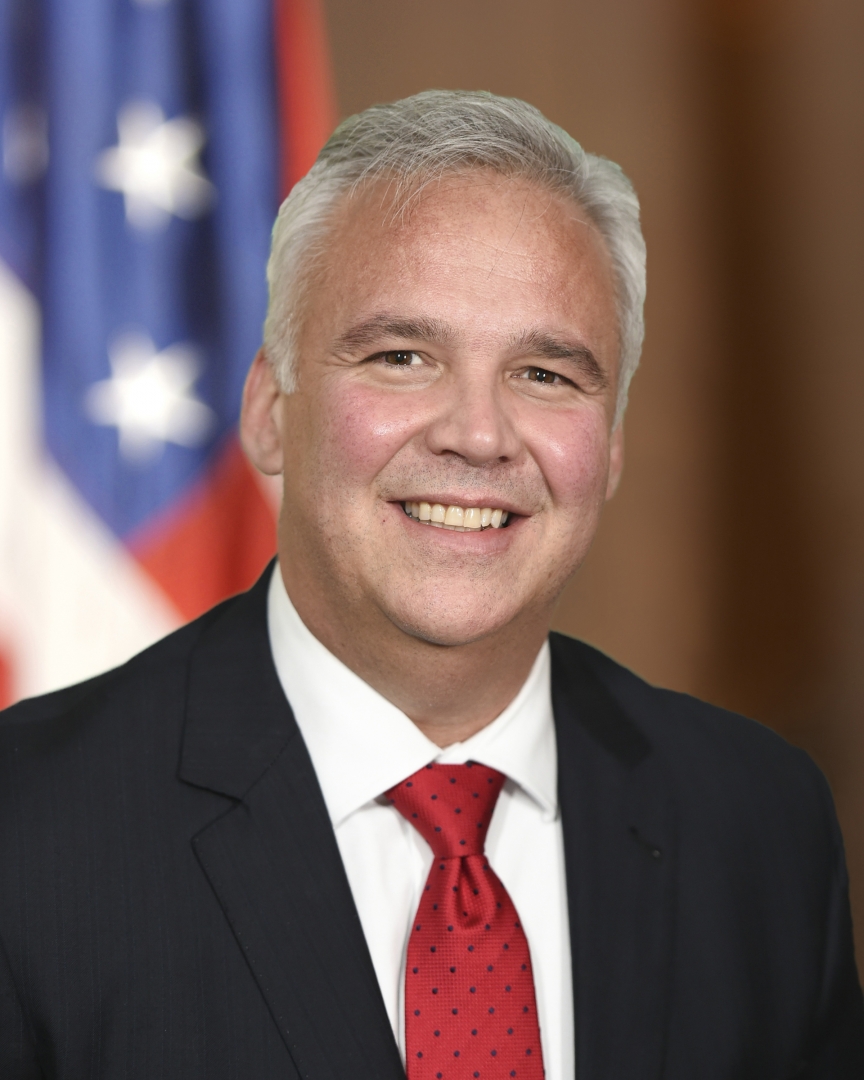
Asm. Matt Simpson
Sponsored bills
Relates to improving Medicaid accountability; verifies Medicaid enrollment data; audits certain Medicaid program areas; creates managed care payment safeguards; establishes a biometric verification pilot program.
Ensures Medicaid spending results in real access to medical care by increasing transparency in Medicaid managed care network adequacy reviews and safeguarding continuity of care in light of recent major provider network withdrawals.
Maddy summaryThis bill requires all visitors and incarcerated individuals to undergo body imaging scans at New York correctional facilities - visitors before entry and inmates upon intake and after visitation. It mandates that facilities use specific scanning equipment defined in public health law, with regulations established by state or New York City health authorities. The bill also requires alternative screening methods for people unable to use scanners due to medical reasons, while allowing facilities to deny visitation for non-medical refusal. This policy directly affects visitors, inmates, and correctional facility staff through new screening procedures.

Requires nonresident visitor sex offenders and registered sex offenders register when temporarily residing within the state; requires short-term rental hosts and short-term rental hosting platforms inform nearby property owners when nonresident visitor sex offenders and registered sex offenders are staying in the unit.
Increases the reimbursement amount authorized to be paid to localities maintaining incarcerated individuals convicted of felonies to $300 per day per capita for the first 10 days, and $600 per day per capita for each day thereafter, or the actual per day per capita cost, whichever is more.
Maddy summaryThis bill establishes the "First Responder Peer Support Program Act" to create a statewide grant program for peer-to-peer mental health support services. It directly affects first responders - including firefighters, police officers, EMTs, 911 operators, and correctional officers - by providing funding for local programs offering trauma-informed training and mental health resources. Key provisions include requiring standardized training on trauma, suicide prevention, and resilience; mandating strict confidentiality for participants; and prohibiting disclosure of personal information to employers. Grants are allocated to eligible local entities, with annual reports tracking program use without identifying individuals.
Establishes a digital legal mail program for the delivery of privileged correspondences to incarcerated individuals housed at correctional facilities; requires law offices sending legal mail via digital platforms to incarcerated individuals to register with the department of corrections.
Maddy summaryThis bill creates an optional 20-year retirement plan for New York state correction officers (including employees directly performing correction officer duties). Eligible members can choose this plan within one year of the law's effective date, allowing retirement after 20 years of service or at age 62. Upon retirement, they receive a pension equal to 1/40th of their final average salary per year of service (capped at 50% total), with additional benefits beyond 20 years capped at 75% of final average salary. The state covers the extra costs through additional contributions.
Prohibits the passage of bills by the legislature between the hours of midnight and eight o'clock a.m. unless 2/3 of the legislature is present; requires two-thirds approval for messages of necessity.