

Maddy summaryBill A 945, known as "Jacobe's Law," requires school administrators to contact the parents or guardians of students when a verified incident of bullying, harassment, or discrimination has occurred. Designated school employees must first investigate and confirm the incident. Following verification, a school professional will discuss any health, safety, or privacy concerns with the students involved. If no such concerns are expressed, the school will make a good faith effort to contact the parents; if concerns are raised, the professional will use their judgment to determine if parental contact is in the student's best interest. The bill also provides immunity from civil liability for individuals who report such incidents in good faith.
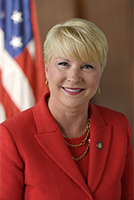
Asm. Mary Beth Walsh
Sponsored bills
Adjusts the school tax relief (STAR) exemption for homes located outside a city with a population greater than one million for the 2025--2026 school years and thereafter (Part A); relates to a real property tax freeze to reimburse qualifying homeowners for increases in local property taxes on their primary residences (Part B); provides for supplemental state assistance to be paid to cities, counties, towns and villages that are compliant with the property tax levy limits (Part C).
Eliminates state sales and compensating use taxes on motor fuels and diesel motor fuels; authorizes localities to eliminate such taxes at the local level; establishes various exemptions from New York's sales and use tax; provides for a sales tax exemption for housekeeping supplies and for ready-to-eat foods.
Maddy summaryThis bill repeals New York City's estate tax, which was levied on property inherited after someone's death. It directly affects individuals who receive inherited assets, as the tax would no longer apply to those estates. The bill removes Article 26 of the city's tax law and amends related administrative code provisions to eliminate references to the repealed tax. The repeal takes immediate effect upon enactment. This is a straightforward policy change that eliminates an existing tax obligation.
Establishes the New York state equine industry board, to advise and make recommendations to the state agencies on state government plans, policies and programs affecting all aspects of equine industry, and in such areas as its experience and studies may indicate to be appropriate.
Requires age verification for internet pornography websites; imposes a $50,000 penalty per day for violations; provides exemptions for news organizations.
Provides that any requirement that undocumented immigrants who are seeking asylum in the United States be sheltered in a certain locality or localities shall only apply to those towns, cities, and counties that opt-in to such requirement through the adoption of a local law or ordinance; defines the term "sheltered" as including, but not limited to, being temporarily or permanently placed into housing, dwelling, or living quarters by a state or local governmental entity.
Increases the applicable percentage of the child tax credit allowed in the empire state child tax credit from thirty-three percent to forty-five percent; prescribes how such payment or refund should be made based on amount.
Maddy summaryThis bill (A 5681) changes voting rules for New York's Public Authorities Control Board. It grants voting rights to members appointed based on recommendations from minority leaders of the state Senate and Assembly - previously they were non-voting with only their comments recorded. The board will now require unanimous votes from all voting members (including these newly empowered minority-recommended members) for decisions. This affects the board's internal operations but does not alter its composition or core responsibilities.
Maddy summaryBill A 7426 extends the deadline for certain entities to provide fiscal intermediary services - such as managing payments for social services programs - from April 1, 2025, to July 1, 2025. This change directly affects current service providers and subcontractors of the statewide fiscal intermediary, giving them additional time to comply with new requirements. The bill amends existing law to delay the restriction that would otherwise limit service provision to only the statewide fiscal intermediary and its subcontractors after the new date. After July 1, 2025, only the statewide fiscal intermediary and its registered subcontractors may offer these services.