

Provides voting membership to existing non-voting rider representatives on the MTA Board, provides for enhanced representation of MTA riders with disabilities.
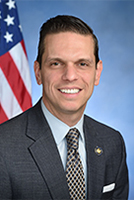
Asm. Angelo Santabarbara
Sponsored bills
Designates a portion of state route one hundred fifty-nine in the town of Rotterdam, county of Schenectady, as the "John M. Grassia III Memorial Bridge".
Maddy summaryThis bill requires New York's Commissioner of Health to establish regional minimum hourly reimbursement rates for home care providers serving Medicaid patients. It directly affects home care agencies and providers who employ home care aides, mandating rates that cover all necessary costs - including base wages, benefits, payroll taxes, operational expenses, and compliance costs. The rates must be set regionally based on actual service costs, adjusted annually to reflect labor law changes, and published publicly. Providers must justify any contract rates below these minimums, and the comptroller can audit contracts to ensure adequacy. The goal is to ensure reimbursement rates support fair wages and operational needs for home care workers under Medicaid.
Maddy summaryThis bill creates a New York state tax credit for small businesses hiring disabled workers. Small businesses with 100 or fewer employees can claim a $5,000 credit per disabled employee (up to $25,000 per business annually), provided the employee works 35+ hours weekly for six months and the employer verifies the employee meets the statutory disability definition. The credit is capped at $5 million total per year, with unused credits carried forward for up to three years. It directly affects small business employers in New York who hire eligible disabled residents, aiming to incentivize their employment through tax relief.
Maddy summaryThis bill increases fines for violating public health laws. It raises penalties for nursing home and hospital operators from $3,000 to $5,000 per violation, with repeat offenses or violations causing harm now carrying up to $10,000 or $20,000 fines. Excess fines collected beyond $2,000 per violation go to a patient safety center, while nursing home fines over $10,000 fund quality improvement programs for nursing homes. The changes apply directly to healthcare facilities and their operators under New York's public health and social services laws.
Maddy summaryThis bill, the "utility ratepayer protection act," requires utilities (like electricity and gas companies) to get explicit approval from both legislative houses before raising customer rates. Utilities must submit a detailed report 180 days in advance, including justification for the increase and their current financial status. The legislature can reject proposed rate hikes they deem unnecessary to cover service costs, preventing increases from taking effect without a majority vote in both chambers. This directly affects utility companies and their customers by adding legislative oversight to rate changes.
Provides that gas, electric, or combination gas and electric corporations shall not be permitted to retain revenues derived from their actual return on equity in excess of authorized rates of return on equity.
Exempts adolescent offenders who displayed a shotgun, rifle or deadly weapon in furtherance of the underlying offense, or who were illegally in possession of a loaded firearm, from those authorized to be removed to family court.
Provides that a collective bargaining agreement or employment contract shall not require that an emergency dispatcher employed by a municipality obtain approval from, or provide notice to, a supervisor to access mental or behavioral health care services.
Maddy summaryThis bill removes specific eligibility restrictions for Medicaid home care services in New York. It repeals a provision requiring individuals seeking home care to meet strict activity-of-daily-living criteria (like needing assistance with multiple tasks) or dementia-related supervision levels. The change directly affects Medicaid recipients needing home care services, particularly those with dementia or Alzheimer's who previously faced these barriers. The policy shift simplifies eligibility by eliminating these prior requirements for people applying on or after October 1, 2020. The bill modifies New York's social services law to broaden access to home care services under Medicaid.