

Relates to coverage for applied behavior analysis and for developmental, individual-differences, relationship-based treatment of autism spectrum disorder.
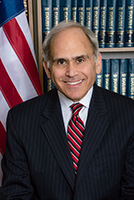
Asm. Jonathan Jacobson
Sponsored bills
Maddy summaryThis bill requires New York's Department of Health to develop rules and guidelines for all state courts to protect court employees and the public from spreading COVID-19. Key provisions mandate protective barriers at locations like the judge's bench and jury box, social distancing standards, face covering requirements, testing for court staff after a positive case is identified, and quarantine protocols for infected employees until they test negative. These rules must be implemented immediately across every court in New York. The bill directly affects court operations and the safety of everyone entering court facilities.
Requires high schools in grades nine through twelve to provide a course in financial literacy; requires students to complete such course as a condition of graduation.
Requires all public school districts, charter schools and non-public schools in the state that participate in the national school lunch program or school breakfast program as provided in the national child nutrition act to serve breakfast and lunch at no cost to the student.
Prohibits utility corporations from imposing late fees, interest, or penalties during an investigation by the commission; allows retroactive late fees, interest, or penalties if a determination is made in favor of such utility corporation; prohibits utility services from being terminated during an investigation by the commission; requires utility corporations to notify customers of investigations; requires notice to the general public; requires the public service commission to prepare reports on investigatory proceedings relating to gas, electric, and steam service.
Enacts the "home utility weatherization jobs act"; requires each gas corporation, electric corporation, or combination gas or electric corporation to submit to the public service commission for review and approval at least one and up to ten neighborhood scale weatherization and electrification-ready projects.
Expands who may visit local correctional facilities to include persons and accompanying staff of the chief executive officer of a county, members of a county legislative body, mayor of the city of New York, New York city public advocate, New York city comptroller, and members of the New York city council.
Maddy summaryThis bill limits the Triborough Bridge and Tunnel Authority's ability to charge trucks multiple tolls per day when entering New York City's central business district. Specifically, it prohibits charging trucks (as defined in Vehicle and Traffic Law §158) more than once daily for entry into the district. The law applies directly to truck drivers and commercial vehicles using the authority's bridges and tunnels. It does not restrict tolls for passenger vehicles or change the authority's broader power to set variable tolls for congestion management.
Maddy summaryThis bill requires state, county, and local transportation agencies to design all publicly funded road projects - including construction, reconstruction, and major maintenance - to safely accommodate all users (drivers, pedestrians, cyclists, and transit riders) through "complete street" principles. It applies to projects receiving both federal and state funding under transportation department oversight, excluding routine resurfacing but including projects with a 10+ year lifespan. The law mandates agencies consider factors like traffic volume, population density, and community input when planning, rather than automatically prioritizing vehicles. It does not change existing project approvals but sets new standards for how projects must be designed.
Maddy summaryThis bill requires contractors and subcontractors working on public construction projects costing over $250,000 to provide a financial guarantee (a surety bond or irrevocable letter of credit) when no public fund has been set up to pay for the project. The bond, equal to the project’s full cost, ensures that workers and suppliers of labor or materials will be paid promptly. It directly affects contractors, subcontractors, and their workers on large public projects where public funds aren’t already allocated. The law applies to all contracts entered into after its effective date.