

Authorizes the New York state environmental facilities corporation to award grants and loans to community water systems and non-community water systems for water quality projects that relate to the removal of perfluoroalkyl and polyfluoroalkyl substances (PFAS).
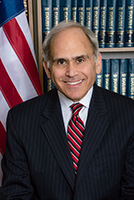
Asm. Jonathan Jacobson
Sponsored bills
Maddy summaryThis bill provides a partial tax exemption for the City of Newburgh's water filtration plant in Orange County, specifically covering the increased property taxes caused by the construction of a granular activated carbon (GAC) treatment system. The exemption applies to taxes owed to the town of New Windsor, the Newburgh Enlarged City School District, and the Cornwall Central School District, offsetting the $250,000+ tax increase after the GAC system was built to remove PFAS contaminants from the water supply. To qualify, the city must withdraw ongoing tax court cases related to the reassessment. The exemption covers only the tax rise directly tied to the GAC system, not the plant's base value.
Requires certain documents and forms to be provided in the twelve most common non-English languages spoken by limited English proficient immigrants of five years or less according to the American community survey, as published by the United States census bureau.
Directs the New York state energy research and development authority to establish a ride clean rebate program for electric assist bicycles and electric scooters; defines terms; provides a fifty percent rebate for eligible purchases.
Requires hospitals and medical facilities to notify nursing homes or assisted living facilities upon receipt of a positive COVID-19 test result for a resident of such nursing home or assisted living facility; provides penalties for violations.
Maddy summaryThis bill limits profit margins for public gas and electric utilities to 4% annually. It directly affects public utility companies (including municipal systems) that provide gas and electric services. The law defines "profit margin" as the return on equity (profit relative to their investment), capping it at 4% each year. The bill requires utilities to adjust rates to meet this cap, effective January 1st after enactment. It does not change existing service standards or customer rates directly, only the allowable profit level for these utilities.
Maddy summaryThis bill prohibits the use of grade 4 fuel oil (a specific type of heavy fuel oil classified under ASTM D396-15c) in all buildings and facilities across the state after July 1, 2030. It directly affects commercial, industrial, and residential properties that currently rely on this fuel for heating or energy. The key provision sets a clear deadline for the phaseout, while allowing municipalities to adopt stricter local regulations if desired. The bill does not require immediate replacement but mandates a transition to alternative fuels or systems by the 2030 deadline. This is a substantive environmental regulation focused on reducing emissions from a specific fuel source.
Maddy summaryThis bill requires all voting systems in New York to use durable paper ballots that withstand recounts without damage and retain voter marks for the full retention period. It mandates that every polling place must offer voters either a hand-marked paper ballot or a nontabulating ballot marking device (which doesn’t record votes electronically). The bill explicitly bans voting machines with wireless capabilities, internet connectivity, or encoded marks like QR/barcodes that require special devices to read. These provisions ensure voter-verifiable paper records remain the standard for audits and recounts.
Authorizes the public service commission to consider non-economic loss suffered by consumers, including pain and suffering or mental anguish, when determining penalties against a public utility company, corporation or person or a combination gas and electric corporation.
Maddy summaryThis bill (A 4999) prohibits the retail sale of tobacco products with non-tobacco flavors (like fruit, mint, chocolate, or menthol) and accessories that add such flavors. It directly affects all licensed tobacco retailers, businesses, and vendors operating under New York's tax law. Violations carry a civil fine of up to $500 per incident, and the law explicitly bans law enforcement from stopping or questioning people about purchasing or possessing these products. The policy aims to restrict flavored tobacco access while defining "characterizing flavor" broadly to cover any distinct non-tobacco taste.