

Maddy summaryThis bill creates a New York state tax credit for small businesses hiring disabled workers. Small businesses with 100 or fewer employees can claim a $5,000 credit per disabled employee (up to $25,000 per business annually), provided the employee works 35+ hours weekly for six months and the employer verifies the employee meets the statutory disability definition. The credit is capped at $5 million total per year, with unused credits carried forward for up to three years. It directly affects small business employers in New York who hire eligible disabled residents, aiming to incentivize their employment through tax relief.
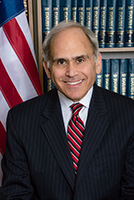
Asm. Jonathan Jacobson
Sponsored bills
Maddy summaryThis bill establishes new felony crimes for reckless endangerment of emergency service personnel, including firefighters, police officers, and building inspectors. It defines "reckless endangerment in the second degree" as knowingly altering a building without a required permit, violating building or fire codes in a way that impedes exit, and this conduct results in injury to an emergency service person during an emergency evacuation. The crime becomes "first degree" if the same actions lead to the death of an emergency service person or if the offender has a previous conviction for this offense within ten years. These offenses are classified as Class E and Class D felonies, respectively.
Maddy summaryThis bill increases fines for violating public health laws. It raises penalties for nursing home and hospital operators from $3,000 to $5,000 per violation, with repeat offenses or violations causing harm now carrying up to $10,000 or $20,000 fines. Excess fines collected beyond $2,000 per violation go to a patient safety center, while nursing home fines over $10,000 fund quality improvement programs for nursing homes. The changes apply directly to healthcare facilities and their operators under New York's public health and social services laws.
Maddy summaryThis bill requires election commissioners serving on county boards outside New York City to be full-time employees of those boards. It sets a standard of two commissioners per board, with counties having over 120,000 residents allowed to increase this to four via local law. The change applies specifically to election boards in counties outside NYC, altering their commissioner employment structure without affecting NYC-based boards.
Authorizes courts to hold evidentiary hearings for a temporary order of protection in certain circumstances; grants superior court judges the authority to issue a temporary order of protection when an action is pending in a local criminal court in certain circumstances.
Relates to reimbursement for anesthesia services; provides that an insurer may use a time related reimbursement methodology for anesthesia services if such methodology is based upon criteria established by an independent organization.
Relates to women's health in correctional facilities; establishes a women's health education program; requires HIV and STD testing to be offered to incarcerated individuals; provides pregnant incarcerated individuals with access to prenatal vitamins as well as a specialized diet tailored to pregnancy needs; requires a study and report on women's health in prison.
Maddy summaryThis bill establishes a new health coverage option under New York's 1332 state innovation program, allowing the state to create a health plan for specific uninsured New Yorkers who don't qualify for Medicaid or ACA marketplace plans. It directly affects residents under 65 with household incomes between 133% and 250% of the federal poverty line, including some noncitizens ineligible for Medicaid due to immigration status. Key provisions include requiring coverage for essential health services (like cancer care access at Medicaid rates, dental, vision, and chronic illness support), automatic enrollment for children born to eligible parents, and continued coverage during pregnancy for one year postpartum. The program requires federal approval under the ACA's Section 1332 waiver process and operates alongside existing Medicaid and marketplace plans.
Requires employers to notify employees if they come into contact with other employees who have been diagnosed in relation to a disease outbreak causing a public health emergency; prohibits employers from disclosing the name of the diagnosed employee.
Imposes an additional tax surcharge on certain non-primary residence class one and class two properties in a city with a population of one million or more.