

Maddy summaryThis bill requires sellers to provide lead-based paint test reports to buyers before selling residential properties built before 1978. It directly affects home sellers, buyers, and real estate agents in New York for properties constructed prior to 1978, which are most likely to contain lead paint. The key mechanism mandates a one-time inspection and disclosure of test results before title transfer, with reports added to a state registry for future buyers. This complements existing laws by standardizing disclosure across all residential sales, not just rentals, ensuring buyers receive clear information about potential lead hazards. The law does not replace buyer due diligence or existing seller responsibilities.
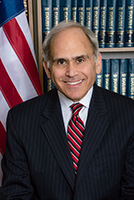
Asm. Jonathan Jacobson
Sponsored bills
Relates to summaries of readable and understandable insurance policies which shall include the limits of insurance, the term of the policy, the amount of premium and the amount of deductibles and a statement.
Maddy summaryThis bill prohibits public owners and contractors from withholding payments for materials delivered and accepted in construction projects. It limits retention to no more than 5% (or 10% under specific conditions) of payments for materials that meet warranty or industry standards, eliminating the ability to withhold funds for such materials. The law directly affects contractors, subcontractors, and material suppliers by requiring timely payment for accepted materials and imposing strict 7-day payment deadlines after public owner payments. Key provisions include banning retention for warranty-covered materials, mandating interest for late payments to subcontractors, and invalidating clauses that delay subcontractor payments pending public owner payments.
Requires healthcare facilities to maintain a fifty percent operating threshold of certain reusable healthcare protective textiles in their inventory unless a reprieve is provided for supply chain issues; provides a fine may be assessed for failure to comply, as determined by the commissioner.
Establishes a persistent domestic violence offender registry of individuals convicted of multiple domestic violence offenses, which is available for public inquiry.
Establishes the "clean fuel standard of 2026"; provides such standard is intended to reduce greenhouse gas intensity from the on-road transportation sector, with further reductions to be implemented based upon advances in technology.
Maddy summaryThis bill creates a sales tax exemption for commercial energy storage systems. It directly affects businesses installing or using equipment that stores electricity for later use in non-residential buildings (like offices, factories, or warehouses) to provide heating, cooling, hot water, or electricity. The key provision exempts the retail sale and installation costs of this equipment, as well as electricity sales from businesses that own and install such systems on a customer's non-residential property under specific written agreements. The exemption applies to both the equipment itself and the electricity generated by it, aligning with existing tax law definitions for similar energy storage systems.
Includes masking products including but not limited to synthetic urine, human urine, a substance used or designed to be added to human urine or a substance used or designed to be added to a chemical test, within the definition of drug-related paraphernalia.
Maddy summaryBill A 8082 establishes a new retirement service credit for members of public retirement systems who have served as volunteer firefighters or emergency service personnel. Eligible members can receive one year of service credit for every five years of volunteer service, up to a maximum of three years of credit for fifteen years of service. To qualify, members must have at least five years of other credited service and pay a fee equivalent to three percent of their compensation for the twelve months prior to application, for each year of credited volunteer service. This credit can be applied towards special twenty or twenty-five year retirement plans.
Expands the eligibility period for indigent legal service attorneys to receive certain loan forgiveness; increases loan reimbursement for certain attorneys who work in legal services with indigent clients.