Extends the time period for tenancy rights from 30 days to 45 days of possession; adds squatting to the definition of criminal trespass in the third degree.
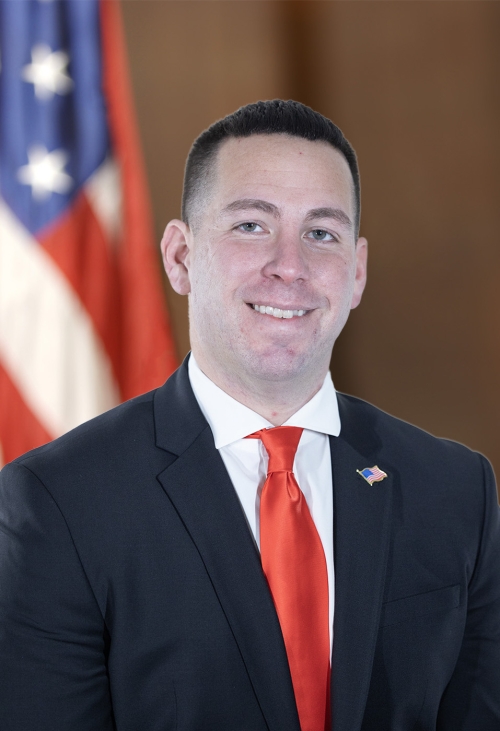
Asm. Brian Maher
Sponsored bills
Establishes term limits for the office of governor and for members of the legislature and changes the term for members of the legislature to a four year term.
Directs the division of homeland security and emergency services to conduct a study on the public safety implications of the electrification of buildings and transportation in the context of emergency response and to issue a report on the findings and recommendations as a result of such study; exempts emergency services vehicles and heavy equipment from the requirements of the climate leadership and community protection act of 2019; prohibits the use of battery packs which contain cobalt mined components for primary propulsion of emergency services vehicles.
Maddy summaryThis bill formally commends New York State Police Trooper Andrew M. Giga for receiving the Superintendent's Commendation Award on May 16, 2024. It recognizes his specific actions during a severe flood in July 2023, where he and a partner rescued stranded motorists by creating a makeshift rope line through dangerous waters. The resolution highlights his calm leadership and humility during the crisis, noting that he later submitted a brief incident report without seeking recognition. Ultimately, the bill serves as an official legislative acknowledgment of his bravery and dedication to public service.
Maddy summaryThis bill allows local governments in New York to exclude the costs of emergency medical services from the cap on their real property tax increases. By making this change, municipalities would have more flexibility to raise taxes specifically to fund emergency medical care without hitting the overall spending limit. The law is set to take effect for the 2025 fiscal year and will remain in force until June 15, 2030.
Maddy summaryThis bill designates New York as a "purple heart state," a symbolic title with no direct impact on laws or government operations. The legislation adds a single line to the state statutes to include this designation, which takes effect on January 1st of the following year. Because the change is purely commemorative and does not alter existing policies or affect specific groups, it serves as an honorary recognition rather than a functional policy update.
Provides that the thruway authority shall issue permits for ambulances and fire vehicles exempting such vehicles from paying tolls on the thruway when engaged in an emergency operation.
Establishes a co-occurring disorders patient bill of rights to be implemented by various agencies; requires a five-year plan for implementing such bill of rights.
Maddy summaryThis bill establishes a patient bill of rights for individuals with co-occurring mental health and substance use disorders, requiring specific state agencies to adopt these protections. The law mandates that affected individuals receive non-discriminatory care, accurate diagnosis and screening, and integrated treatment plans tailored to their specific needs. It further guarantees access to high-quality evidence-based services, continuity of care, family support, peer advocacy, safe housing, and prevention programs for at-risk youth. By requiring these standards across various settings, the legislation aims to ensure that people with dual diagnoses are treated with dignity and receive the comprehensive support necessary for recovery.

Maddy summaryThis bill proposes an amendment to the state constitution to allow the legislature to authorize individuals to run pool-selling operations without taking a profit. Currently, the constitution prohibits most forms of gambling, but it already permits state-run lotteries and horse racing betting under specific rules. The key change would create a new exception for non-profit pool-selling, enabling the legislature to pass laws permitting this activity if it chooses. The bill also requires the amendment to be published for three months before the next general election to allow voters to consider it.