

Increases the amount of years of military service credit a member may purchase from three years to four years; provides that the provisions of such act shall not be subject to the requirement that the state shall make an equal payment to the retirement system.
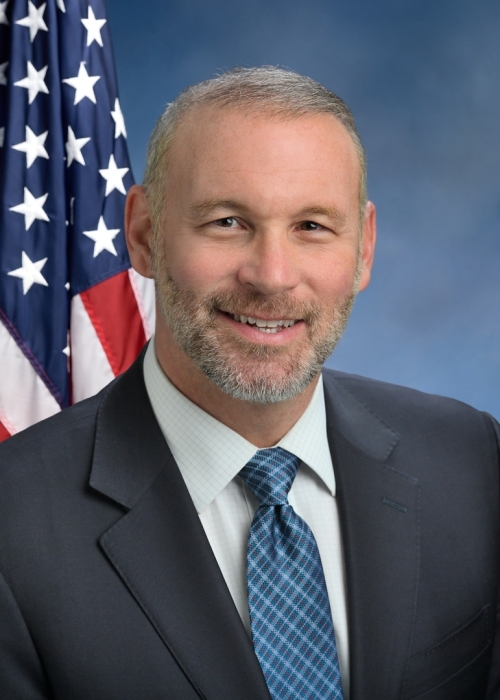
Asm. Steve Stern
Sponsored bills
Maddy summaryThis bill requires health insurance plans in the state to cover up to two epinephrine auto-injectors annually for treating life-threatening allergic reactions. It directly affects individuals with health insurance who need these emergency devices, ensuring they are not burdened with high costs. The law mandates that the total out-of-pocket expense for these devices be capped at $100 per year, regardless of deductibles or copayments. Insurance companies must include this coverage in major medical and comprehensive policies, with specific rules for high-deductible plans to maintain eligibility for health savings accounts. The changes will take effect on January 1, 2026, applying to all policies issued or renewed on or after that date.
Enacts the "Lieutenant Joseph Banish mental health act" to provide a testimonial privilege for communications arising out of law enforcement peer support counseling.
Requires the department of financial services to fulfill certain requirements to implement homeowner natural disaster preparedness, home safety and loss prevention courses.
Maddy summaryThis bill updates election laws to guide local boards of elections in selecting specific locations for early voting and voter registration. It allows religious buildings to serve as polling places without requiring them to open on Saturdays if this conflicts with their beliefs, while mandating that public school buildings never be used for early voting. Additionally, the legislation requires that public buildings be used for voting whenever possible and outlines procedures for ensuring accessibility for disabled voters, including a process for building owners to request cancellation of a polling place designation if it would unreasonably interfere with their normal operations.
Authorizes municipalities to offer a real property tax exemption to certain volunteers who live in that municipality but who serve in neighboring municipalities.
Maddy summaryThis bill requires that test reports for lead-based paint be disclosed during the sale of residential real estate in New York State. It applies to all properties built before 1978 and mandates that inspection results be shared with buyers to ensure they are aware of potential hazards before completing a transaction. By adding a new article to the Real Property Law, the legislation aims to create a statewide registry of these test results, making information about lead risks more accessible to future renters and purchasers. The act is designed to complement existing federal disclosure rules and local testing requirements, particularly in New York City, by ensuring consistent transparency across the entire state.
Relates to raising the tax abatement rate and extending certain deadlines for purposes of the green roof tax abatement for certain properties in a city of one million or more persons.
Maddy summaryThis bill requires state, county, and local transportation projects to prioritize safe access for all road users, including drivers, pedestrians, cyclists, and public transit riders. It mandates that agencies using complete street design principles consider these needs during the planning, design, and construction of new or rebuilt roads, while also applying these standards to maintenance projects lasting at least ten years. Additionally, the legislation updates the criteria for determining when a road project is unnecessary, adding community support as a key factor alongside traffic volume and land use. The law will not apply to projects approved before it becomes effective and will take effect approximately 260 days after passage.
Extends the time period for tenancy rights from 30 days to 45 days of possession; adds squatting to the definition of criminal trespass in the third degree.