Issue · Labor & Employment

Labor & Employment (Paid Leave)

Every labor & employment bill, vote, and legislator stance in New York, automatically classified by Maddy, our AI policy reader.

Total bills
110
2025 Regular Session
Top supporter
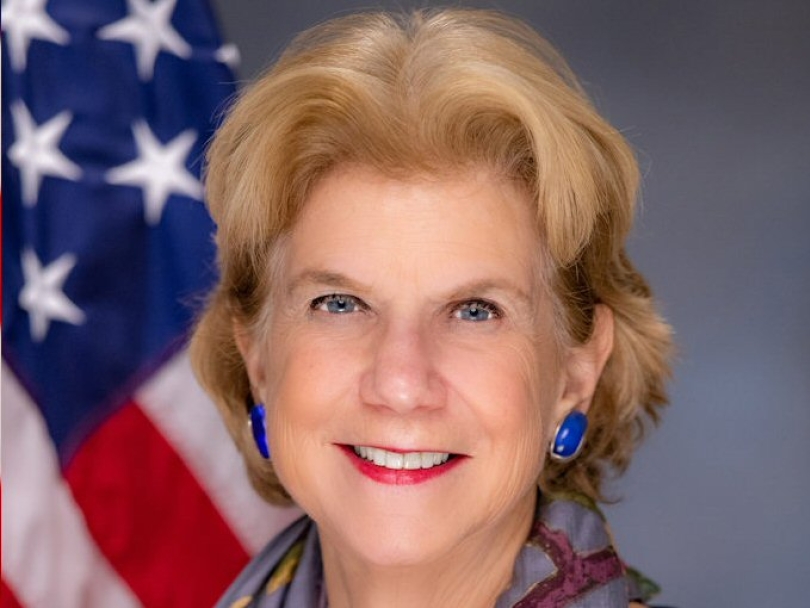
Shelley Mayer
100% support rate
Top opponent
Andrew Lanza
0% support rate
Ranked legislators
10
5 support · 5 oppose
Key legislators

Who's moving paid leave in New York

Legislators moving paid leave in New York
Legislator Party Stance Support rate Votes
Shelley Mayer
Shelley Mayer Senate · District 37
D
Strong +
100% 11
NF
Nathalia Fernández Senate · District 34
D
Strong +
100% 10
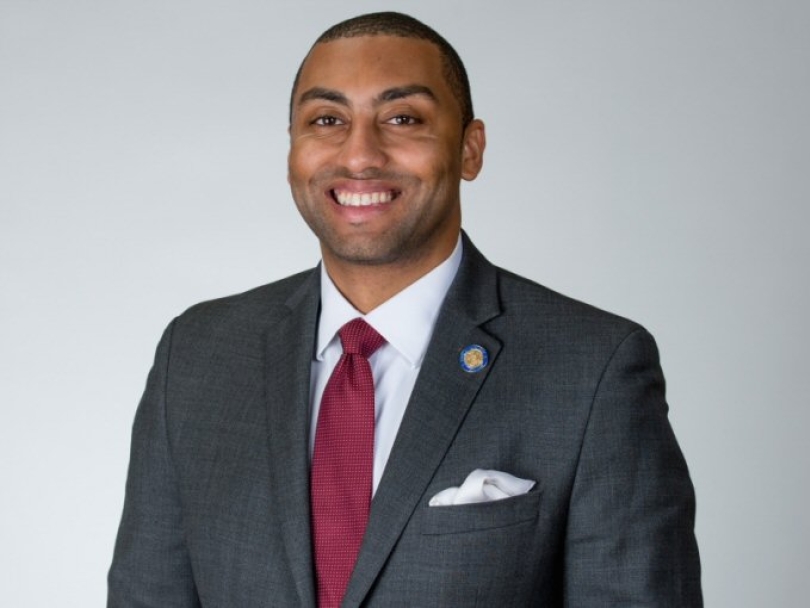
Jamaal Bailey
Jamaal Bailey Senate · District 36
D
Strong +
100% 9
James Skoufis
James Skoufis Senate · District 42
D
Strong +
100% 9
Jessica Ramos
Jessica Ramos Senate · District 13
D
Strong +
100% 9
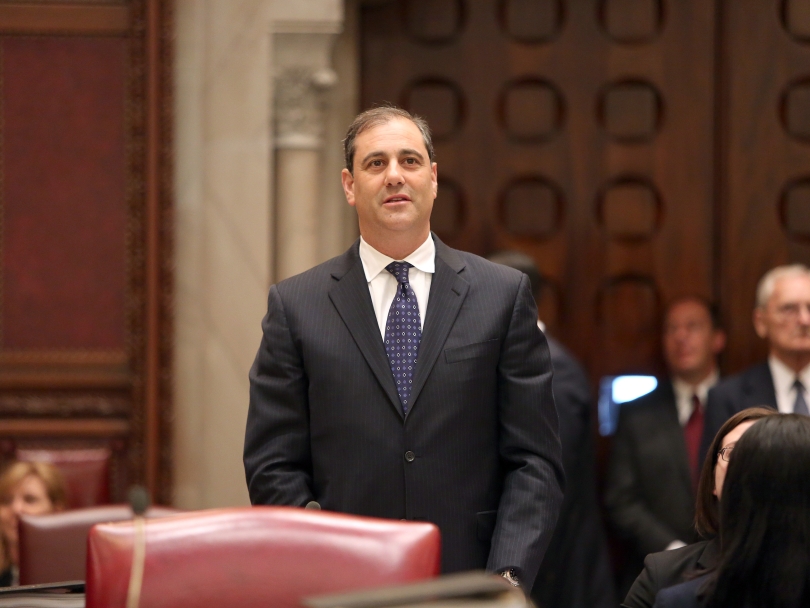
Andrew Lanza
Andrew Lanza Senate · District 24
R
Strong −
0% 8
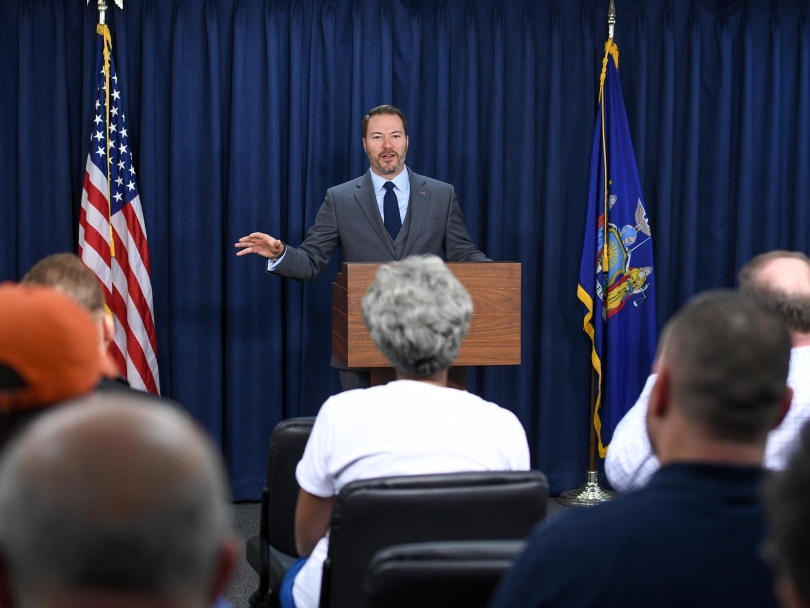
Mark Walczyk
Mark Walczyk Senate · District 49
R
Strong −
0% 8
Rob Ortt
Rob Ortt Senate · District 62
R
Strong −
0% 8
George Borrello
George Borrello Senate · District 57
R
Strong −
0% 7
Tom O'Mara
Tom O'Mara Senate · District 58
R
Strong −
0% 7
Showing 101–110 of 110 bills

All labor & employment bills

passed both · New York · Assembly Jun 1, 2026

A 1202: Relates to use of accrued sick time, compensation time or vacation time

This bill allows public employees in New York (including state, county, school district, and retirement system workers) to use accrued sick, vacation, or personal time during waiting periods for workers' compensation benefits or when their claim is disputed. Employers cannot force employees to use this time during such periods, and if an employee later qualifies for benefits, they get their used time fully restored. The law does not apply to employees covered by collective bargaining agreements unless their union specifically opts in to these provisions. It preserves existing collective bargaining rights while ensuring employees don't lose accrued time during workers' comp processing delays.
in committee · New York · Assembly Jan 7, 2026

A 1467: Relates to paid family leave after a stillbirth

This bill (A 1467) adds "to recover after a stillbirth" as a qualifying reason for paid family leave under New York's workers' compensation law. It directly affects employees who experience a stillbirth, allowing them to take paid leave for recovery. The key provision amends existing law to include stillbirth recovery alongside other covered reasons like bonding with a newborn or caring for a family member with a serious health condition. The change applies to all policies or contracts issued, renewed, or modified after the effective date. This is a specific policy update to expand access to paid leave for a defined health-related event.
in committee · New York · Senate Jan 7, 2026

S 3524: Increase the amount of family leave time that may be taken in a year

This bill increases New York's paid family leave benefits by raising the maximum leave time from 10 weeks to 26 weeks per year (52-week calendar period), effective January 1, 2020, and gradually increasing the benefit percentage from 60% to 100% of an employee's average weekly wage (capped at 80% of the state average). It directly affects New York employees who need leave for family care (e.g., newborns, sick relatives), employers providing this benefit, and insurers administering the program. Key provisions include a minimum $100 weekly benefit, the option for employees to use accrued vacation time instead of family leave (with full pay), and a superintendent's authority to delay benefit increases if market stability is at risk. The bill also clarifies that leave duration cannot exceed 26 weeks in any 52-week period and ensures reinstatement protections.
Sub-Topics Paid Leave
passed · New York · Senate Jun 4, 2026

S 172: Increases short-term disability benefits

This bill increases short-term disability and family leave benefits for eligible New York workers. It phases in higher weekly benefit rates (from 50% to 67% of average weekly wage) and extends maximum benefit periods (from 8-10 weeks to 12 weeks) over time, starting in 2018. These changes apply to employees taking leave for disability or qualifying family care needs under New York's workers' compensation law. The bill requires employers to maintain health benefits during leave and prohibits retaliation for taking leave. The superintendent of financial services may delay benefit increases if needed to maintain program stability.
in committee · New York · Assembly Jan 7, 2026

A 1664: Relates to dysmenorrhea and use of sick leave

This New York state bill (A 1664) allows employees to use their existing accrued sick leave for painful menstrual cramps (dysmenorrhea). It directly affects all employees covered by sick leave policies under New York's labor law, including those working for state agencies, local governments, schools, and private employers. The bill permits using sick leave in full or partial days for this condition, clarifying that it does not create new paid leave but uses existing sick leave benefits (excluding workers' comp or insurance). It explicitly protects existing collective bargaining agreements and takes effect 120 days after enactment.
in committee · New York · Assembly Jan 7, 2026

A 1808: Requires employers to provide up to ten additional days of unpaid leave for absences due to domestic violence, a family offense, sexual offense, stalking or human trafficking

Requires employers to provide up to ten additional days of unpaid leave for absences when the employee or employee's family member has been the victim of domestic violence, a family offense, sexual offense, stalking or human trafficking upon the employee's request for reasons related to such offense or offenses.
in committee · New York · Assembly Jan 7, 2026

A 8058: Requires certain workers have access to paid sick leave

Bill A 8058 aims to expand access to paid sick leave for workers. It amends the state labor law by redefining who qualifies as an "employee" for paid sick leave purposes. Under this bill, a person providing labor or services to an employer is considered an employee unless the employer can demonstrate three specific conditions are met, indicating an independent contractor relationship. Minor league baseball players compensated under certain collective bargaining agreements are specifically excluded from this expanded definition.
in committee · New York · Assembly Jan 7, 2026

A 9109: Establishes the paid leave for immigration hearings act

This bill, the "Paid Leave for Immigration Hearings Act" (A 9109), allows New York employees to use their existing accrued paid sick leave for immigration court appearances or preparation, covering both the employee and their family members. It expands the state's labor law to specifically include immigration proceedings as a valid reason for taking sick leave, without requiring employers to know confidential details about the case. Employers must grant this leave upon request and cannot demand disclosure of immigration-related information as a condition for providing it. The law applies to all covered employers in New York and takes effect 180 days after enactment.
in committee · New York · Assembly Jan 7, 2026

A 1399: Increase the amount of family leave time that may be taken in a year

This bill gradually increases the maximum paid family leave time New York employees can take annually. Starting in 2018, it expands leave from 8 weeks to a maximum of 26 weeks by 2021, with corresponding increases in benefit rates from 50% to 100% of the employee's average weekly wage (capped at state averages). It sets a minimum weekly benefit of $100, ensures full wage coverage for lower earners, and allows the superintendent of financial services to delay increases if needed for program stability. The bill directly affects eligible New York workers needing leave for family care, with concrete policy changes being the phased expansion of leave duration and benefit levels.
Sub-Topics Paid Leave
in committee · New York · Senate Jan 7, 2026

S 5991: Requires employers provide its employees paid leave

S 5991, the "LEAVE Act," requires most employers to provide paid sick leave and paid leave based on company size: small businesses (4+ employees with >$1M income) must offer 40 hours paid sick leave and 40 hours paid leave annually; mid-sized (5-99 employees) get 40 hours each; large businesses (100+) get 56 hours sick leave and 40 hours paid leave. Employees accrue leave at 1 hour per 30 hours worked, with protections covering medical needs, family care, and domestic violence situations (including safety planning and legal support). The bill also mandates 20 hours of paid prenatal leave annually starting in 2025, to be taken in hourly increments at the employee’s regular pay rate. It applies to all covered employers in the state and prohibits requiring confidential health disclosures as a condition for leave.
Showing 101 to 110 of 110 bills
Previous 1 9 10 11