Issue · Labor & Employment

Labor & Employment

Every labor & employment bill, vote, and legislator stance in New York, automatically classified by Maddy, our AI policy reader.

Total bills
18
119th Congress
Top supporter
Nick LaLota
92% support rate
Top opponent
Elise M. Stefanik
38% support rate
Ranked legislators
8
5 support · 3 oppose
Key legislators

Who's moving labor & employment in New York

Legislators moving labor & employment in New York
Legislator Party Stance Support rate Votes
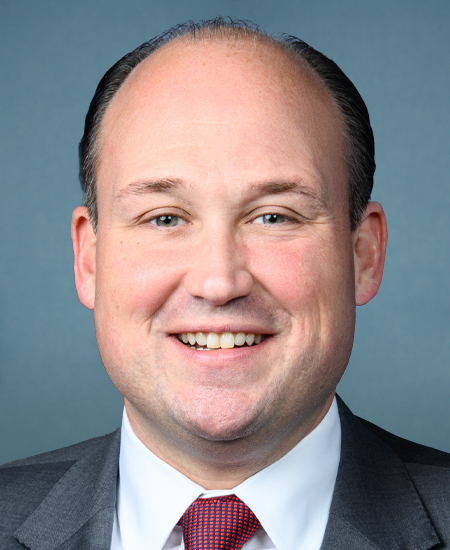
Nick LaLota
Nick LaLota House · District 1
R
Strong +
92% 195
Michael Lawler
Michael Lawler House · District 17
R
Strong +
85% 194
Thomas R. Suozzi
Thomas R. Suozzi House · District 3
D
Support
77% 198
Laura Gillen
Laura Gillen House · District 4
D
Support
75% 195
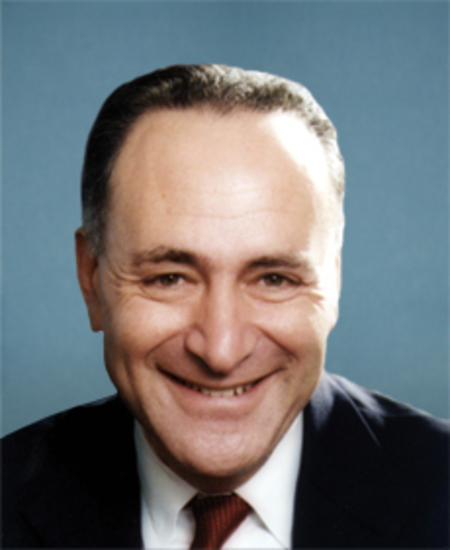
Charles E. Schumer
Charles E. Schumer Senate
D
Support
75% 213
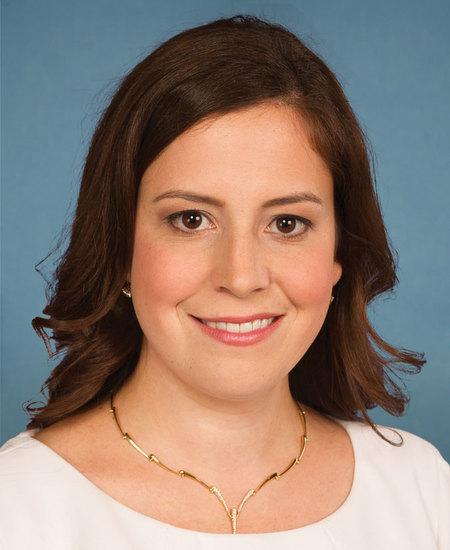
Elise M. Stefanik
Elise M. Stefanik House · District 21
R
Oppose
38% 176
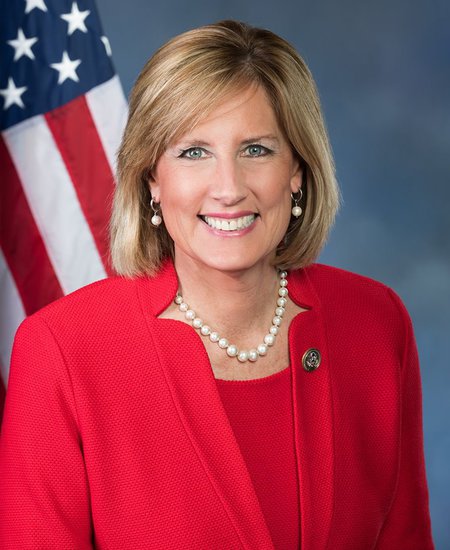
Claudia Tenney
Claudia Tenney House · District 24
R
Oppose
38% 196
Nicholas A. Langworthy
Nicholas A. Langworthy House · District 23
R
Mixed −
46% 198
Showing 1–10 of 18 bills

All labor & employment bills

in committee · United States · House May 19, 2026

HR 8901: Securing Innovation and Research from Adversaries Act

HR 8901, the Securing Innovation and Research from Adversaries Act, prohibits federally funded researchers and institutions from collaborating with entities on specific U.S. government restricted lists, such as those related to national security risks or forced labor. The bill defines research collaboration broadly to include joint projects, data sharing, co-authorship, and personnel exchanges, and it requires agencies to issue guidance for standardized compliance. While the law generally bans these partnerships, it allows federal agency heads to grant case-by-case waivers if the collaboration is essential for national security or critical scientific purposes, provided they report the decision and justification to Congress within 30 days.
in committee · United States · House Jan 3, 2025

HR 200: Federal Freeze Act

This bill freezes federal hiring and salary increases for one year, requiring agencies to maintain current staffing levels (based on employment as of enactment). After the initial freeze period, agencies must reduce staff by 2% within two years and by 5% within three years. The law applies to all federal agencies and their employees, with limited exceptions for appointments deemed critical to law enforcement, public safety, or national security. It directly changes personnel management by mandating specific workforce reductions and prohibiting pay raises.
Sub-Topics Public Employees
in committee · United States · House Jan 7, 2025

HR 236: Federal Employee Return to Work Act

This bill requires federal employees who telework at least one day weekly (or 20% of their time under alternative schedules) to be paid at the "Rest of U.S." locality pay rate without future adjustments. It excludes employees who telework daily, those with disabilities receiving accommodations, Foreign Service members, law enforcement officers, and military personnel on active duty. Covered employees will no longer receive annual pay adjustments under standard federal pay schedules. The policy takes effect at the start of the first full fiscal year after the bill becomes law. It directly affects federal workers meeting the telework threshold, altering their pay structure based on location.
in committee · United States · House Jan 16, 2025

HR 473: SHOW UP Act of 2025

HR 473, the SHOW UP Act of 2025, requires federal executive agencies to return to pre-pandemic telework policies within 30 days of enactment, limiting work-from-home options to those in place on December 31, 2019. Agencies must then conduct a 6-month study analyzing pandemic-era telework impacts - including effects on mission performance, costs from underused office space, and employee productivity tools - and submit a plan to Congress if they seek to expand telework beyond these baseline levels. The plan requires certification from the Office of Personnel Management confirming it will improve mission performance, reduce real estate costs, lower locality pay expenses, and ensure secure remote work capabilities without increasing agency costs. This bill directly affects all federal executive agencies (excluding the Government Accountability Office) and their employees by restricting telework flexibility and imposing strict requirements for any future expansion.
in committee · United States · House Jan 23, 2025

HR 687: MERIT Act of 2025

The MERIT Act of 2025 makes significant changes to federal personnel management by repealing Chapter 43 performance-based actions and modifying procedures for disciplinary actions, furloughs, and bonus recoupment. It extends probationary periods for senior executives (to 2 years) and competitive service employees (to 2 years), establishes new rules for reducing retirement benefits of employees convicted of felonies related to their federal service, and creates standardized procedures for adverse actions including written notice requirements and response periods. The bill also allows agencies to recoup bonuses for misconduct and modifies procedures for handling furloughs of more than 14 days. These changes apply to all federal employees across government agencies and aim to clarify and streamline personnel management processes.
Sub-Topics Public Employees
in committee · United States · House Mar 5, 2025

HR 1882: Saving Gig Economy Taxpayers Act

This bill modifies tax reporting rules for gig economy platforms (like Uber or DoorDash) by reinstating a pre-American Rescue Plan threshold. It requires third-party payment platforms to report income to the IRS only if a gig worker earns over $20,000 in a year or completes more than 200 transactions. This directly affects low-earning gig workers who would no longer receive tax forms for smaller earnings. The change simplifies reporting for platforms and reduces administrative burden on workers with minimal income from these platforms.
Sub-Topics Gig Economy
in committee · United States · House Jan 28, 2026

HR 7248: MARINA Act

HR 7248 (MARINA Act) standardizes fees and lease terms for marinas operating on Corps of Engineers waterways. It caps rent at 1% of marina sales (including food, fuel, and boat services), creates fixed administrative fee tiers ($50,000 for major projects, $5,000 for moderate reviews, $1,000 for routine matters), and sets minimum lease terms at 50 years for initial agreements. The bill also prohibits requiring wages above federal minimum wage and mandates a public fee schedule. It directly affects all marina operators under Corps leases, ensuring consistent pricing and reducing arbitrary fees across all districts.
Sub-Topics Minimum Wage
in committee · United States · House Sep 26, 2025

HR 5596: FARMS Act

HR 5596, the FARMS Act, freezes the current wage rate for H-2B visa workers for two years after enactment. It directly affects H-2B nonimmigrant workers and their employers by preventing increases to the required wage rate during this period. The bill allows the Secretary of Labor to retain the existing wage rate if they determine a valid calculation method for the new rate is unavailable. This provides temporary stability to employers hiring H-2B workers without requiring immediate changes to wage payments.
in committee · United States · House Dec 12, 2025

HR 6685: To amend the Internal Revenue Code of 1986 to establish an exception for multiemployer plan participants to the requirements for automatic enrollment.

This bill exempts multiemployer pension plans from automatic enrollment requirements under the Internal Revenue Code. Specifically, it amends Section 414A(c)(3) to explicitly exclude multiemployer plans (defined under Section 414(f)) from rules requiring automatic enrollment in retirement plans. This change directly affects workers enrolled in union-sponsored multiemployer pension plans, allowing these plans to avoid automatic enrollment obligations. The amendment applies to taxable years beginning after December 31, 2024.
in committee · United States · House Jul 16, 2025

HR 4448: Restoring Equal Opportunity Act

HR 4448, the Restoring Equal Opportunity Act, prohibits lawsuits alleging discrimination based on "disparate impact" in employment and housing. It amends the Civil Rights Act of 1964 and Fair Housing Act to ban claims where a neutral policy (like a test or screening rule) unintentionally disadvantages protected groups (such as race or gender), even if there was no discriminatory intent. The bill also nullifies specific federal regulations implementing civil rights laws, removing legal grounds for such claims under current enforcement rules. This directly affects employers, housing providers, and federal agencies that enforce civil rights laws, changing how discrimination claims can be brought in court.
Showing 1 to 10 of 18 bills
1 2 Next