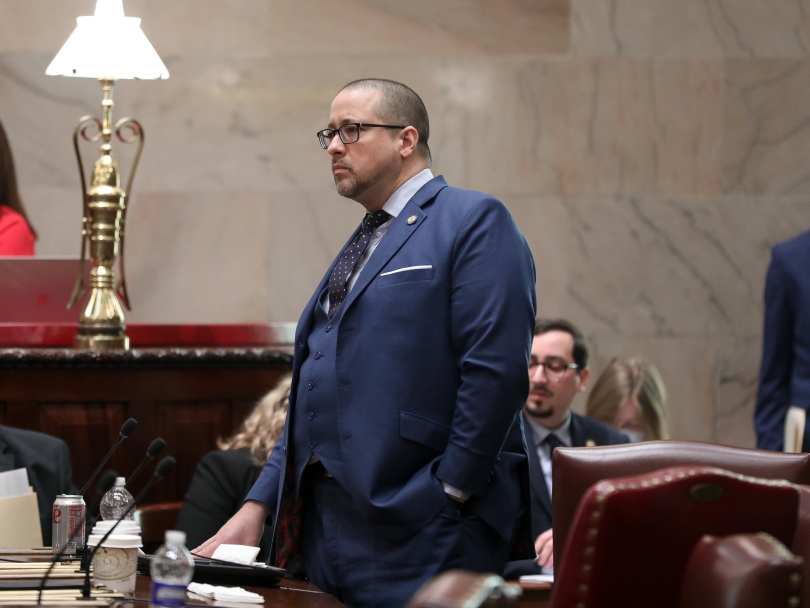
S 8267 establishes a local community housing fund for the Town of Rochester, Ulster County, to increase affordable housing opportunities for residents. The fund provides financial assistance - up to 50% of a home's purchase price - as grants or loans to first-time homebuyers meeting income limits (100% of state mortgage agency thresholds for Ulster County). It uses town revenues like real estate transfer taxes, general fund surpluses, and state/federal grants to support home purchases, new construction, rehabilitation, or rental housing for eligible households. The program specifically targets primary residences (not investment properties) and requires repayment of loans upon home resale.
This bill establishes an independent agency to handle complaints from current and converted Mitchell-Lama residents regarding issues like rent increases, harassment, or unsafe living conditions. It requires state and city housing agencies to verify financial documentation before approving rent hikes or building conversions, and mandates comptroller approval for all rent increases based on verified expenses. The bill also guarantees legal support for tenants in housing court and creates a specialized help desk for self-represented litigants. These changes directly affect Mitchell-Lama residents, building owners, co-op boards, and state/local housing agencies overseeing affordable housing.
Relates to establishing the housing access voucher program; provides that the commissioner of the division of housing and community renewal shall implement a program of rental assistance in the form of housing vouchers for eligible individuals and families who are homeless or who face an imminent loss of housing; provides that the commissioner shall designate housing access voucher local administrators in the state to administer the program.
This bill requires landlords to maintain habitable housing conditions before they can pursue rent payments or eviction cases. Specifically, landlords cannot file such actions if there are unresolved housing code violations, lack of essential utilities (heat, water, electricity, sewage), rodent infestations, or other dangerous conditions that have existed for five or more days in the building. Landlords may submit an affidavit claiming violations were recorded erroneously, but courts can dismiss cases if the affidavit is untrue or unsafe conditions persist at filing. The law also mandates that landlords include specific notices about tenant protections in eviction notices. This directly affects landlords seeking to collect rent or evict tenants and strengthens tenant safeguards against unsafe housing conditions.
Relates to establishing the housing access voucher program; provides that the commissioner of the division of housing and community renewal shall implement a program of rental assistance in the form of housing vouchers for eligible individuals and families who are homeless or who face an imminent loss of housing; provides that the commissioner shall designate housing access voucher local administrators in the state to administer the program.
Establishes a tax credit for rent paid on the personal residence of certain taxpayers who lease the taxpayer's primary residence during the taxable year and who pay rent with respect to such residence in excess of thirty percent of such taxpayer's gross income for such taxable year whose income is less than fifty percent of the area median income.
Removes provisions that prohibit cities of one million or more from strengthening rent regulation laws to provide more comprehensive coverage than state laws.
Relates to rental discrimination based upon consumer credit history; prohibits a person from refusing to rent or lease or otherwise to deny to or withhold from any person or group of persons housing accommodations because of the consumer credit history of such person or persons, or to represent that any housing accommodation is not available for rental or lease when in fact it is so available; defines consumer credit history.
This bill adds veterans to the list of protected classes under New York's housing discrimination law. It prohibits landlords, property owners, and housing providers from refusing to rent, sell, or lease housing accommodations based solely on a person's veteran status. The law applies to both publicly-assisted housing (Section 1) and general housing, land, or commercial space (Section 2). These changes take effect immediately upon enactment.
This bill requires landlords using automated tools to screen housing applicants to conduct annual bias checks by independent auditors, ensuring the tools don't disproportionately harm protected groups like racial minorities or women. Landlords must publicly share summary results of these checks on their websites before using the tools and notify applicants about how the tools work, what data they use, and denial reasons. It directly affects landlords who deploy such technology and housing applicants whose applications are processed by these systems. The law mandates transparency about tool usage and provides applicants a 24-hour window to request human review if denied. Violations may trigger investigations by the attorney general.