Issue · Healthcare

Healthcare (Primary Care)

Every healthcare bill, vote, and legislator stance in New York, automatically classified by Maddy, our AI policy reader.

Total bills
42
2025 Regular Session
Top supporter
John Liu
100% support rate
Top opponent
Dan Stec
0% support rate
Ranked legislators
10
5 support · 5 oppose
Key legislators

Who's moving primary care in New York

Legislators moving primary care in New York
Legislator Party Stance Support rate Votes
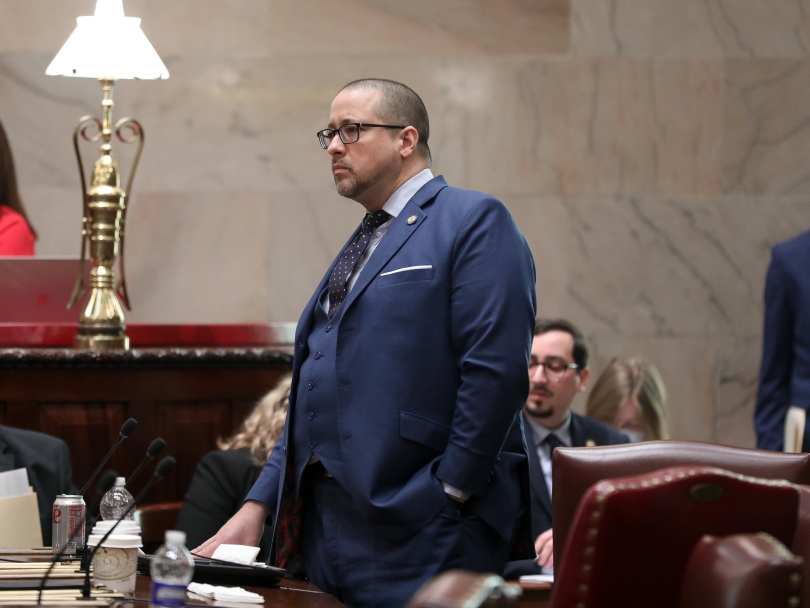
John Liu
John Liu Senate · District 16
D
Strong +
100% 7
Andrea Stewart-Cousins
Andrea Stewart-Cousins Senate · District 35
D
Strong +
100% 6
Gustavo Rivera
Gustavo Rivera Senate · District 33
D
Strong +
100% 6
Jamaal Bailey
Jamaal Bailey Senate · District 36
D
Strong +
100% 6
Joe Addabbo
Joe Addabbo Senate · District 15
D
Strong +
100% 6
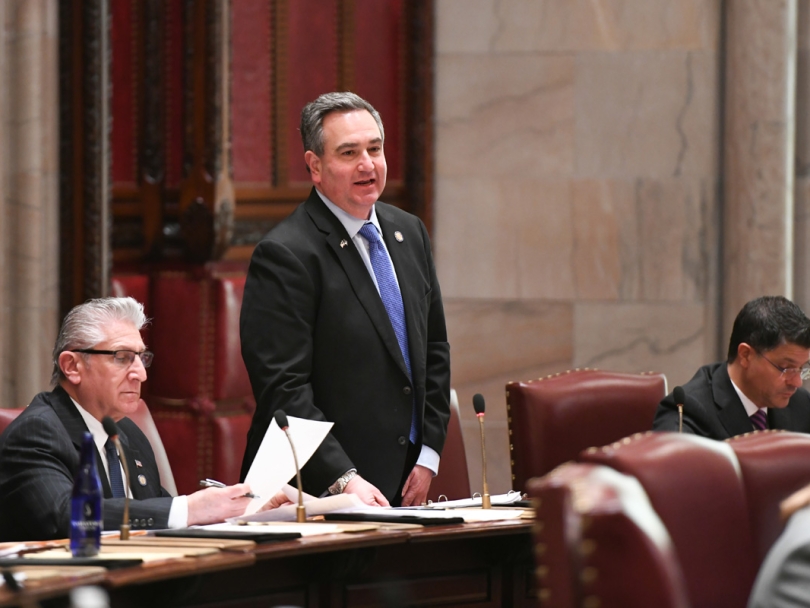
Dan Stec
Dan Stec Senate · District 45
R
Strong −
0% 7
Dean Murray
Dean Murray Senate · District 3
R
Strong −
0% 4
George Borrello
George Borrello Senate · District 57
R
Strong −
0% 4
Jim Tedisco
Jim Tedisco Senate · District 44
R
Strong −
0% 4
Patricia Canzoneri-Fitzpatrick
Patricia Canzoneri-Fitzpatrick Senate · District 9
R
Strong −
0% 4
Showing 31–40 of 42 bills

All healthcare bills

in committee · New York · Assembly Jan 7, 2026

A 9078: Establishes a task force focused on preventive care in the event federal standards are changed or revoked

Establishes a task force focused on preventive care in the event federal standards are changed or revoked; establishes the terms, pay and makeup of such taskforce.
Sub-Topics Primary Care
in committee · New York · Assembly Jan 7, 2026

A 1309: Authorizes collaborative programs for community paramedicine services

This bill authorizes hospitals, home care agencies, physicians, and emergency medical services (EMS) to form collaborative programs focused on community paramedicine. It allows these partnerships to provide preventive care in community settings - such as managing chronic conditions (e.g., diabetes, hypertension) and reducing avoidable emergency room visits and hospital admissions - instead of relying solely on emergency transport. The law enables state funding (like grants or rate adjustments) and regulatory flexibility to support these initiatives, while requiring collaboration among the specified partners. It directly affects healthcare providers and at-risk patients, aiming to improve care coordination and reduce costs through proactive community-based services.
in committee · New York · Senate May 27, 2025

S 6000: Directs the department of health to establish an alternative payment methodology (APM) for Federally Qualified Health Centers to preserve and improve patient access to fertility care

Directs the department of health to establish an alternative payment methodology (APM) for federally qualified health centers to preserve and improve patient access to fertility care.
in committee · New York · Senate Jun 5, 2026

S 5333: Authorizes collaborative programs for community paramedicine services

This bill authorizes collaborative programs between hospitals, home care agencies, physicians, and emergency medical services (EMS) to provide community paramedicine services. It specifically allows these partnerships to develop plans for preventive care in community settings, targeting at-risk individuals to avoid unnecessary emergency room visits, transports, and hospital admissions - especially for those with chronic conditions, behavioral health needs, or disabilities. The law establishes a legal framework for these collaborations under New York's public health system, enabling state funding support like grants or rate adjustments for participating entities. It directly affects healthcare providers, EMS organizations, and vulnerable patient populations by expanding coordinated care models beyond traditional emergency response.
in committee · New York · Assembly Jan 7, 2026

A 2514: Authorizes pharmacists to administer injections for contraceptive use

This bill allows New York pharmacists to administer FDA-approved progestin-only contraceptive injections for birth control, expanding access to contraception. Pharmacists must complete a patient risk assessment, provide educational materials, and notify a patient's primary care provider (with opt-out allowed) before administering the injection. They must also complete required training and may refuse service if safety concerns exist. The law directly affects patients seeking contraception - particularly those without regular doctors - and pharmacists who provide this service.
in committee · New York · Assembly Jan 7, 2026

A 6334: Expands the healthcare services provided by telehealth

This bill requires health insurers and government programs to reimburse telehealth services at the same rate and under the same conditions as in-person care, directly affecting telehealth providers and patients accessing remote healthcare. It specifically ensures mental health services delivered via telehealth (under mental hygiene law) are reimbursed at full in-person rates unless a commissioner deems them inappropriate. The bill excludes reimbursement for facility fees or clinic costs not incurred during telehealth visits, as these typically apply to in-person settings. It also notes that new telehealth service types or audio-only calls require federal funding approval. The changes expire 60 days after enactment, aligning with the original law's expiration.
in committee · New York · Senate Mar 17, 2026

S 4589: Relates to federal qualified health center rate adequacy

Bill S 4589 modifies how Federally Qualified Health Centers (FQHCs) are reimbursed for their operating costs. Beginning in April 2025, and every three years thereafter, the department will analyze actual FQHC costs over the prior five years, considering factors like services provided, staffing, and technology. Based on this analysis, the department will develop and issue updated payment rates, removing existing payment ceilings or caps. The bill ensures that no FQHC will receive a lower operating cost component or overall payment rate than what was applied before September 30, 2025.
Sub-Topics Primary Care
passed · New York · Senate Apr 16, 2026

S 354: Expands the healthcare services provided by telehealth

This bill expands telehealth healthcare coverage by requiring insurers and government programs to reimburse telehealth services at the same rate as in-person visits, with specific exceptions. It ensures telehealth providers are paid equally for most services, though they won't be reimbursed for facility costs (like clinic fees) that weren't incurred during virtual visits. Mental health services delivered via telehealth - covered under specific mental hygiene laws - must receive full in-person reimbursement rates unless a commissioner deems them inappropriate. New telehealth modalities, provider types, or locations require federal funding approval. The bill aims to make telehealth financially equivalent to in-person care for most covered services.
in committee · New York · Senate Jun 12, 2025

S 6895: Relates to high deductible health plans and health savings accounts

This bill clarifies cost-sharing rules for health plans paired with Health Savings Accounts (HSAs). It ensures that for HSA-qualified high-deductible plans, cost-sharing requirements (like copays) don't make enrollees ineligible for HSAs. Specifically, cost-sharing only applies after an enrollee meets the IRS's minimum deductible, except for preventive care services, which always have no cost-sharing regardless of the deductible. This directly affects individuals enrolled in such health plans who use HSAs to save for medical expenses.
Sub-Topics Primary Care
in committee · New York · Assembly Mar 6, 2026

A 67: Relates to federal qualified health center rate adequacy

This bill updates how New York State calculates payment rates for federally qualified health centers (FQHCs), which provide primary care in underserved communities. It changes the rate calculation method: through 2025, rates use the Medicare Economic Index, and after 2025, they use a federal cost adjustment formula (FQHC Market Basket inflator) adjusted for service scope. The state health department must analyze actual FQHC costs every three years starting in 2025 to set updated rates, ensuring payments reflect real costs while guaranteeing no facility receives a rate lower than the 2025 level. This directly affects FQHCs by potentially increasing their state-funded payments based on verified operational expenses.
Sub-Topics Medicare Primary Care
Showing 31 to 40 of 42 bills
Previous 1 3 4 5 Next