Issue · Healthcare

Healthcare (Long-Term Care)

Every healthcare bill, vote, and legislator stance in New York, automatically classified by Maddy, our AI policy reader.

Total bills
164
2025 Regular Session
Top supporter
Gustavo Rivera
100% support rate
Top opponent
George Borrello
0% support rate
Ranked legislators
10
5 support · 5 oppose
Key legislators

Who's moving long-term care in New York

Legislators moving long-term care in New York
Legislator Party Stance Support rate Decisive votes
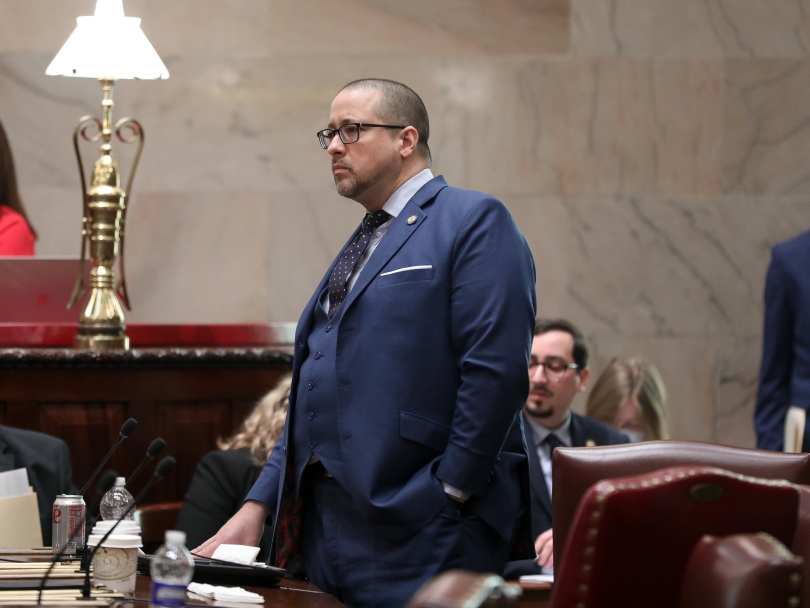
Gustavo Rivera
Gustavo Rivera Senate · District 33
D
Strong +
100% 21
Kristen Gonzalez
Kristen Gonzalez Senate · District 59
D
Strong +
100% 21
Robert Jackson
Robert Jackson Senate · District 31
D
Strong +
100% 20
Zellnor Myrie
Zellnor Myrie Senate · District 20
D
Strong +
100% 19
Lea Webb
Lea Webb Senate · District 52
D
Strong +
100% 18
George Borrello
George Borrello Senate · District 57
R
Strong −
0% 10
Patricia Canzoneri-Fitzpatrick
Patricia Canzoneri-Fitzpatrick Senate · District 9
R
Strong −
0% 10
Tony Palumbo
Tony Palumbo Senate · District 1
R
Strong −
0% 10
Alexis Weik
Alexis Weik Senate · District 8
R
Strong −
0% 9
Dan Stec
Dan Stec Senate · District 45
R
Strong −
4% 23
Showing 151–160 of 164 bills

All healthcare bills

in committee · New York · Senate Jun 12, 2025

S 3361: Requires medical evaluations for assisted living eligibility to be conducted within thirty days prior to the date of admission

This bill requires medical evaluations for assisted living facility admission to be completed within 30 days before a resident's move-in date. It directly affects assisted living facilities and prospective residents, mandating that evaluations must be signed by a physician, physician assistant, or nurse practitioner. The key provision updates eligibility rules to ensure assessments reflect current health needs. This change aims to improve safety and appropriateness of care placements by requiring timely evaluations. (4 sentences)
died · New York · Senate Jan 7, 2026

S 6282: Relates to certain requirements for waivers issued under the hospital-home care-physician collaboration program

Provides that health regulations may not be waived under the hospital-home care-physician collaboration program without publication and opportunity for public comment; prohibits waiver of an applicant's obligation to meet public need, character and competence, or financial feasibility requirements.
in committee · New York · Assembly Jan 7, 2026

A 909: Establishes a pilot program authorizing certain nurse aides to administer medication in residential health care facilities in St. Lawrence county

This bill establishes a pilot program in St. Lawrence County allowing certified nursing home medication aides to administer certain medications in residential health care facilities. It directly affects certified aides (with specific training and experience) and the facilities where they work, under strict conditions. Key provisions require direct supervision by a registered nurse, prohibit injections except for diabetes, heparin, or epinephrine emergencies, and mandate case-specific training. Aides cannot assess patient needs or perform beyond their scope, and facilities must document all medication administration. The program is limited to St. Lawrence County as a temporary pilot.
in committee · New York · Senate May 19, 2026

S 2332: Relates to long term care options for medicaid recipients; repealer

Repeals managed long term care provisions for Medicaid recipients; establishes provisions for fully integrated plans for long term care including PACE and MAP plans.
in committee · New York · Senate Jan 7, 2026

S 358: Relates to eligibility for home care services under medicaid; repealer

Bill S 358 aims to expand eligibility for personal and home care services funded by Medicaid. It removes specific functional assessment criteria, which currently require individuals to need assistance with a certain number of daily living activities to qualify. This includes removing particular requirements for those with dementia or Alzheimer's diagnoses. The bill directly affects individuals seeking to receive in-home care services through the Medicaid program by making it easier to meet eligibility standards.
in committee · New York · Assembly Apr 29, 2026

A 6272: Provides for rates for residential health care facilities

This bill updates how New York State sets payment rates for residential health care facilities (like nursing homes). It requires the state to adjust rates using specific components - direct/indirect price changes, facility-specific costs - and mandates updates by April 1, 2026, and every five years after. Special rate provisions apply to facilities providing specialized care (e.g., for brain injury rehab, AIDS units, or pediatric services), with inflation adjustments starting in 2026. The bill also creates a workgroup of experts to advise on rate-setting and includes funding mechanisms to support facility quality improvements.
in committee · New York · Senate Mar 4, 2025

S 1235: Relates to the ability of the New York state medical care facilities finance agency to issue certain bonds and notes

This bill increases the New York State Medical Care Facilities Finance Agency's borrowing limit for hospital and nursing home project bonds from $18.2 billion to $20.2 billion. It directly affects medical facilities seeking financing for construction or improvements by allowing the agency to issue up to $200 million more in bonds. Key provisions include a new rule ensuring that refunding bonds don’t increase long-term debt costs and clearer requirements for maintaining reserve funds. The bill modifies existing law to expand financing capacity while maintaining fiscal safeguards.
in committee · New York · Assembly Jan 7, 2026

A 4517: Relates to establishing a program of health care quality innovation and improvement through home care

This bill creates a state-funded program to improve healthcare quality in home care settings. It provides grants or supplemental payments to certified home health agencies, long-term home care programs, and managed care plans that partner with home care providers. The program supports specific quality improvements like falls prevention, care coordination with hospitals, technology integration for better patient monitoring, staff training, and evidence-based practices. These initiatives aim to enhance patient outcomes, reduce health disparities, and align home care with broader healthcare systems. The program requires the health commissioner to establish application and scoring processes with input from home care providers and managed care plans.
Sub-Topics Long-Term Care
in committee · New York · Senate Jun 5, 2026

S 5333: Authorizes collaborative programs for community paramedicine services

This bill authorizes collaborative programs between hospitals, home care agencies, physicians, and emergency medical services (EMS) to provide community paramedicine services. It specifically allows these partnerships to develop plans for preventive care in community settings, targeting at-risk individuals to avoid unnecessary emergency room visits, transports, and hospital admissions - especially for those with chronic conditions, behavioral health needs, or disabilities. The law establishes a legal framework for these collaborations under New York's public health system, enabling state funding support like grants or rate adjustments for participating entities. It directly affects healthcare providers, EMS organizations, and vulnerable patient populations by expanding coordinated care models beyond traditional emergency response.
died · New York · Senate Jun 4, 2026

S 118: Relates to the dissemination of information pertaining to Alzheimer's disease and other forms of dementia through the NY Connects: Choices for Long Term Care program

S 118 creates a searchable public database of existing dementia and Alzheimer's disease support programs for elderly individuals (60+). The office of aging, working with the health department, will develop criteria to identify successful programs and maintain the database on its website. The database will include program names, descriptions, contact details, and service areas to help elderly individuals, families, and caregivers find local resources. It requires annual updates to ensure the information remains current and accessible. This bill directly affects elderly persons with dementia/Alzheimer's and the service providers offering support in community settings.
Sub-Topics Long-Term Care
Showing 151 to 160 of 164 bills