Issue · Criminal Justice

Criminal Justice (Violent Crime)

Every criminal justice bill, vote, and legislator stance in New York, automatically classified by Maddy, our AI policy reader.

Total bills
137
2025 Regular Session
Top supporter
Julia Salazar
100% support rate
Top opponent
Patrick Gallivan
0% support rate
Ranked legislators
9
5 support · 4 oppose
Key legislators

Who's moving violent crime in New York

Legislators moving violent crime in New York
Legislator Party Stance Support rate Votes
Julia Salazar
Julia Salazar Senate · District 18
D
Strong +
100% 6
Luis Sepúlveda
Luis Sepúlveda Senate · District 32
D
Strong +
100% 6
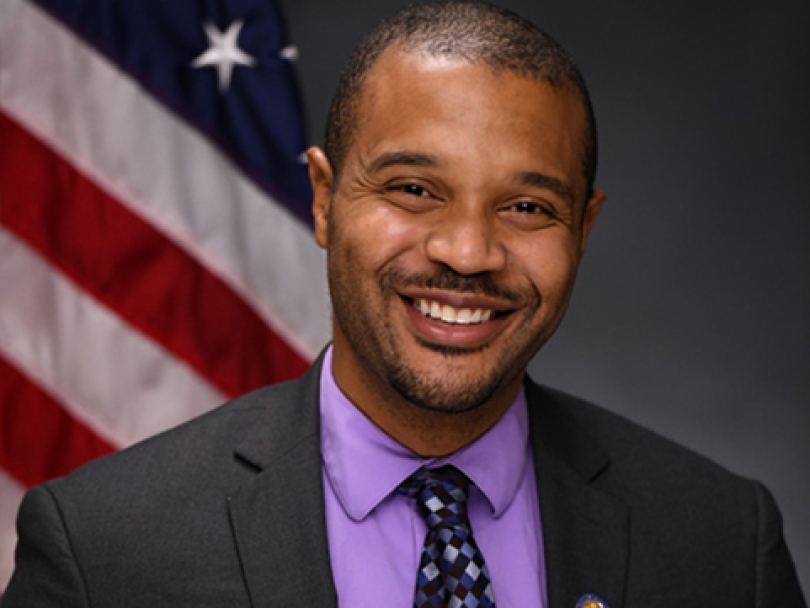
Jabari Brisport
Jabari Brisport Senate · District 25
D
Strong +
100% 5
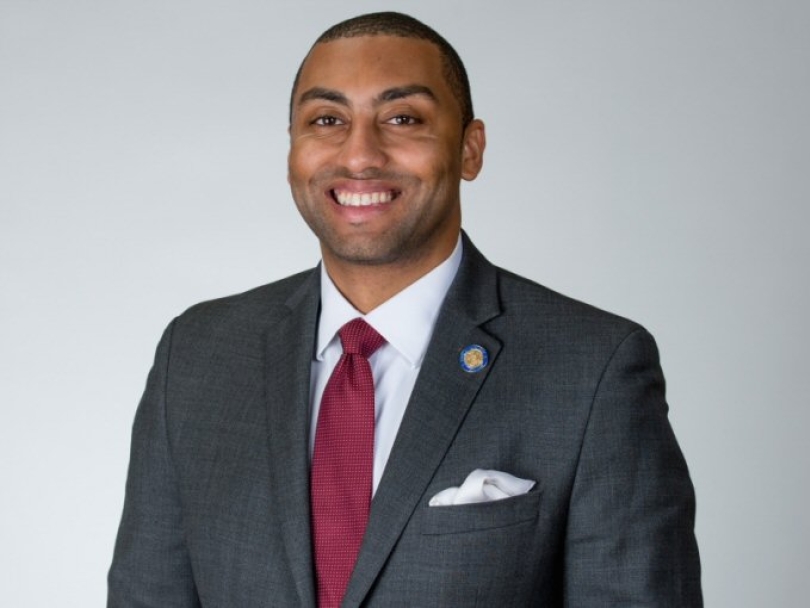
Jamaal Bailey
Jamaal Bailey Senate · District 36
D
Strong +
83% 6
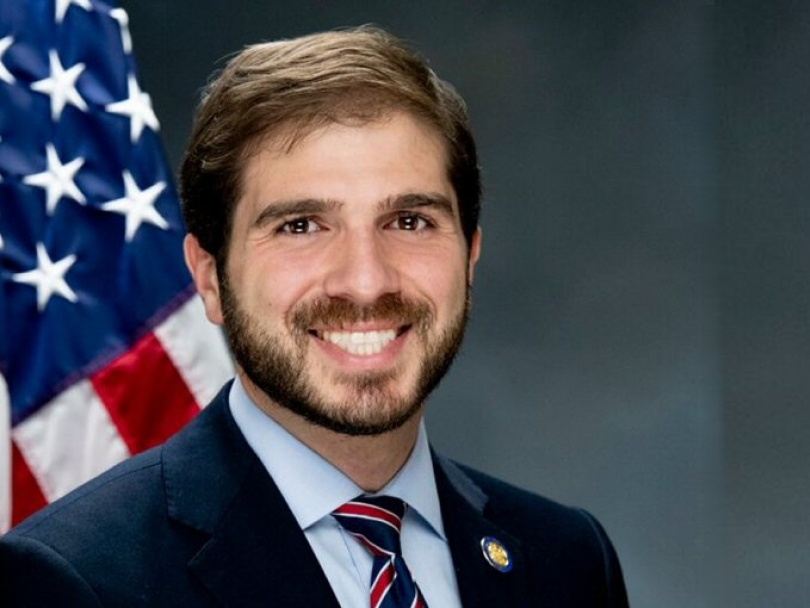
Andrew Gounardes
Andrew Gounardes Senate · District 26
D
Strong +
80% 5
Patrick Gallivan
Patrick Gallivan Senate · District 60
R
Strong −
0% 5
Tom O'Mara
Tom O'Mara Senate · District 58
R
Strong −
0% 5
Tony Palumbo
Tony Palumbo Senate · District 1
R
Strong −
0% 5
Dean Murray
Dean Murray Senate · District 3
R
Strong −
20% 5
Showing 31–40 of 137 bills

All criminal justice bills

in committee · New York · Senate Jan 7, 2026

S 4346: Establishes a gang prevention coordination council

Establishes a gang prevention coordination council to evaluate the needs and strengths of local governments in each county of the state relating to juvenile delinquency, gang activity, and gang violence and prevention, award grants to local government agencies and not-for-profit corporations; publish guidelines for local governments to implement evidence-based practices to prevent gang activity and prevent youth from joining gangs; makes related provisions.
in committee · New York · Senate Jan 7, 2026

S 3453: Relates to enhancing penalties and protecting victims of crimes of domestic violence

This bill (S 3453) increases penalties for repeat domestic violence offenses by adding a 10-year lookback period for prior convictions. It creates a new "aggravated harassment in the first degree" offense specifically for individuals who commit harassment against someone they live with or are in a domestic relationship with, after a prior harassment conviction within the last decade. The bill also amends related offenses like assault, strangulation, and menacing to include stricter penalties when the perpetrator has a prior conviction for similar crimes and is part of the same household or family as the victim. These changes directly affect repeat offenders in domestic relationships, making certain offenses class E or D felonies instead of lower-level charges. The bill focuses on holding repeat domestic violence perpetrators accountable through enhanced sentencing.
in committee · New York · Senate Jan 7, 2026

S 6045: Adds assaults against certain employees of state and local government agencies as an assault in the second degree

Establishes a person is guilty of assault in the second degree when such person intends to cause physical injury to an employee of New York state or any of its political subdivisions or of a public authority or a public benefit corporation while such employee is performing such employee's duties.
Sub-Topics Violent Crime
in committee · New York · Senate Jan 7, 2026

S 5448: Establishes certain offenses based on homicide due to criminal sale of a controlled substance and the criminal sale of a controlled substance to a child in the first degree

Establishes certain offenses based on homicide due to criminal sale of a controlled substance; establishes the offense of criminal sale of a controlled substance to a child in the first degree; expands the definition of controlled substances with respect to certain offenses; increases the felony classification of certain controlled substance offenses; includes electronic prescriptions and blank prescription forms in the definition of certain controlled substance offenses.
in committee · New York · Senate Jan 7, 2026

S 6662: Relates to assaults on medical providers and employees and volunteers of hospitals

This bill (S 6662) expands legal protections by making assaults against specific healthcare personnel a more serious offense under New York's penal law. It directly affects medical providers (like doctors and nurses), hospital employees, and volunteers - such as registered nurses, nurse practitioners, certified nursing assistants, ambulance personnel, and hospital volunteers - as defined in public health law. The key change adds these individuals to the list of protected persons, making it a crime to assault them with intent to prevent them from performing their duties. The law also specifies that causing physical injury to these protected individuals during their work constitutes a punishable offense.
in committee · New York · Assembly Jan 7, 2026

A 2136: Establishes the crime of assault on a food delivery person

Establishes the crime of assault on a food delivery person as a class E felony; defines a food delivery person to mean a person employed by a restaurant, or put into service by a restaurant, retail food store licensed by the department of agriculture and markets, or a third party vendor, to deliver food or other goods pursuant to an order placed by a customer.
Sub-Topics Violent Crime
in committee · New York · Senate Jan 7, 2026

S 3935: Relates to creating the crime of aggravated harassment of a survivor of domestic violence or sexual assault

This bill creates a new class E felony offense for aggravated harassment specifically targeting survivors of domestic violence or sexual assault. It makes it illegal to harass someone with the belief they are a survivor of such trauma, elevating certain harassment to felony status. The law directly affects survivors by providing stronger legal protection against targeted harassment, and it applies to anyone who commits such harassment knowing the victim's status. The provision defines the crime and sets the penalty without altering existing definitions of harassment.
in committee · New York · Senate Jan 7, 2026

S 4540: Relates to consent

This bill (S 4540) amends New York's penal law to clarify that consent for sexual contact must be a "knowing, voluntary, and mutual decision among all participants," defined through clear words or actions showing ongoing permission. It specifies that consent is absent when there is forcible compulsion, incapacity, or when a victim clearly expresses lack of consent (e.g., verbal withdrawal or non-agreement under reasonable circumstances). The law directly affects how sexual assault cases are legally evaluated, particularly in defining rape, sexual abuse, and forcible touching offenses. The amendment takes effect 30 days after enactment.
Sub-Topics Violent Crime
in committee · New York · Assembly Jun 13, 2025

A 5206: Requires training regarding sexual assault for police officers and child protective services workers

Requires police officers to receive training instruction for crimes involving sexual assaults; requires training for child protective services workers in certain instances.
in committee · New York · Senate Jan 7, 2026

S 829: Establishes the crimes of vehicular assault and vehicular manslaughter in an active work zone and intrusion into an active work zone

This bill creates new criminal offenses for drivers who enter active construction zones where workers are present. It establishes two levels of vehicular assault (causing serious injury) and two levels of vehicular manslaughter (causing death), with penalties ranging from class E felony to class B felony based on whether the violation was negligent or reckless. A separate misdemeanor charge applies to any driver, cyclist, or pedestrian entering an active work zone without authorization, punishable by fines up to $500 or up to three months in jail. The law defines an "active work zone" as any area with proper signage, cones, or traffic controls where workers are physically present.
Showing 31 to 40 of 137 bills
Previous 1 3 4 5 14 Next