

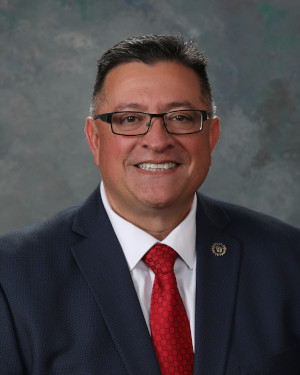
Maddy summaryThis bill updates New Mexico's rules for off-highway vehicles (like ATVs, snowmobiles, and recreational vehicles) to reflect industry changes and improve registration processes. It clarifies vehicle definitions (e.g., weight limits for recreational vehicles), increases registration fees to $17 per vehicle (with up to $40 in user fees), and allocates funds to the trail safety fund. The changes directly affect off-highway vehicle users who must pay updated fees for registration, renewal, or nonresident permits. Safety requirements remain largely unchanged, including prohibitions against operating recklessly near people or livestock. The bill also establishes a $1 fee per registration for litter control.
Sponsored bills
Maddy summarySB 454 modifies retirement credit requirements for New Mexico public safety employees. It increases credited service by 20% for qualifying state police, correctional officers, probation officers, and fire members who were employed or retired by June 30, 2013, to help them meet retirement eligibility. The bill adjusts age and service requirements for municipal police retirement plans (Plans 1-4) to align with these changes. Effective dates vary: probation officers saw adjustments starting July 1, 2021, while fire members' changes apply from July 1, 2024. The bill is pending before the Senate committees after being postponed indefinitely in June 2025.
Maddy summaryHB 562 appropriates $3 million from the general fund to the New Mexico Health Care Authority for fiscal year 2026 to increase Medicaid reimbursement rates specifically for independent rural health care providers. This funding directly benefits rural clinics and healthcare professionals serving underserved communities by improving their payment rates under Medicaid. The bill requires all allocated funds to be spent by the end of fiscal year 2026, with any unspent balance reverting to the general fund. It does not change Medicaid eligibility or provider qualifications, focusing solely on increasing reimbursement amounts through dedicated funding.
Maddy summaryHB 104 expands New Mexico's Victims of Crime Act to include specific crimes committed against peace officers as qualifying "criminal offenses." It adds provisions (items 22-25) to the definition list, covering aggravated assault, assault with intent, battery, and aggravated battery upon peace officers. This change directly affects peace officers who are victims of these specific assaults, ensuring they qualify for victim services and compensation under the Act. The bill does not change penalties for these crimes but updates eligibility for victim support programs. The bill passed the House but was postponed indefinitely in the Senate on June 3, 2025.
Maddy summaryHouse Memorial 33 (HM 33), introduced by Representatives Terrazas, Ramos, Brantley, Jones, and Dow, requests the New Mexico Higher Education Department to study spending practices at all public higher education institutions - including community colleges, universities, tribal colleges, and specialty schools. The study would examine all taxpayer-funded expenditures, procurement policies, and travel policies, including those exempt from standard state procurement and travel codes. This procedural memorial, which was referred to the House Education Committee but later postponed indefinitely, does not create new laws but asks for a review of existing spending mechanisms. It directly affects all 32 public higher education institutions in New Mexico that use state funds.
Maddy summaryHB 107 amends New Mexico's Controlled Substances Act to increase penalties for drug trafficking when it causes a death. It specifically adds a 12-year minimum prison term for a first-time trafficking offense resulting in human death, applying to Schedule I/II narcotics, methamphetamine, and related substances. The bill maintains existing felony classifications for other trafficking violations but elevates penalties for death-related cases. It directly affects individuals convicted of distributing controlled substances that lead to fatalities, particularly in cases involving narcotics or methamphetamine. The law does not change penalties for trafficking without death or for other offenses like distribution to minors.
Maddy summaryHB 127 would allocate $1 million from New Mexico’s general fund to the Department of Public Safety for purchasing license plate readers during fiscal year 2026. This funding directly affects the Department of Public Safety, enabling it to acquire technology that automatically reads license plates, typically used for traffic enforcement or law enforcement purposes. The bill specifies that any unspent funds at year-end would revert to the general fund. The measure was postponed indefinitely on June 3, 2025, and is currently inactive.
Maddy summarySB 399 creates a state fund to reimburse New Mexico local governments for specific border-related expenses directly requested by state or federal authorities. The fund covers costs like emergency medical services for border crises, law enforcement responses to unattended deaths, specialized border patrol equipment, humanitarian aid (transportation, housing, healthcare), illegal dumping cleanup, and state/federal drug/human trafficking task forces. Administered by the Department of Finance and Administration, the fund uses state appropriations to pay eligible local governments for these documented expenses. The bill requires the department to establish rules for reimbursement and specifies exactly which costs qualify.
Maddy summarySB 220 requires New Mexico state agencies to publicly post the terms of legal settlement agreements within 30 days on the Sunshine Portal if they settle claims without involving the risk management division. It also establishes "loss prevention review teams" to investigate serious incidents like deaths, serious injuries, or major financial losses exceeding $250,000, which must recommend prevention strategies and submit detailed reports to agency leaders and the risk management director. Agencies must provide these teams with full access to relevant documents and personnel during investigations. Annual reports on these reviews will be submitted to the legislature, aiming to improve transparency and prevent future incidents.
Maddy summarySB 19 requires all members of New Mexico's boards of regents for state educational institutions (as listed in the state constitution) to complete 10 hours of mandatory training during their first term. The training covers five specific areas: state constitution and education law (2 hours), financial management (2 hours), student success services (2 hours), governance and resources (2 hours), and ethics/public accountability (2 hours). The Higher Education Department must develop and provide this training, with current board members having until December 31, 2025, to complete it. This bill directly affects all appointed board members of New Mexico's public universities and colleges.