

Maddy summarySB 158 requires New Mexico's Economic Development Department to create an annual report on all projects funded through public support under the Local Economic Development Act. The report must detail each project's public funding amount, capital investment commitments, job creation numbers and wages (including full-time economic base jobs), and the project's economic return on investment. It also mandates that the department and Industrial Training Board share workforce training data - including trainee numbers, average wages, locations, and economic impact - with the Legislative Finance Committee. The report will be published online (excluding confidential business information) and submitted to the committee starting July 1, 2025, to evaluate the effectiveness of economic development incentives.
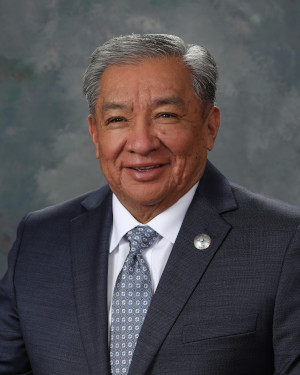
Sponsored bills
Maddy summarySB 268 allocates $2.5 million from the state general fund to fund athletics for the University of New Mexico (UNM) and New Mexico State University (NMSU) for fiscal year 2026. UNM receives the full amount directly, while NMSU’s funding is contingent on hiring an athletic director with at least five years of experience in name, image, and likeness (NIL) policy. Any unspent funds by the end of fiscal year 2026 will revert to the state general fund. This bill directly affects UNM and NMSU athletics departments through targeted budget allocations with specific conditions for NMSU.
Maddy summaryThis bill (SB 2) amends New Mexico's criminal competency law to clarify court jurisdiction when a defendant's competency to stand trial is questioned. It requires metropolitan courts to transfer a case to a district court if they determine a defendant is not competent to stand trial - previously, metropolitan courts could retain jurisdiction in such cases. The bill directly affects criminal defendants in New Mexico who face competency evaluations during trial. The title "Public Health & Safety Initiatives" is misleading, as the bill concerns court procedures, not public health measures. (Note: The bill's emergency designation cites public safety, but the substantive change relates solely to court jurisdiction.)
Maddy summarySB 13 establishes a legal framework for New Mexico to create state-tribal education compact schools operated by tribal nations. It authorizes the Public Education Department to enter into agreements with tribes to establish schools focused on language and cultural preservation, requiring tribes to submit a resolution and application detailing grade levels and compliance. The bill exempts these schools from certain state laws and rules while allowing them to access state and federal funding, and it mandates a five-year compact term with provisions for compliance, dispute resolution, and reporting. This directly affects tribal nations in New Mexico seeking to operate culturally rooted schools within the public education system.
Maddy summarySB 425 reauthorizes spending periods for existing state capital projects and establishes rules for handling unspent funds. It requires unexpended balances from severance tax bonds and general fund appropriations to revert to specific funds (like tribal infrastructure or the originating fund) after set deadlines, extending some project timelines through fiscal year 2027. The bill redirects specific unspent funds - such as money originally for a Las Vegas water line to purchase vehicles, or funds for a veterans building renovation to improve Veterans Park - while setting clear reversion dates. This procedural bill streamlines fund management without creating new policies or altering agency responsibilities.
Maddy summarySB 163 prohibits New Mexico public and charter schools from banning students enrolled in or eligible to enroll at federally recognized tribes, pueblos, or nations from wearing tribal regalia at graduation ceremonies and other school events. The bill amends existing school discipline policies to explicitly state that schools cannot restrict "tribal regalia" - defined as traditional dress, symbols, jewelry, beading, or feathers - along with graduation attire or as part of cultural expression. It directly affects Native American students in New Mexico public schools by protecting their right to display cultural items during formal school activities. The law clarifies that such protections are part of broader anti-discrimination policies already in place for students' cultural and religious expression.